What are the prospects for goose farming in 2016?
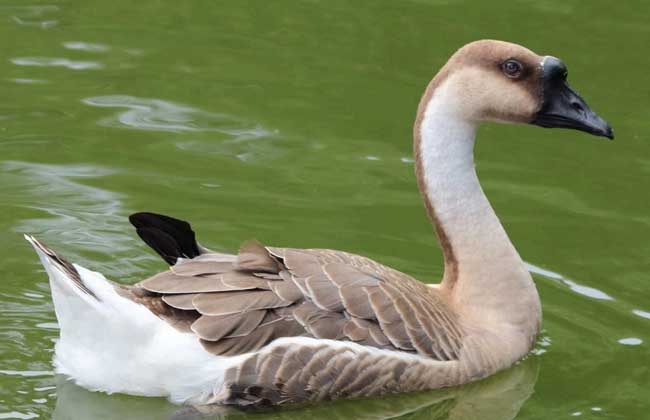
The goose is a grass-eating waterfowl with high economic value. It not only tolerates coarse feed, has strong adaptability, a wide range of feed sources, fast growth and high feed conversion, but also requires low input, yields high output, delivers good returns, has high economic value and produces green, safe products. It is a short, flat and quick project for getting rich, and is suitable for large-scale farming in the vast rural areas of our country. Let us take a look below at the prospects for goose farming in 2016!
Prospects for goose farming
1. Large gap: The goose industry is a sunrise project with huge development potential worldwide. At present, domestic and international market demand for goose meat exceeds supply. China's annual demand for geese is 800 to 900 million birds, while the number raised is only about 600 million birds. It is predicted that Shanghai needs 20 million geese per year, Guangzhou needs 70 to 80 million per year, Guangxi also needs around 70 million per year, and Hong Kong, China needs 100,000 per day. On the international market, demand for goose meat also shows a clear growth trend, with a predicted gap of around 200 million birds.
2. High profit: In the consumption share of the meat market, goose meat has risen from 1% 10 years ago to 4%, and is still on an upward trend. The increase in goose meat consumption has brought generous returns to farmers. Buying one gosling costs 12 yuan, and it can be sold after 65 to 70 days of raising, with a total cost of 15 to 16 yuan. At a selling price of 12 yuan per kg, one goose can sell for 54 yuan, yielding a profit of 15 to 20 yuan. The high returns of meat goose farming have directly driven the development of goslings, and goslings of good breeds have long been in short supply.
Advantages of goose farming
1. China has a vast territory, unique geographical latitudes and superior natural ecological conditions, with about 72 million mu of grassland and wetland, and Henan alone has more than 2.7 million mu, which is very suitable forgoose farming. China has more than 3,000 years ofgoose farminghistory, with more than ten excellent goose breeds of various types. It is a major goose-farming country in the world, with an annual raising volume of about 800 million birds, accounting for about 40% of the world's total goose farming.
2. Goose farming is a labor-intensive industry. Our country's rural areas have a large surplus labor force and low wages, which makes them very suitable for goose production. Developed countries with market competitiveness, however, are unsuitable for goose farming due to labor shortages and high wages, so there are no international competitors, leaving us broad room for development, which can be called a rare opportunity.
3. Geese mainly eat grass and consume little grain, belonging to grain-saving poultry. Developing goose farming fits the national conditions of many people and little land, a large rural surplus labor force, insufficient feed grain, and abundant by-products from agriculture, forestry and fruit growing. Compared with pig farming, the same amount of feed used to raise geese can produce three times the output of pigs. Geese grow fast, have high feed utilization, and have a short raising cycle; they can be marketed after 60 to 90 days, so economic turnover is fast.
4. Geese have strong vitality and disease resistance, wide adaptability and tolerance of extensive raising. They do not need high-level raising facilities, and the scale can be large or small, making them suitable for farmers to raise.
5. Goose meat is rich in nutrition and good in quality, with a protein content as high as 17.6 to 18.2%, and a lysine content 30% higher than that of chicken. The fat content of goose meat is only about 11%, while that of lean pork is about 28.8% and that of lean mutton is about 13%. Moreover, goose fat is much richer than pork, beef and mutton in unsaturated fatty acids that are beneficial to people, so goose meat is delicious and fatty but not greasy. Goose meat also has low cholesterol content and is beneficial to human health, so consumers do not need to fear cardiovascular and cerebrovascular diseases caused by eating goose meat.
6. Geese can fully use various crop by-products and fallen leaves from forests and turn them into high-quality goose products, which not only enriches the feed resources for geese and reduces feed costs, but also reduces environmental pollution caused by burning straw. Goose manure can also fertilize fields, increase soil organic matter, improve soil structure, raise crop yields, form a virtuous cycle and promote sustainable agricultural development.
7. Geese can grow together and develop in coordination with industries such as fish, fruit and forestry, as well as crops such as corn and peanuts, with good ecological benefits.
8. The comprehensive utilization rate of the goose body is high, and the value-added potential is great. The whole goose is a treasure. Down, fatty liver, goose feet, goose head, goose tongue, goose neck, goose wings, intestines, tendons, stomach and blood are all valuable and best-selling products. Through primary processing, deep processing and fine processing of the goose body, the value can be increased several times, more than ten times, or even dozens of times compared with selling live geese or carcasses. For example, goose down has always been the most popular and most active commodity on the world down market, with annual trade volume of about 45,000 tons, containing 70% goose down, at 75,000 to 80,000 USD per ton. China is the country that raises the most geese, produces the most down and exports the most down in the world. In 1995 alone, down exports earned 820 million USD in foreign exchange, and the annual output value of down products reached more than 8 billion USD. Goose fatty liver is a precious food on the international market, priced at 35,000 to 45,000 USD per ton, goose breast muscle at 3,500 USD per ton, and goose feet at 40,000 USD per ton. Domestic market: goose head 11,000 yuan per ton, goose wings 12,000 yuan per ton, fresh goose intestines 18,000 yuan per ton, frozen goose intestines 14,000 yuan per ton, fine goose tongue 30,000 yuan per ton, and coarse goose tongue 16,000 yuan per ton.
Preparation for goose farming
1. Choice of raising method: At present, China's meat goose raising methods mainly include two types: confined raising and a combination of housing and grazing. Among them, confined raising is represented by the model of planting grass to raise geese. Planting grass to raise geese not only saves labor, saves feed and lowers costs, but also provides excellent grass quality, tender and clean grass, safety and economy, low investment and high returns. In China, small-scale meat goose raising generally adopts the traditional method of combining housing with grazing, while large-scale and intensive meat goose farming promotes the raising model of planting grass to raise geese.
2. Choice of meat goose breed: Choose goose breeds with fast early growth, low concentrate consumption, high feed conversion, large body weight, wide adaptability and strong stress resistance. The main breeds are Yangzhou White Goose, Longchang Goose and Taihu Goose.
① Yangzhou White Goose: Yangzhou White Goose is an excellent poultry breed with fast growth, high egg production, large body weight, strong reproductive capacity and high down yield. The body weight of young geese at 70 days of age is more than 3.5 kg, and annual egg production is 72 to 80 eggs. The young geese of this breed are suitable for processing into saltwater goose and phoenix goose, and have a relatively large market in Jiangsu, Shandong and other provinces and municipalities.
② Longchang Goose: Longchang Goose originated in Wenjiang, Leshan, Yibin, Yongchuan and Daxian in Sichuan Province, and is called Longchang Goose in the Jiangsu and Zhejiang areas. It grows relatively fast before 70 days of age, weighing about 2.5 kg at 60 days of age, and averaging 3.6 kg at 80 days of age. The young geese are fat and tender, and are gradually marketed for sale from 60 days of age.
③ Taihu Goose: Taihu Goose originated in Suzhou and Wuxi in southern Jiangsu Province and Huzhou and Jiaxing in northern Zhejiang Province. It is a small white goose breed, mainly used for producing young meat geese. It can be marketed at about 70 days of age, with an average body weight of 2.5 to 2.8 kg. The slaughter rate of young geese is 78.6% for half-eviscerated and 64% for fully eviscerated.
3. Choice of raising scale: The size of the raising scale should be determined according to the raiser's funds, labor, grass and feed resource conditions, and market sales. If conditions are not mature enough and raising techniques cannot keep up, there is no need to pursue large scale, otherwise poor raising management, increased disease and death in the goose flock will make the loss outweigh the gain. The vast majority of farming households in China raise meat geese at a scale of 500 to 3,000 birds per batch. Beginner farmers generally raise about 500 meat geese per batch, 2 to 3 batches a year; specialized large households raise 1,500 to 2,000 meat geese per batch, 3 to 4 batches a year. The suitable scale for ordinary meat goose raising households is generally 1,500 birds, raised by 2 people. Such a scale is relatively economical and moderate, easy to manage, and suitable for planting grass to raise geese.
2. Raise farming funds: To develop meat goose production, farming funds must be prepared well. Farming funds mainly include two major categories: fixed capital and working capital. Specifically, they include site construction costs, goose house building costs, equipment purchase costs, gosling costs, feed costs, disease prevention and control costs, water and electricity costs, and management, transport and sales costs. The amount of funds depends on the raising scale and raising method. Generally, the raising model of planting grass to raise geese is adopted. Raising 1,500 meat geese requires 5,000 yuan in fixed capital, 7,500 yuan for goslings (calculated at 5 yuan per bird), and 25,500 yuan in working capital for raising, totaling 38,000 yuan in farming funds to be raised, and then meat goose farming production can proceed normally.
Summary: As people's awareness of food safety, nutrition and health care grows day by day, consumer demand for goose products will certainly increase day by day, the market potential is huge, and there is still no international competitor. Therefore, we should emancipate our minds, clearly understand the situation, and in industrial structural adjustment, make good use of the east wind of WTO accession, seize the opportunity, adapt measures to local conditions, and vigorously develop the goose farming industry.