What are the tips for raising Xupu geese in rural areas?
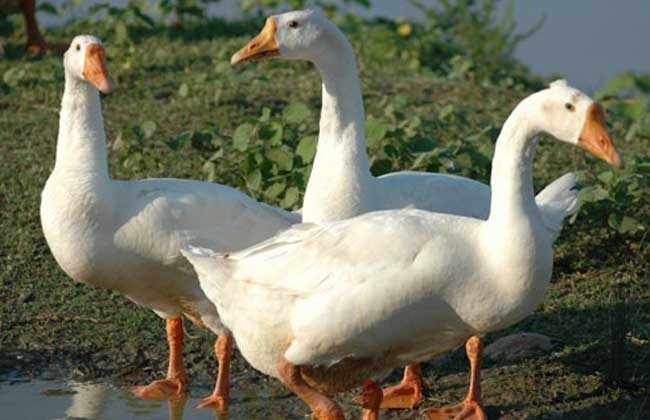
The Xupu goose is not the largest of the goose breeds, but it is still outstanding. In China it is an excellent meat goose and a high-quality raw material meat goose for deep processing. It is the big fellow among goose breeds, the Xupu goose. The Xupu goose originates in western Hunan, where they live in rural areas with green mountains and clear waters. They are also an excellent species resource, an outstanding breed that has reproduced to this day after a hundred years. Today we are talking about the farming tips for Xupu geese.
In raising Xupu geese, attention must first be paid to the management of young goslings in the early stage, the early 30 to 45 days of age: the newly selected breeding geese must be trained to form a flock, mainly kept in sheds combined with grazing. According to the grass quality of the grazing land and the body condition of the goose flock, supplement feed 50 to 100 grams per day, with breeding ganders given a larger amount of supplement. The feed should be mainly compound feed, with green feed as a supplement. Green feed mainly comes from the planting of high-quality forage grass. Suitable forage grasses to plant include: hn-mc Youyou ryegrass, hn-mc Youyou alfalfa, etc. Middle stage (60 to 90 days of age): mainly grazing; once entering the full shed-feeding period, green feed and roughage should predominate, fed 3 times a day, at fixed times but not in fixed amounts. The feed is mainly green grass, grain chaff, rice bran, wheat bran, corn stalk powder, etc., mixed and soaked soft in water before feeding. Breeding ganders generally begin rough feeding at around 140 days of age. Late stage (after 120 days of age): while feeding grass, gradually increase concentrated feed and reduce roughage, feed concentrated feed 2 to 3 times a day, achieve diversified feed combinations, and pay attention to supplementing minerals and vitamins, allowing the geese to feed freely, prompting the female geese to lay eggs early and lay more eggs. The breeding goose shed should be spacious and bright, and the feed troughs and water troughs should be cleaned daily and the bedding replaced, keeping the bedding straw and the inside of the shed dry. The goose shed should be quiet, hygienic and have a good environment, strictly guard against cold and damp, and special attention should be paid to keeping the goose shed warm in winter.
In winter, for the management of Xupu geese, farmers should do a good job of cold protection and heat preservation: the cracks and holes in the walls on all four sides of the goose shed should be plugged well, the back windows sealed with plastic film, and a cold-proof curtain hung on the door. The temperature inside the goose shed should be kept at 10°C to 20°C, and the light should be relatively dim. Before the geese are moved into the goose shed, fumigate and disinfect it with 25 milliliters of formalin and 12.5 grams of potassium permanganate per cubic meter of space.
The Xupu goose has a very long useful life, and the breeding life of breeding geese is longer than that of other poultry. Generally speaking, the egg production of female geese increases year by year from the start of laying, and begins to decline in the 4th year. Usually, in the 2nd year after the female goose starts laying, she lays 15% to 25% more eggs than in the 1st year, and in the 3rd year she lays 30% to 50% more eggs than in the 1st year. That is to say, breeding female geese can generally be used for 3 to 4 years. There are also some small early-maturing goose breeds, such as China's Taihu goose and the former Soviet Union's Kuban goose, whose egg production is highest in the 1st year. For these breeding geese, many farmers are accustomed to using the "clear out every year" method to replace the whole flock, that is, using ganders and female geese for only one year, and when a few geese begin to molt at the end of the laying period, culling them all and selling them as commercial geese.
Farmers raising Xupu geese also need to do a good job of disease prevention and control. Throughout the fattening process of the geese, prevention should be the priority. Carefully observe the mental state, dietary changes and fecal color of the goose flock, and once sick geese are found, isolate and treat them immediately. If fowl cholera occurs, penicillin can be used at 100,000 to 150,000 units per goose per intramuscular injection, twice daily. For influenza, kanamycin and streptomycin can be used for treatment.