How much does a goose weigh? The normal weight range of a goose
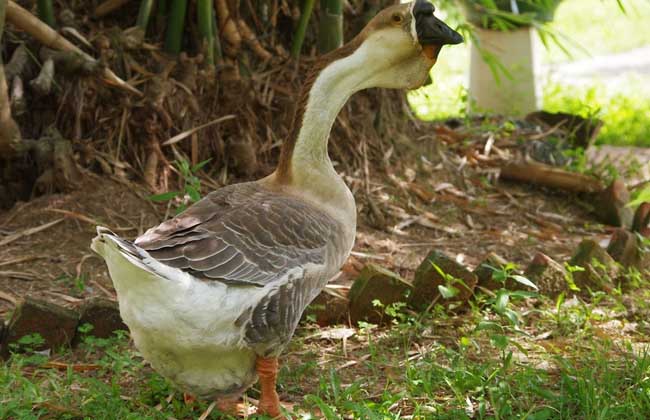
The goose is a type of bird in the order Anseriformes, family Anatidae, and is considered the first poultry species domesticated by humans. Chinese geese descend from the swan goose, while European geese descend from the greylag goose. They grow quickly and live longer than other poultry, weighing 4 to 15 kg. They inhabit areas near ponds and other bodies of water and are good swimmers. The main breeds include the Lion Head goose, Taihu goose, and others. Let us take a look below at how much a goose weighs!
How much does a goose weigh?
The weight of a goose varies with breed and age in months. Geese are divided into three categories by size: large, medium, and small. Small-breed ganders weigh 3.7 to 5.0 kg, and geese (females) 3.1 to 4.0 kg, such as China's Taihu goose, Wuzong goose, Yongkang Grey goose, Huo goose, Zi goose, and others. Medium-breed ganders weigh 5.1 to 6.5 kg, and females 4.4 to 5.5 kg, such as China's Zhedong White goose, Wanxi White goose, Xupu goose, Sichuan White goose, Yan goose, Yili goose, and others, as well as Germany's Rhineland goose. Large-breed ganders weigh 10 to 12 kg, and females 6 to 10 kg, such as China's Lion Head goose, France's Toulouse goose, Landes goose, and others.
The largest goose breed
The Toulouse goose. The Toulouse goose, also known as the Siam goose, Tulusi goose, and others, is the largest goose breed in the world. It originated in the town of Toulouse in southwestern France. It has a large head, a pointed bill, a thick short neck, and a broad deep body, with well-developed dewlap and belly pouch. Its plumage is greyish-brown, its belly is red, and its bill, shanks, and webbed feet are orange-red. Adult ganders weigh 10 to 12 kg, and females 8 to 10 kg, with annual egg production.
Common types of geese
1. Lion Head goose: The Lion Head goose is the only large goose breed in China, named for the well-developed fleshy knobs on its forehead and cheeks that give it a lion-head appearance. Adult ganders weigh 8.85 kg, and females 7.86 kg. The age at first laying is 160 to 180 days, generally controlled at 220 to 250 days of age. In the first laying year it produces 24 eggs, with an average egg weight of 176 g and milky-white eggshells.
2. Taihu goose: The Taihu goose originated in the Taihu region of the Yangtze River Delta. It is small to medium in build. Adult ganders weigh 4.33 kg, and adult females 3.23 kg each. Its laying performance is relatively good, averaging 84.6 eggs per year, with a high of 123. The average egg weight is 135.3 g, and the eggshell color is fairly uniform, being almost entirely white.
3. Embden goose: The Embden goose originated near the city of Emden in western West Germany. Females begin laying at about 10 months of age, producing an average of 10 to 30 eggs per year, with an egg weight of 160 to 200 g and a hard, thick, white eggshell. Females have a strong brooding instinct. Adult ganders weigh 9 to 15 kg, and females 8 to 10 kg. It has good fattening performance and excellent meat quality, and is used to produce high-quality goose fat and meat.
4. Siam goose: The Siam goose is the largest goose breed in the world. It was domesticated and bred from the greylag goose in the early 19th century. It originated in the suburbs of Toulouse in southern France and is mainly distributed in southwestern France. The age at first laying is 305 days. It produces 30 to 40 eggs per year, with an average egg weight of 170 to 200 g and milky-white eggshells. Ganders have a relatively strong libido, and females do not have a strong brooding instinct. Adult ganders weigh 12 to 14 kg, and females 9 to 10 kg. After forced fattening, the average fatty liver weight per goose can reach more than 1.0 kg, with a maximum fatty liver weight of up to 1.8 kg.