Detailed Explanation of Key Technical Points for Foie Gras Goose Farming
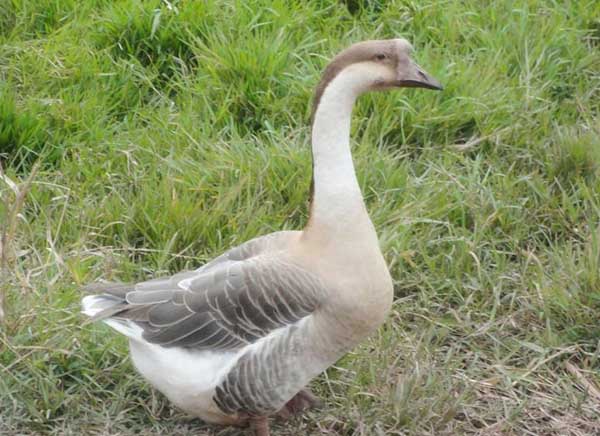
Goose foie gras has a delicate texture, a unique flavor, and is extremely nutritious. Foie gras contains large amounts of unsaturated fatty acids and various vitamins that are beneficial to human health, and is most suitable for children and the elderly. It is one of the most precious and best-selling nutritional products on the international market, attracting consumers in all wealthy countries and regions, and its market prospects are very broad. Here, the editor will introduce the farming technology for high-quality foie gras geese.
Breed Selection for Raising Foie Gras Geese
Breed is one of the important factors affecting foie gras production. The foie gras performance of different goose breeds varies greatly, and not all geese can produce foie gras. For example, China's small goose breeds are mainly egg-laying types with very poor foie gras performance and are not suitable for foie gras production. Those that can be used for foie gras production include large breeds such as the Lion Head Goose, with an average foie gras weight of 600 grams and a maximum of 1400 grams; the world-famous French Landes Goose, a specialty foie gras breed, has an average foie gras weight of 836 grams and a maximum of 1780 grams. Although the above large goose breeds have relatively good liver production performance, their reproductive performance is very poor. Therefore, using heterosis to breed high-yield complementary lines for meat, liver, and feather production is an effective method to improve the level of foie gras production. So to produce goose foie gras, in addition to selecting specialty foie gras breeds, one should purchase high-yield complementary lines bred through crossbreeding for foie gras production from breeding goose farms.
Feed for Foie Gras Producing Geese
Research has proven that corn is the most ideal high-energy feed. Analysis results found that each kilogram of corn contains about 400 mg of choline and 0.25% phosphorus, both lower than other high-energy feeds. Because choline plays a role in maintaining normal liver function in animals, it helps with the transfer of fat in the liver, prevents excessive fat deposition in the liver, and protects the liver. Therefore, the higher the choline content in the feed, the better it can prevent fat accumulation in the liver from affecting the fattening effect. In addition, because corn has low choline content and poor liver protection ability, fat is more easily deposited to form fatty liver. So using corn as the force-feeding feed for foie gras increases the average foie gras weight by 20%—45% compared with any other high-energy feed, and it is currently the preferred feed for foie gras production at home and abroad.
When using corn as force-feeding feed, whole corn kernels should be used rather than crushed corn, because crushed corn has many gaps and a large volume, which affects the filling amount. In order to increase the filling amount and increase foie gras weight, whole corn kernels must be used in terms of feed form.
There are 3 methods for processing corn kernels, namely the boiling method, the dry-frying method, and the soaking method. Comparing the 3 methods, the boiling method is the most suitable. Pour the selected dry corn (smaller kernels are preferable) into a pot of boiling water, making the water level 10 cm above the corn, boil for 8 minutes, remove and drain, and while hot mix in 2% animal fat, add 0.5% salt, 0.02% multivitamins, and an appropriate amount of trace element additives, and mix thoroughly with the corn.
Feeding and Management During the Pre-feeding Period
Before force-feeding, the geese must go through 2—3 weeks of pre-feeding. Through pre-feeding, the geese are allowed to further grow and develop, strengthen their physique, increase foie gras uniformity, and improve foie gras quality. At the same time, pre-feeding exercises the geese's digestive ability, allowing them to consume large amounts of feed so that the digestive tract expands and softens, enabling it to bear large amounts of feed during forced feeding. In the early stage of pre-feeding, a complete formula feed can be given. After 10 days, the proportion of formula feed in the daily ration is gradually reduced and the corn kernel content increased. In the late stage of pre-feeding, basically corn kernels are fed, so as to adapt to the all-corn-kernel force-feeding during the filling period. It should be emphasized here that during the pre-feeding period, as much green forage as possible should be fed to increase the capacity of the digestive tract.
Before pre-feeding begins, the geese should be vaccinated and dewormed and kept in housing, and can be grazed once each in the morning and afternoon every day. The goose house should be clean, flat, dry, and quiet. Raise 2—2.5 geese per square meter of floor space, with sufficient and clean water supply. Grazing should be stopped 3 days before the end of the pre-feeding period.
Feeding and Management During the Force-feeding Period
Feeding and management during the force-feeding period is one of the most critical links in the goose foie gras production process. The force-feeding operation technique, the control of the amount fed each time, and the length of the force-feeding period will all affect foie gras quality and weight gain to different degrees. Before force-feeding, first put the geese into specially made feeding cages. Depending on the specifications of the feeding cage, generally 5—6 geese per cage, and use a specially made force-feeder for feeding. Feed 4 times a day, namely at 8 o'clock, 14 o'clock, 20 o'clock, and 2 o'clock. The feeding amount can be flexibly controlled according to breed and size. Insufficient feeding amount affects foie gras weight gain, while excessive feeding amount easily causes feed retention and results in rejects. Therefore, before each feeding, feel the enlarged part; if the feed has already been digested, it shows good digestive ability and the feeding amount can be increased next time. However, the throat and esophagus of geese are relatively narrow. When inserting the tube, in addition to applying oil to the tube, special care must be taken to prevent injury to the esophagus. After the tube is inserted into the esophagus, fix the head and beak with the left hand, step on the starter once, and the corn kernels will be pushed toward the enlarged part as the spiral pusher rotates. The feeder uses the right hand to gently push the corn kernels downward, then steps on the starter again and pushes the corn kernels again, until filling is complete. Generally speaking, the force-feeding period is about 3 weeks, with the specific time depending on the goose's condition. If the force-fed geese have dull eyes, listlessness, rapid breathing, moist and disheveled feathers, obesity, sagging abdomen, reluctance to move, or even paralysis, and show indigestion symptoms such as feed retention and diarrhea, it indicates that the foie gras is already mature and the geese should be slaughtered promptly to obtain the liver.