Detailed Explanation of Black Swan Breeding Technology and Rearing Management Methods
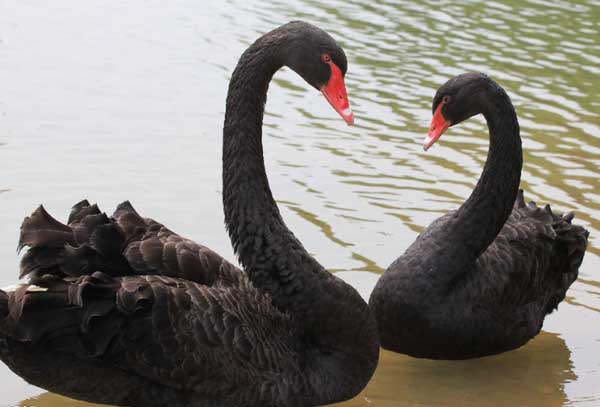
The black swan is native to Australia and is an important member of the swan family, a world-famous ornamental rare bird. Its physical features are that except for a small part of the primary flight feathers which are white, the rest of the body plumage is pitch black, the back is covered with fluffy nuptial feathers, the beak is bright red with a "V"-shaped white band at the front end, the iris is red, the webs are black, the body weight is 4-7 kg, and the neck is often curved in an "S" shape, with a dignified and beautiful posture. Its temperament is gentle and it is easy to raise. In China it can breed two clutches each year in spring and autumn, and by using the method of artificially stimulating egg production it can produce 4-5 clutches of eggs, with the number of eggs reaching 30. The black swan's rearing method is simple and its disease resistance is strong, making it a labor-saving and high-benefit premium breeding species.
Environment and Rearing Methods
1. Macro-environmental conditions. The site should be chosen in a place far from villages and residential areas, avoiding external interference as much as possible.
2. Natural free-range rearing. When black swans are free-range, the water area can be large or small. Generally, 1 pair of breeding swans can be stocked per 100 sq m of water area. Some emergent aquatic plants should be planted in the pond, and the open ground around the pond can be used for rotational planting of forage grass according to the season for them to feed on, and some trees should be planted to provide shade in summer. The perimeter of the free-range area should be enclosed with 1.5 m high netting or fencing to prevent other animals from entering and interfering, affecting their growth and reproduction. The water in the pond must be disinfected regularly; generally, 50 kg of fresh lime powder or 20 kg of bleaching powder is spread per mu of water surface. Under free-range conditions, black swans require artificial wing clipping or manual feather clipping once a year to prevent them from flying away. The feather clipping method is simple; the specific operation is to cut 5-6 primary flight feathers after the annual autumn molt is complete.
3. Cage and pen housing. If cage and pen housing is used, the pen area is 30 sq m, containing a 10 sq m pond with a water depth of 60 cm, and 1 pair of breeding swans is raised per pen, with the pond water changed regularly.
Feed Standards
1. Breeding swan feed. Concentrate feed (layer chicken pellet feed may be used) is the main component, supplemented by green feed (including forage grass, green vegetables, etc.). During the breeding period, add 5% fish meal and 3% shell powder to the concentrate feed to meet breeding needs.
2. Feed requirements for cygnets. The daily ration is 70% concentrate feed and 30% green feed. The concentrate feed uses meat chick pellet feed with high protein content.
3. Young swans. After cygnets are raised to 4 months of age they enter the young swan rearing stage; the concentrate feed can be switched to layer chick pellet feed, and green feed should be provided for free feeding.
Pairing of Breeding Swans
1. Free pairing. Young swans enter the pre-breeding period at 18 months of age and begin pairing. They can be allowed to choose freely in the free-range area. Successfully paired swans are inseparable and appear in pairs, which can be considered successful pairing. The formed pairs are relatively stable, and occasionally there is the phenomenon of one male with two females.
2. Artificial forced pairing. For swans that have not successfully paired through free choice, the method of artificial forced pairing can be used to solve their mating problem. The specific operation is to place an unpaired male and female black swan in adjacent cages for pen rearing, so that they can see each other but cannot reach each other. If the two swans are frequently seen gathering across the net and nodding to show affection, they can then be placed in the same cage for rearing. If pairing occurs, they can be released into the free-range breeding area. If it fails, it can be tried once more; generally one attempt is enough to solve the problem.
Work During the Breeding Period
1. Provide nesting materials. Black swans enter sexual maturity at 20 months of age. At this stage, provide dry thatch, sheep grass, rice straw and other nesting materials around their activity area for them to freely gather to build nests.
2. Natural incubation. After the black swan builds its nest it can lay eggs. Generally the first egg is laid 8-15 days after the first mating, then one egg every other day, with 6-7 eggs per clutch. If they are allowed to incubate naturally, a small shelter needs to be built on top of the nest to shade the sun and keep off rain, and human interference must be avoided during incubation.
3. Artificial incubation. After the first egg is laid it can be taken from the nest and replaced with a dummy egg; thereafter newly laid eggs are taken out, and finally the dummy egg is removed. When taking eggs manually, take protective measures to prevent being attacked by the swans and injured. Generally after 20 days they enter the second egg-laying period, and the second clutch of eggs can be allowed to hatch naturally. Breeding eggs are stored for 4-5 days. When the number of eggs is large, machine incubation can be used; when the number of eggs is small, a simple method of artificial incubation can be used, and warm water incubation is generally preferable. The temperature scheme of variable-temperature incubation is best: 38°C for days 1-15, 37.5°C for days 16-32, and 36.8°C for days 33-35. When development reaches 25 days, cool the eggs once a day for 5-8 minutes each time. After 32 days, manually add humidity to increase the hatching rate of breeding eggs. The cygnets hatch at 35 days.
Management During the Brooding Period
Naturally hatched swan chicks can be brooded by the breeding swans themselves, with relatively ideal results. For artificially hatched cygnets, the following points must be done well in brooding:
1. Temperature. It is 35-32°C from 1-7 days after hatching, then decreases by 1-2°C each week, gradually dropping to natural temperature. Whether the temperature is suitable is judged by the mental state of the cygnets.
2. Disease prevention. Within 24 hours after hatching, cygnets are injected subcutaneously in the neck with 0.5 ml of gosling plague serum.
3. Feeding. Cygnets can begin drinking 30 hours after hatching. Use warm boiled water for drinking, with antibiotics added to the water for 3 days of drinking. Feed is given 2 hours after the start of drinking. Feed is administered 6-7 times a day, with drinking water freely available.
Sanitation and Epidemic Prevention Measures
1. Clean the breeding area regularly, keep the breeding area clean, and spray and disinfect with disinfectant liquid to kill various pathogens. Commonly used disinfectant liquids include quaternary ammonium salt preparations, sulfonamide-containing preparations, etc. The disinfectants should be changed regularly.
2. During the rearing period, broad-spectrum antibiotics such as amoxicillin, oxytetracycline, ciprofloxacin, etc., or Chinese herbal medicines can be mixed into the feed and fed for three days each month to prevent the occurrence of poultry diseases.
3. In early March each year, breeding swans are given intramuscular injections of gosling plague serum and goose paramyxovirus oil vaccine once each.
Prevention and Treatment of Common Diseases
The main diseases of black swans include gosling plague, colibacillosis, goose paramyxovirus disease, fowl cholera, parasitic diseases, etc. While doing routine work well, regularly observe the mental state of the black swans, so as to achieve early detection, early isolation, and early treatment, and use medication according to the symptoms to prevent the spread of poultry diseases.