How can you make money raising geese? A detailed explanation of breeding methods
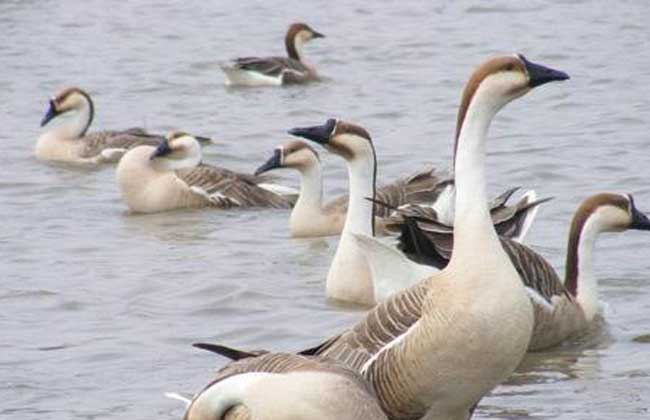
Raising geeseIs it profitable? This is the question most goose farmers care about most. In fact, in recent years goose farming has led many farmer friends down the road to prosperity. How did they do it? Here the editor will share with you a few secrets on how to make money raising geese.
Is raising geese profitable?
1. Geese are herbivorous poultry; there is no trick to raising geese, just clean water and green grass.” Goose farming mainly relies on green grass and coarse feed, saving on concentrated feed and keeping feeding costs low.
2. Geese are large and grow fast; with proper feeding, they can reach 3.5-5 kg in just three months.
3. Goose meat is nutritious. With its unique flavor, it is a truly green food and is highly favored by consumers.
4. Goose feathers, especially down and quill feathers, are in great demand in both domestic and international markets. And prices remain firm.
To further improve the economic benefits of goose farming, there are also the following secrets.
Drug-assisted live feather plucking from geese
At present, down is in short supply on domestic and international markets, and prices are climbing. Because goose down has large clusters and strong warmth retention, it is even more sought after on the international market. Goose farmers use drug-assisted live feather plucking technology, that is, feeding adult geese one tablet of “Kuaibaling”, then after a few days letting the geese wash off the dust and mud in water, and once they are dry, catching the geese to pluck their feathers. When plucking, it is like plucking scalded chicken feathers, both light and quick, the geese feel no pain and do not bleed, and the plucking is thoroughly clean, with high down yield and good quality. When plucking, separate the down, quill feathers and piece feathers; one plucking can bring in 20-25 yuan. After plucking, the geese are kept indoors for 5-7 days, given a suitable supplement of concentrated feed, and then returned to normal grazing management.
After about 50 days, a second plucking can be done, and after that a third and fourth as well, with each plucking adding another income. If you no longer pluck feathers, once the goose feathers have grown back fully, they can be slaughtered or sold on the market. Geese fed the “Kuaibaling” drug have no drug residue in their bodies, and the quality of the goose meat is not affected in the slightest.
Producing goose fatty liver
Goose fatty liver is in short supply on the international market, with a price of up to 30 US dollars per kg. Consumption in many domestic star-rated hotels and restaurants is also increasing day by day. Using geese for forced fattening, each goose can produce 0.5-1 kg of goose fatty liver. Producing goose fatty liver in batches and organizing exports can increase income by more than 100 yuan per goose.
Planting grass to raise geese
Geese are herbivorous poultry, mainly eating grass; with an appropriate amount of concentrated feed, they can be fattened into market-ready geese. At present, grain prices are weak, and farmers growing grain alone do not earn much. Normally, 667 sq m of land planted with two crops a year, with 500 kg of grain harvested per season, gives 1000 kg for the whole year; sold at current prices, 667 sq m brings in 1000 yuan. But with grass planting for goose farming, 667 sq m of land planted year-round with high-quality forage grasses for different seasons can yield as much as 20,000-25,000 kg per year. At 35-40 kg of grass eaten per goose (plus 2 kg of concentrated feed supplemented per goose), 500 geese can be raised. At 3.5 kg per goose and a selling price of 7.6 yuan per kg, each market-ready goose can sell for 26.60 yuan, and 500 market-ready geese bring in a total of 13,300 yuan. After deducting the cost of goslings of 5,000 yuan (10 yuan each), feed costs of 1,000 yuan (the feed payment for a total of 1,000 kg of supplementary feed for 500 geese) and the 1,000 yuan income from growing grain on 667 sq m of land, the gross profit can reach 6,300 yuan.
And for growing grain to raise geese, the accounts were also calculated: 667 sq m of land yielding 1,000 kg of grain a year can only raise 115 market-ready geese (at 3.5 kg per goose and a feed-to-meat ratio of 2.5:1), with goose sales income of 3,059 yuan. After deducting the gosling cost of 1,150 yuan and feed costs of 1,000 yuan, the gross profit is only 900 yuan. Moreover, planting grass is much easier than growing grain, so planting grass to raise geese is a good path to prosperity that benefits both farming and livestock.