Key Technical Points for Family Goose Raising and Daily Feeding Management Methods
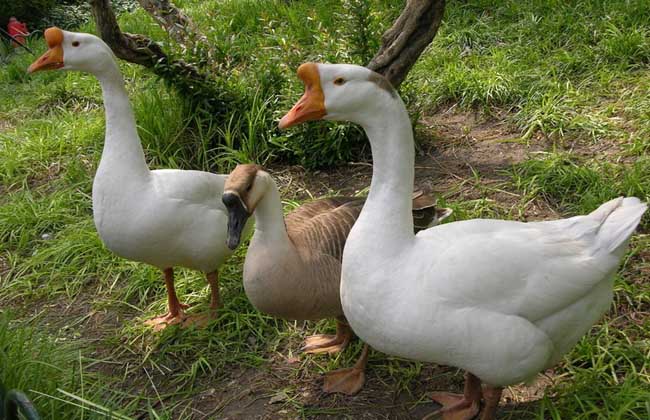
The goose is a treasure from head to tail, with very high comprehensive utilization value, simple raising, a high input-output ratio, low raising risk, and economic benefits superior to raising chickens and ducks, making it a good path to prosperity.Goose raisingis converting grass into meat; geese eat a hundred kinds of grass and can utilize large amounts of green feed and some roughage. This is determined by the physiological characteristics of geese: the pressure of a goose's gizzard is half again as great as a duck's and 1 times greater than a chicken's; relying on this powerful movement and the grinding by the grit within it, and because the cecum of geese contains more microorganisms, it can ferment and decompose cellulose into lower fatty acids, making cellulose easy to dissolve and absorb. The absorption rate of crude protein from green grass by geese reaches 76%. Goose feed has wide sources, is cheap, and low in cost. Geese have good adaptability and strong disease resistance, do not demand much of housing environmental conditions, and do not need very good buildings; except for duckling houses, in winter the temperature inside the house only needs to stay above 0°C.
Geese have very few diseases; among infectious diseases that pose a greater threat to poultry, by types of naturally infectious diseases, geese have 1/3 fewer than chickens. Geese have a short production cycle and quick results. Generally, from birth to slaughter for market is one production cycle; among herbivorous livestock and poultry, cattle generally take 18 months, meat sheep 5-6 months, meat rabbits 3-3.5 months, and geese have the shortest production cycle at 2-3 months. At present in China most goose breeds have a meat goose production cycle of 70-80 days. Geese are gregarious and easy to manage. Geese are docile in temperament, do not run or jump about wildly, and are convenient for grazing and yard management; they do not necessarily occupy strong labor, and the elderly, weak, and women can all raise them.
Goose Breeds
Breed is the internal cause determining benefits; good breeding stock produces good young, good young yields good fruit, and good fruit brings good benefits. As for the question of goose breeds, it can be said that China is rich in goose resources; there are 12 included in the National Domestic Poultry Breed Records alone, and there are also some breed variants. For example, Guangdong Province customarily raises local gray geese such as Lion Head Geese, Wuzong Geese, and Magang Geese, which have good meat quality. Anhui prefers to raise Yan Geese and Wanxi White Geese; although they lay 30-40 fewer eggs, breeding geese have 3-4 laying periods and can lay and hatch in all four seasons to produce meat geese. Jiangsu Province customarily raises Taihu Geese, which lay more eggs (more than 60), and prefers to market young geese at about 2 kg, with relatively tender meat. The Northeast prefers to raise Huoyan Geese and Zi Geese, with annual egg production all above 100. Zhejiang Province raises Zhedong White Geese; the advantage is that the age at first laying is early, about 150 days, and they can lay and hatch in all four seasons to produce meat geese, reaching 3.5 kg body weight at 60 days of age. Hunan raises Xupu Geese; although annual egg production is relatively low at about 30, the meat yield is high with semi-eviscerated rate of 87.3%-88.6%, body weight above 3 kg at 60 days of age, and relatively good fatty liver performance reaching 600 grams.
Sichuan Province prefers to raise Sichuan White Geese, which have balanced egg, meat, and feather production performance and are the first choice breed for general large-scale farming, with annual egg production of 60-80. **Due to poor climatic conditions, they raise Yili Geese with extensive feeding; most fly away during the day to forage on their own and return at night for supplemental feed. It is the only goose breed in China evolved from the greylag goose. If the feeding environment and conditions for this goose are changed, its production performance potential is relatively large; under extensive feeding, annual egg production is 10-20. Which breed to raise depends on the production purpose and economic benefits combined with local natural conditions when choosing a goose breed. If the main purpose is producing fatty liver and foie gras, then Lion Head Geese, Xupu Geese, and France's Landes Geese or their hybrids should be raised; if specializing in producing goose fatty liver for export, Landes Geese should be the main breed raised. If the main purpose is producing goose meat, then hybrid geese should be used,
Selection of Goose House Site
1. Have an adequate water source.
2. Have a feed production base for growing green feed. High-quality forage grass can supply 60%-80% of the daily ration nutrition for geese.
3. A quiet environment, fresh air, and shade from trees.
4. Far from villages and towns, which is good for sanitation and epidemic prevention.
5. The goose house should be built on high, dry, flat or gently sloping terrain, facing south or southeast, and the soil should preferably be sandy loam with good water permeability, so that sunlight is good and drainage is facilitated, while also helping to prevent heat, moisture, and cold. It is possible either to build a simple shed with bamboo fencing or coarse netting around it for raising, or to use flowing water sources such as ditches and rivers to build the shed beside the ditch or river for enclosed raising. Goose houses using a post-and-beam structure must pay special attention to the problem of summer ventilation and heat dissipation; the front and rear walls need two rows of windows, upper and lower, and the lower edge of the lower row of windows should preferably be 30 cm from the ground.
Construction of Goose Houses
1. Brooding house. It is required that the house be well insulated, airy, dry, and free of drafts; the ratio of window lighting area to floor area is 1:10-15. The brooding house should preferably raise 5-15 goslings under 20 days of age per square meter.
2. Fattening house. The house is equipped with shelf frames, divided into single-row and double-row types, and divided into small pens, each pen about 10-12 sq m, which can hold 60-80 medium-sized growing geese.