What are the methods for rapid pigeon breeding?
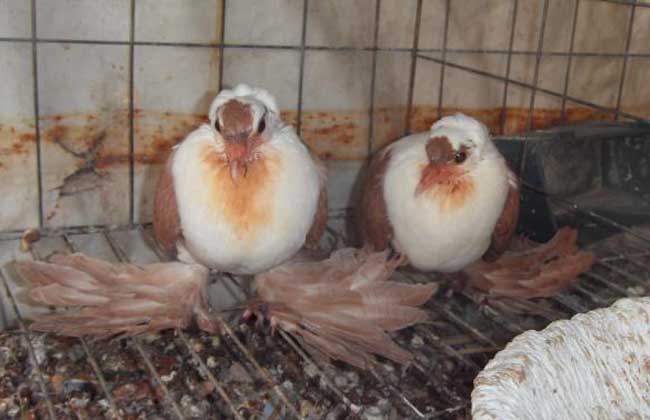
The pigeon is a very common bird, a general term for hundreds of species in the order Columbiformes, family Columbidae. Pigeon keeping as an emerging breeding project has been developing in our country for more than 20 years. Although it has gone through twists and turns, in recent years it has developed rapidly and become an emerging money-making project, winning the favor of more and more friends who enjoy breeding. Below let us take a look at how to get pigeons to breed quickly!
How to get pigeons to pair up quickly
1. Pairing cage: First you can buy a pairing cage and put the male and female pigeons together to keep them. If the male and female pigeons are emotionally unstable, you can first keep them in separate compartments, and once they are more familiar with the new environment, put them together.
2. Choose the season: The pairing of male and female pigeons is also greatly related to the season. Generally speaking, spring is the easiest time to succeed, while winter is the hardest, so try to encourage them to breed in spring. Taking warmth-preserving measures for the pigeon house in autumn and winter can avoid the influence of the season.
3. Feed them well: If you hope the pigeons can mate as quickly as possible, you can consider feeding them chopped scallions or hemp seeds, and try to avoid injections, because they have certain side effects.
How to get pigeons to breed quickly?
1. Pairing period: For already mature pigeons, according to the breeder's purpose, pair a male and a female together and shut them in a pigeon cage so that they develop feelings and then mate and lay eggs. This period is the pairing period. Most pigeons can develop feelings during the pairing period and become a loving “couple”, living together, producing together, and never separating. This stage lasts about 10 to 12 days.
2. Incubation period: This is the process after the male and female pigeons have successfully paired, in which the two mate and produce fertilized eggs, and then take turns incubating them. This period lasts about 17 to 18 days. The brooding period runs from the birth of the squab until it can live independently. After the squab is born, the male and female pigeons produce pigeon milk, jointly care for the squab, and take turns feeding it. During this period, the pigeons begin to mate again, and after the squab is 2 to 3 weeks old, they lay another clutch of eggs. This stage requires 20 to 30 days.
3. Brooding period: From birth to full development, a squab needs 4 months, and some early-maturing breeds need only 3 months. At this time, the pigeon has all the characteristics of a mature pigeon, will come into heat, mate, and have reproductive capacity. However, it is inappropriate for a pigeon that has just recently approached maturity to be paired for breeding; it should wait until it is fully mature before it can be paired for production.
Reasons why pigeons do not lay eggs
1. Endocrine abnormalities: The appearance of no sperm in male pigeons is greatly related to the endocrine system, mainly caused by a lack of vitamins and trace elements. It is recommended to increase vitamin supplementation during breeding, such as deep-sea cod liver oil extract pills, brewer's yeast, and high-potency liver extract, etc.
2. Insufficient hormone secretion: For insufficient estrus or insufficient hormone secretion in the body, methyltestosterone tablets can be used, half a tablet to one tablet per day, together with vitamin E for treatment. Protein and minerals should also be strengthened in the feed, and then it will improve.
3. Caused by lack of nutrition: It is recommended to increase vitamin supplementation during breeding, such as vitamins A and D, 1 capsule at a time, used 3 days a week. Do not stop the health grit; you can add shell powder and sterilized eggshells to it. Generally, after doing this, it will improve.
4. Caused by organ lesions: Whether it is a female pigeon or a male pigeon, if it is found to be an organic lesion, such as a congenital malformation of the oviduct in a female pigeon, or blockage of the oviduct caused by disease infection, then if it is not a very important pigeon, there is no need to expend too much effort.
Precautions for pigeon breeding
1. Avoid early pairing: Sexual maturity does not mean physical maturity. To avoid early pairing, young pigeons 3 to 4 months old should be kept separately by sex. Generally, by 6 months of age, the body has developed sufficiently and can mate and breed normally. For a newly established pigeon farm, it is best to introduce young pigeons 3 to 4 months old, with equal numbers of males and females, so that after reaching 6 months of age they can be paired purposefully.
2. Egg-laying management: Under normal conditions, pigeons lay 2 eggs in a row per clutch. Generally, when the first egg is laid on the first day, it is at noon or dusk; no egg is laid on the second day; and after noon on the third day the second egg is laid, with a time difference of 48 hours. Pigeon eggs are white, oval-shaped, and weigh about 15 to 20 grams.
3. Incubation management: Incubation mostly begins after the second egg is laid, with the male and female taking turns sitting on the eggs. The incubation period is about 18 days. After 4 to 5 days, the first candling can be carried out. Hold the egg toward a bright light. If there are red-brown blood vessels inside the egg, evenly distributed, forming a spiderweb pattern, and the shape is stable, then it is a fertilized egg. On the tenth day of incubation, candle it once more with light. If one side of the egg is found to be dark, while the other side forms a relatively bright empty space due to the enlarged air cell, then it is a normally developing egg. After about 18 days, the chick pigeon pecks through the shell and emerges.
4. Do a good job of disease prevention: Often check whether there is bedding straw in the nest bowl. When there is no bedding straw, it is easy for the breeding eggs to break and affect the hatching rate. At the same time, pay attention to the stability and fixed position of the nest bowl. If the nest bowl is unstable, it is easy to break or kill the young pigeons. If the nest bowl is not fixed, it is also easy to cause breeding pigeons to enter by mistake and fight, affecting reproduction.
5. Feed nutrition: Only when the crude protein content is 18 to 20% can pigeons obtain sufficient nutrition and prepare rich pigeon milk for the birth of the squab. If it is found that a pigeon lays 1 egg per clutch, or lays soft-shelled eggs and sand-shelled eggs, this is a problem of nutrition and health grit. The way to handle it is to provide nutrition-rich feed and high-quality health grit.