What do pigeons eat to lay eggs faster? Feed mixing methods during the laying period
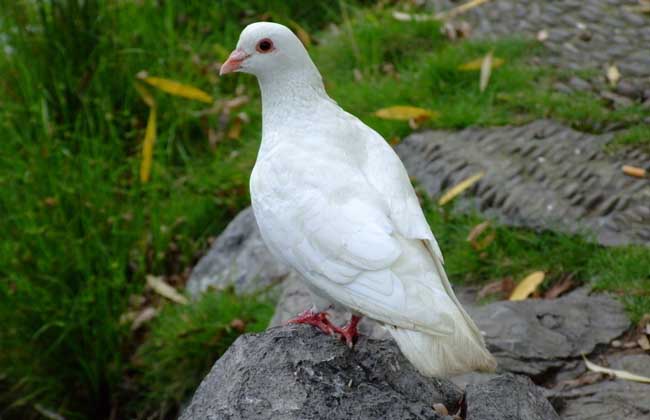
The pigeon is a very common bird, a general term for hundreds of species in the family Columbidae of the order Columbiformes, widely kept around the world, with feather colors including tile gray, blue, white, black, green, and pied; the pigeon we usually refer to is just one species in the genus Columba and is the domestic pigeon, which has lived alongside humans for thousands of years. Now let us take a look at what pigeons eat to lay eggs faster!
What do pigeons eat to lay eggs faster?
Let pigeons eat some relatively nutritious substances such as legumes, and at the same time let pigeons move around in a spacious area more often; this allows pigeons to have more contact and improves their nutrition, which can make pigeons lay eggs a bit faster. Moreover, after pigeons lay eggs there is no need to add any special food, because they will not easily switch to eating food they are used to; as long as there is corn, medium-ripe rice and paddy, mung beans, and peanuts, that is all fine.
What food is good for pigeons to eat?
Pigeon feed is mainly based on coarse grains, with the more commonly used ones being wheat, buckwheat, sorghum, corn, peas, mung beans, hemp seed, and peanut kernels. When feeding, at least two kinds of feed should be selected and mixed for feeding. For example, normally wheat, corn, and sorghum total 3 parts, peas 1 part; during training, change to wheat, corn, and sorghum total 3 parts, peas 1 part, hemp seed 1 part. Besides coarse grains, green feed such as leafy greens, cabbage, and wheat seedlings as well as mineral feed can also be provided. For the mineral feed ratio, use yellow clay and yellow sand 3 parts each, slaked lime 2 parts, salt 1 part, shell powder or eggshell powder 0.5 part, charcoal 0.5 part; after crushing, add water, mix, roll into balls, and dry in the sun. When feeding, break the balls apart and place them in the pigeon loft.
Why do pigeons not lay eggs?
1. Organic: Organic causes are due to old age, decline in physical condition, malnutrition, vitamin deficiency, and insufficient hormone secretion caused by other factors. As long as the cause is found and the right remedy is applied, it can be improved. If it is due to old age, it is best to let it produce pigeons according to a planned schedule; if it is other causes, only targeted treatment can be effective.
2. Organ-based: Organ-based causes are congenital malformation of the laying tract or blockage of the oviduct caused by disease infection, resulting in no egg production or inability to synthesize eggshells. This is more troublesome; if the pigeon is not too important, there is no need to spend too much effort on it.
Complete collection of pigeon feed formulas
1. Formula for 1-month-old young pigeons: 3 to 4 kinds of energy feed for young pigeons, accounting for 75 to 80%, and 1 to 2 kinds of protein feed, accounting for 20 to 25%.
2. From 1 month old to sexual maturity of pigeons: before pairing, young pigeons can also be called squabs, up to the young pigeon stage; you can choose 80% corn, 15% peas, and 5% mung beans to make pigeon feed.
3. Feed formula for breeding pigeons: you can choose 70% corn, 20% peas, 5% mung beans, 5% wheat, plus an additional 1 to 5% hemp seed to prepare pigeon feed.
4. Feed formula for adult pigeons: you can choose 40% corn, 20% brown rice, 10% sorghum or wheat, 20% peas, and 10% mung beans, while adding poultry multivitamins once a week to make feed for pigeons.