What are the breeding characteristics of the White King pigeon?
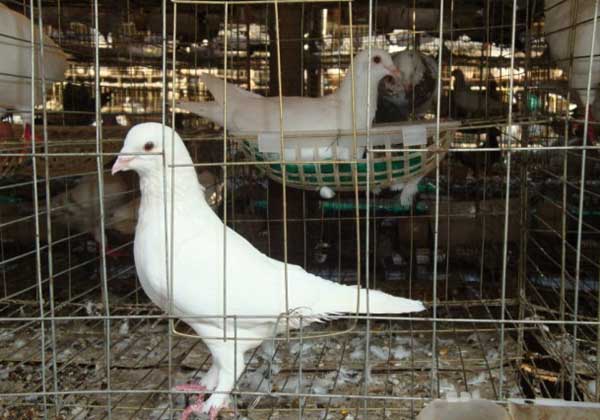
The White King pigeon is a bird of the class Aves, family Columbidae. Because it is rich in nutrients and also has medicinal value, it is regarded as an excellent tonic. Pigeon meat is neutral in nature, salty in taste and non-toxic, and is rich in protein and fat; pigeon eggs contain protein, fat, carbohydrates, calcium, phosphorus, iron, etc. Regular consumption of pigeon meat nourishes the kidneys and boosts qi and removes wind and detoxifies, and can treat chronic malaria; eating pigeon eggs can prevent measles. There are many breeds of meat pigeons, mainly the White King pigeon, the French Mondain, the Homer pigeon, the Shiqi pigeon, etc., and the one mainly promoted is the White King pigeon. The White King pigeon has the characteristics of strong reproductive capacity, large body size, fast growth, and tender meat.
Breeding characteristics of the White King pigeon
1. All-white with stable genetic genes. The White King pigeon has a uniform feather color, all white, and a white-skinned carcass. There is no difference whatsoever in body weight and feather color between second-generation squabs, and there is very rarely any atavism, fully meeting the quality standards for the domestic market and for foreign trade export.
2. Good production performance. Breeding pigeons of the White King pigeon produce 9-10 pairs of breeding eggs per year, and can raise 8-9 pairs of squabs. The fertilization rate and hatching rate of breeding eggs reach more than 95%, the slaughter rate of squabs is 85%, and the eviscerated carcass is 400-500 grams.
3. Large body size and fast growth. The average body weight of an adult male White King pigeon is 800-1000 grams, with the largest male pigeon at 1250 grams; the average body weight of an adult female pigeon is 750-900 grams. The average body weight of a squab at two weeks of age is 488 grams, and the average body weight at four weeks of age is 620 grams, with a first-grade commercial rate of 90%.
4. Strong disease resistance, high immunity rate, and very few diseases occur.
5. Tolerant of coarse feed and high in returns; the meat-to-feed ratio of squabs is only 1:6, and the meat-to-feed ratio of young pigeons is only 1:1.7.
In addition, the White King pigeon has another characteristic: compared with other meat pigeon breeds, its features are very obvious: a relatively round head, a protruding forehead, a thin beak and small nostrils, a broad and round chest, a large back and thick tail that is medium-long and slightly upturned, males large and females small, and it is very easy to identify.
Reproductive characteristics of the White King pigeon
Feeding results show that the White King pigeon is tolerant of rearing and has a high survival rate. With a good feed ratio, it can produce more than 8 clutches per year. Reserve breeding pigeons at 6-7 months of age can be paired to lay eggs, and squabs at 18-20 days can reach a body weight of 1-1.2 jin.
Feed formula for the White King pigeon
1. Feed combination: when combining feed, diversification should be achieved as much as possible and it should be avoided being too single, because when multiple feeds are mixed together, they play a role in complementing each other nutritionally, which helps improve the vitality or reproductive capacity of the pigeons. During the brooding period, breeding pigeons should use the following daily ration formula: (for reference) corn 40%, wheat 30%, peas (mung beans) 20%, brown rice 10%.
2. Health sand formula: supplying sufficient health sand is very important for raising pigeons well, especially for caged pigeons. During the brooding period, breeding pigeons should use the following formula: (for reference) methionine 0.3%, lysine 0.6%, Andrographis paniculata 0.5%, gentian 0.6%, iron powder 0.5%, alum 1%, multivitamins 1%, trace elements 1%, charcoal powder 4%, salt 4%, aged gypsum 6%, bone meal 10%, yellow mud 10%, shell powder 25%, medium-coarse sand 35%.