What essential equipment is needed for keeping pigeons?
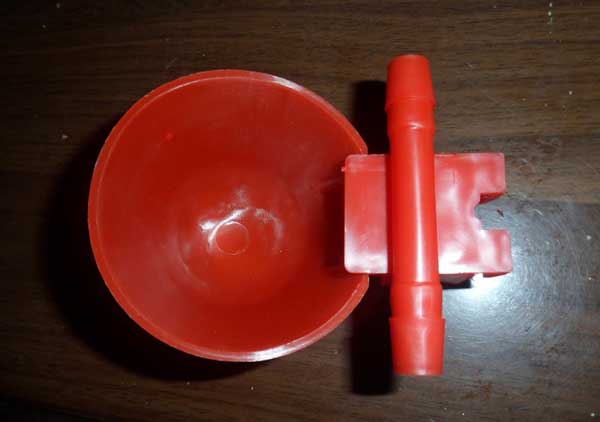
Pigeon-keeping equipment generally includes nest bowls, feed troughs, waterers, health-grit pots, perches, bathing basins, pigeon-catching nets, leg bands, bedding material, pairing cages and squab transport cages, etc.
Nest bowls and bedding
Nest bowls are used for pigeons to lay eggs and incubate. Square or round plastic basins, clay bowls, wooden basins and gypsum bowls can be used as nest bowls. The square open-mesh plastic baskets produced by some plastics factories, generally used for holding fruit and vegetables, measure about 16 cm along the side and about 8 cm in rim height, and work well as nest bowls. Round nest bowls woven from thin iron wire are also very practical, with a diameter of 20 cm and a height of 8 cm. Plastic nest bowls and iron-wire nest bowls are light, durable and well ventilated, resulting in fewer broken eggs, a high hatching rate and a high squab survival rate, and they are also easy to clean and disinfect. Clay bowls have poorer ventilation; in the rainy season and in poorly ventilated pigeon lofts, using clay bowls as nest bowls is not ideal. In addition, the number of nest bowls placed in a colony-keeping loft must be sufficient, because each unpaired young pigeon needs to occupy one nest, and one pair of breeding pigeons sometimes occupies 2-3 nest bowls, so generally the number of nest bowls should exceed the number of pigeons to meet their need to claim nests and reduce the fighting caused by nest-claiming. Bedding material must be laid properly in the nest bowl; the bedding should have good warmth retention, ventilation and resilience, keep the incubating eggs warm, keep the eggs from rolling and breaking easily, and make the breeding pigeons comfortable while sitting on the nest, thereby helping to raise the hatching rate. Commonly used bedding materials include rice straw, dry grass, rice husks, fine sand and burlap pieces.
1. Rice straw and other relatively soft dry grass have good warmth retention and average resilience. It is best to weave them into a round nest; unweaved grass material easily tangles around the pigeons' feet and may even drag the eggs out of the nest.
2. Rice husks have good warmth retention and resilience. The drawback is that they easily scatter out of the nest, so they must be constantly replenished, which also increases the cleaning workload.
3. Using several layers of burlap as bedding, or covering a layer of burlap over the grass material, provides both good warmth retention and resilience; after a few days of use, it can be washed, dried and reused.
4. Clean, dry fine sand is a good bedding material, with good warmth retention and cushioning performance; it also binds the droppings in the nest into clumps that are easy to remove. During the entire incubation period, it only needs to be replaced once before hatching. Whichever bedding material is used, it must be dry and clean, about 2 cm thick.
Feed troughs
There are many forms of feed troughs; they are where pigeons eat. For caged meat pigeons, the feed trough is hung on the front mesh of the pigeon cage: a round bamboo tube about 8 cm in diameter and about 40 cm long with a 5 cm opening, straddling between two cages for two adjacent pairs of breeding pigeons to use. For colony-kept meat pigeons, the feed trough is placed on the loft floor for the pigeons to use collectively; a long strip shape is best for easy feeding. There is a self-feeder type whose top is a lidded feed storage box divided into 4-6 compartments of different sizes, each holding one type of feed, so that pigeons eat according to their own needs; this kind of trough has the advantages of less feed waste and saving time and labor. A self-feeder 90 cm high, 91 cm long and 15 cm wide can hold 65-70 kg of corn, soybeans, wheat, sorghum, etc. in total, enough to feed 30 pairs of meat pigeons for 7-10 days. To prevent feathers and debris from falling into the feed, the feed trough should be 10-25 cm above the ground.
Waterers
Waterers should meet the following conditions:
1. They keep the drinking water clean, fresh and sufficient, and the pigeons' feet or bodies cannot get into them.
2. The water depth is at least about 2.5 cm, enough to submerge the cere, and adding water is convenient without wetting or dirtying the loft floor.
3. Pigeon droppings and debris cannot pollute the drinking water, and it is easy to clean and disinfect.
4. Economical and durable, convenient to use, and reasonably priced.
Waterers for colony-kept pigeons
The container must be able to hold water while preventing pigeons from splashing in it, and droppings and feathers should not easily fall into the water. Common types include tower-style and clay-jar waterers.
Waterers for caged breeding pigeons
1. Cup-type waterers, including ceramic cups, plastic cups and glass bottles with broken necks, with a capacity of more than 400 ml and an open mouth. Each pair or two pairs of breeding pigeons share one.
2. Trough-type waterers: the trough can be made of zinc sheet or plastic, with a length equal to the row length of the pigeon cages, suitable for medium and large pigeon farms. Water is added through a tap, and cleaning is convenient, but it is easily polluted by droppings and needs frequent wiping.
3. Pipe waterers: they can be made from plastic round pipes or iron sheet pipes 12-16 cm in diameter. According to the width of the pigeon cages, 4-6 cm oval openings are cut on top of the round pipe, one opening for each cage position, and water is supplied through a tap to ensure clean drinking water. To clean the water pipe, a piece of sponge tied with a nylon rope can be inserted from one end of the pipe and pulled out from the other end, repeated several times, to clean the dirt inside the pipe thoroughly.
Health-grit pots
They can be made from wooden boards, bamboo tubes or empty tin cans. Generally they should not be too large, and the health grit should not be filled too much, to avoid prolonged storage causing moisture and spoilage. The health-grit pot should be 6-8 cm deep, with a bottom diameter of 4-5 cm and a top opening diameter of 6 cm.
Perches
Pigeons like to stay high up. Colony-kept breeding pigeons, squabs and young pigeons often need perches. Perches are usually placed at the base of the loft walls or on the walls and around the exercise yard; they can be placed flat or at an angle. Apart from racing pigeon perches, which are more particular, meat pigeon perches are generally more flexible. Perches are usually made of bamboo or wood, 2-4 m long and 0.4-0.6 m wide or slightly wider. Generally, bamboo strips 1.5-2.0 cm wide are nailed at intervals of 10-30 cm on two wooden sticks or square bars. The number of perches should be enough for every pigeon to have a place to rest.
Bathing basins
Bathing basins are for pigeons to bathe in; they can be made of plastic, porcelain or wood, large or small, square or round. Generally one bathing basin is provided for every 40-50 pigeons, with a water depth of about 6 cm. As for bathing frequency, two or three times a month in winter and spring is suitable, and three or four times a week in summer and autumn. Each bath should be given between 10:00 and 15:00 on a sunny day. When external parasites are severe, medicated bathing can be carried out; after bathing, the dirty water should be poured out promptly to prevent pigeons from accidentally drinking it and becoming poisoned or ill.
Pedal-type pigeon feeder
The pedal-type pigeon feeder is used by only a few farms. When using it, put the compound feed into the feeding device and add an appropriate amount of clean water; hold the squab's neck lightly with the left hand, with the palm against the pigeon's back, pinch its mouth corners with the thumb and index finger, and pry open the pigeon's beak; with the right hand insert the feeder into the squab's mouth, then step on the switch, and the feed is poured into the squab's crop. Each step feeds one squab, and about 300-500 squabs can be fed per hour. During operation, take care to avoid injuring the squab's throat and tongue.
Leg bands
Leg bands, also called leg rings or pigeon rings, are made of plastic or aluminum sheet. To identify pigeons and keep pedigree records, breeding pigeons and young pigeons kept for breeding should all wear numbered leg bands. Usually young pigeons are banded at 7-8 days of age.
Pigeon-catching nets
Pigeon-catching nets are often used when artificially pairing breeding pigeons, selling breeding pigeons and isolating and treating sick pigeons. They are usually woven from nylon thread, hemp thread and mosquito netting. Several handles of different lengths can be made for the net according to the needs of the pigeon farm.
Squab transport cages
1. Wire-mesh transport cages: first make a four-tier square three-dimensional frame from square timber, each tier 18 cm high, with small-gauge wire mesh nailed around and between the tiers as partitions, and each tier fitted with a cage door; each cage can hold about 60-80 squabs.
2. Bamboo-strip transport cages: this kind of cage is 65 cm square, with a flat bottom, a turtle-back-shaped top, sides 13 cm high at the edges and 17 cm high in the middle, and a round cage door in the center of the top with an opening diameter of 16-20 cm; each cage can hold 35 squabs. The material must be strong enough so that the lower cages are not crushed flat during transport.