Detailed Explanation of Key Technical Points and Feeding Management Methods for Squab Pigeon Breeding
Superior breeding pigeons are large, robust, of pure feather color, highly adaptable, fast-growing and highly prolific. Generally, the breeding period can reach about 5 years, with a peak period of 3 years. The highest annual output of young pigeons from superior breeding pigeons is 18 (6-9 clutches), and the lowest is 12. Due to different nutritional levels, the egg-laying rate, fertilization rate and hatching rate of breeding pigeons also vary. When introducing breeding stock, select breeding pigeons with prominent breed characteristics, harmonious male-female pairing, and youth and vigor. Do not be tempted by low prices to introduce sexually immature young pigeons whose male-female pairs have not been formed (some young pigeons are actually one month old and need to be raised for another 5 months before they can be paired and start laying, which is not economical and cannot guarantee quality). Nor should you be taken in by “good looks” - those pigeons that appear large and robust are actually old and feeble breeding pigeons with reduced reproductive capacity that are about to be culled.
Feeding Management for Natural Brooding
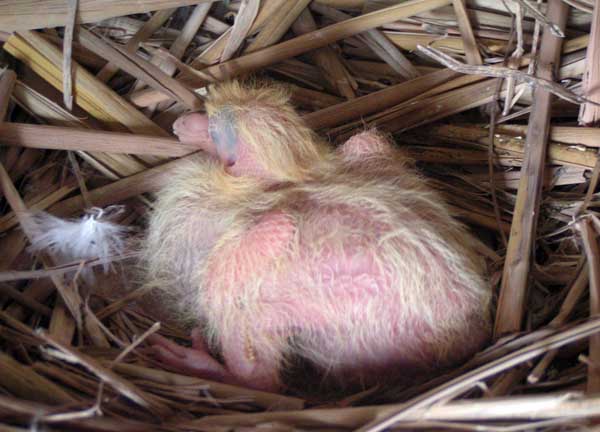
Squab refers to nestling pigeons within one month of age from hatching to leaving the nest for sale or retention for breeding. Pigeons are altricial birds. Newly hatched nestlings cannot open their eyes, cannot walk or feed freely, and rely entirely on their parent pigeons for feeding to survive. Their thermoregulatory ability and disease resistance are both very poor, making this the most dangerous period in a pigeon's life, requiring large amounts of nutrients. Therefore, the following points should be noted in feeding management:
1. Careful observation: If the breeding pigeon still does not feed the squab 5-6 hours after hatching, check and find the cause. If the breeding pigeon is ill, besides isolating it for treatment, the squab should be removed and placed in another nest. If the breeding pigeon is a first-time brooder and does not know how to feed, artificial induction of feeding should be used. The method is: gently place the beak of the newborn squab into the beak of the breeding pigeon. After several inductions, the breeding pigeon will learn.
2. Adequate nutrition: Newborn squabs first cannot walk or feed and rely entirely on parent pigeons for feeding; second, they grow and develop rapidly and gain weight quickly. For this reason, parent pigeons must be given nutrient-rich feed, especially increased protein feed, and the number of feedings must be increased.
3. Appropriate temperature: Newborn squabs have very short feathers and poor cold resistance. In cold winter, cold-proof and heat-preservation work must be done well. When the coop temperature is below 6°C, warming facilities should be added. In hot summer, heat prevention is needed. When the coop temperature is above 26°C, heat prevention work should be done well.
4. Rotating squab positions: To avoid one squab in a clutch being large and the other small with great differences in individual development, the method of rotating positions and balancing care should be adopted. Specifically, before 6-7 days of age when squabs can stand, rotate the positions of the two squabs in the same clutch once every 2-3 days so that they receive balanced care from the breeding pigeons.
5. Merging squabs: If only one squab is hatched in a clutch, or if only one remains from a pair of squabs due to mid-way death, it can be merged into another single-squab or double-squab nest with the same or similar age. This can avoid the phenomenon of crop impaction caused by the remaining single squab often being overfed by the parent pigeons. When first merging nests, observe carefully whether the parent pigeons refuse to feed or peck at the newly merged squab.
6. Careful disease prevention and control: When squabs reach 7-9 days of age, parent pigeons begin to switch from feeding all crop milk to feeding whole grains. At this time, squabs cannot yet adapt well to grain feed, and indigestion and crop impaction often occur. When first merging nests, observe carefully and solve problems promptly when found. For squabs with indigestion, half a yeast tablet and 1-2 grains of health sand can be fed daily. In winter, Sangju Ganmao tablets can be fed, half a tablet daily, to prevent colds and eye inflammation.
7. Strengthen feeding on wire mesh: Some parent pigeons lay eggs again when squabs are about 15 days old. At this time, squabs can be placed on wire mesh for rearing. Some of these parent pigeons will continue to feed the squabs, while others have no interest in feeding. Therefore, observe carefully, and for those unwilling to feed or not feeding in time, carry out artificial feeding or find foster pigeons to feed them.
8. Keep nests and housing clean and dry: Nest bowls and bedding straw contaminated by feces and dampness should be replaced promptly. The housing should be disinfected regularly and kept clean and dry to keep away disease outbreaks.
9. Pay attention to providing health sand: To ensure squab health and increase the market weight of squabs, health sand should be provided to squabs on time every day to increase trace elements and vitamin content and prevent indigestion in squabs.
10. Put on leg bands in time: For meat pigeons, chicken wing number tags are used instead of leg bands, with numbers printed on them as marks of birth time and to distinguish sibling pigeons.
11. Grasp the market time: According to market demand, squabs can generally be marketed (or purchased) at 20-25 days of age. Based on practice, marketing at around 23 days of age gives the most cost-effective meat-to-feed ratio. Squabs retained for breeding must be about 30 days old, when they can live independently, before being taken away from the parent pigeons.
Artificial Rearing Technology for Squabs
Artificial rearing of squabs refers to artificially feeding nestling pigeons hatched from incubators with artificially compounded feed. This can advance the laying of the next clutch by 10 to 20 days, thereby improving the production performance of parent pigeons and increasing economic income.
1. Preparation of rearing feed
For squabs 1-3 days old, fresh sterilized milk, glucose, vitamin B10 water and digestive enzymes can be used to prepare a fully thick feed for feeding.
For 4-6 days old, fresh milk or milk powder can be used, with cooked egg yolk, glucose, multivitamins and digestive enzymes added, to prepare a fully thick feed for feeding.
For 7-10 days old, rice powder, glucose, milk powder, flour, peas, protein digestive enzymes and yeast tablets can be added to congee to make a semi-thick liquid feed.
For 11-14 days old, rice porridge, bean powder, glucose, oatmeal, milk powder and yeast tablets are mixed into a liquid feed.
For 15-20 days old, corn, sorghum, wheat, peas, mung beans, broad beans, etc. can be ground and mixed with milk powder and yeast tablets to make a semi-liquid feed.
For 20-30 days old, the above raw materials can be used in larger granules and mixed with boiling water into a slurry for feeding.
After 30 days of age, raw materials such as corn, sorghum and peas can be placed for pigeons to peck slowly. After 1-3 days, the pigeons will feed according to their own needs.
2. Rearing methods
Weigh out the required amount of feed prepared according to squab age, pour it into a basin, and soak it in boiling water for 30-60 minutes. After softening, the feed becomes liquid or gelatinous, making it easy for squabs to digest and absorb and convenient for filling with a feeding machine. Then group the squabs requiring artificial feeding separately by age in rearing cages and feed them by manual operation.
Newly hatched squabs have small appetites, and artificial feeding is relatively difficult. It is best for two people to operate: one person holds the squab, and the other inserts the rubber tube slowly into the esophagus with a syringe. Movements should be gentle to prevent the rubber tube from entering the trachea or injuring the esophagus, and to prevent feeding too much and causing esophageal swelling and indigestion.
For artificial feeding of 1-3 day old squabs, a 20 ml syringe with the needle removed and a small-hole soft rubber tube attached can be used. Do not feed too much each time. Feed 4 times a day (8 AM, 11 AM, 4 PM, 9 PM).
For 4-6 day old squabs, a small hanging bucket or feeding device can be used. Pour the prepared milk feed into the hanging bucket and hang it above the squabs so the feed flows into the rubber tube. After the rubber tube is inserted into the esophagus, open the tube clamp, and the feed automatically flows into the pigeon's crop. Use the clamp to control the output and prevent too much feed from flowing. Feed 4 times a day, at the same times as for 1-3 day old squabs.
For squabs after 7 days of age, a suitable filling machine can be used. First pour the soaked prepared feed into the hopper of the filling machine, insert the rubber tube into the squab's esophagus, step on the switch with the right foot, and the feed enters the crop. The amount fed can be controlled by the foot switch. Each press of the foot switch fills the squab once. When proficient, each person can feed about 500 squabs per hour. Feed 3 times a day at 8 AM, 3 PM and 9 PM. Do not feed too full each time to avoid indigestion.
When artificial rearing is used for squabs, the nutritional cost of the feed increases by 20%-30%. Coupled with careful manual management, squabs grow and develop somewhat faster than with natural brooding. According to reports, artificial rearing of squabs can not only improve the production performance of breeding pigeons, but also relatively increase squab body weight, raise the qualification rate of squabs for market, and increase economic income.