How to Select Meat-Type Breeding Pigeons? A Detailed Guide to Selection Methods and Techniques
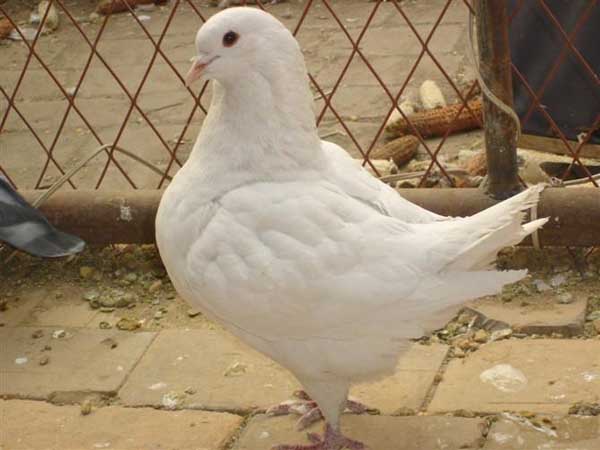
The ultimate purpose of raising meat pigeons is to produce squabs for consumption and obtain economic benefits, so the quality and production performance of meat-type breeding pigeons are the key to the success or failure of meat pigeon farming. Beginners must strictly control the selection of breeding pigeons.
Breed Selection
As mentioned earlier, there are more than 40 breeds of meat pigeons, but currently not many breeds are raised in China. Most farms mainly raise hybrid King Pigeons, while the numbers of purebred King Pigeons and Shiqi Pigeons are not large, and other breeds are even fewer. Therefore, beginners should not blindly pursue purebred meat pigeons; as long as they can purchase good-quality hybrid King Pigeons, the goal of producing squabs can be achieved.
Appearance Selection
When selecting breeding pigeons, they should first conform to the breed characteristics of that breed. For example, the American King Pigeon should have a short, squat, plump body, a broad chest, a round back, and a short, upturned tail, closely resembling a “hen's body shape”; the Shiqi Pigeon has a long body, long wings, and a long, flat, straight tail, shaped like the “banana bud” of a banana plant. Second, breeding pigeons should be well developed, robust in constitution, with a broad forehead, a short beak, large and spirited eyes, a deep chest protruding forward, a straight keel, a flat, broad, and long back, and a large, soft abdomen; male pigeons should have hard pubic bones, while female pigeons should have thin, soft, and wide pubic bones, with smooth, glossy feathers that cling tightly to the body.
Body Weight Selection
Most beginners prefer to select large-bodied pigeons as breeding stock when purchasing. However, from the actual production situation, overly large breeding pigeons have difficulty mating due to their heavy body weight, resulting in low fertilization rates and easy egg breakage during incubation, so the overall reproduction rate is not high; smaller breeding pigeons have a relatively higher reproduction rate, but most have poor feeding ability, resulting in a relatively low commercial rate of the squabs produced. Therefore, in production, it is advisable to select breeding pigeons of moderate size, generally with male pigeons weighing 650-800 grams and female pigeons weighing 550-700 grams.
In addition, when purchasing reserve breeding pigeons, attention should also be paid to individual matching. Usually male pigeons are relatively larger and female pigeons are relatively smaller. If large individuals are deliberately selected, it often causes a serious imbalance in the sex ratio, resulting in unnecessary losses.
Age Selection
Generally, meat pigeon farms provide breeding pigeons divided into reserve breeding pigeons and production breeding pigeons. The former are young breeding pigeons aged 1-4 months, and the latter are paired breeding pigeons aged over 5 months. The price of reserve breeding pigeons varies with age and is cheaper than production breeding pigeons. Therefore, many beginners choose reserve breeding pigeons to save money, but reserve breeding pigeons have poor adaptability to the environment, are prone to illness, and are difficult to raise. If one lacks sufficient breeding experience, it is easy to fail in raising them. Therefore, beginners should purchase paired breeding pigeons aged 5-6 months. After purchasing such breeding pigeons, as long as they are carefully raised, most of them will lay eggs and enter the reproductive period within 15-20 days, so the breeding risk is relatively small.