A detailed explanation of how to prepare health sand for pigeons
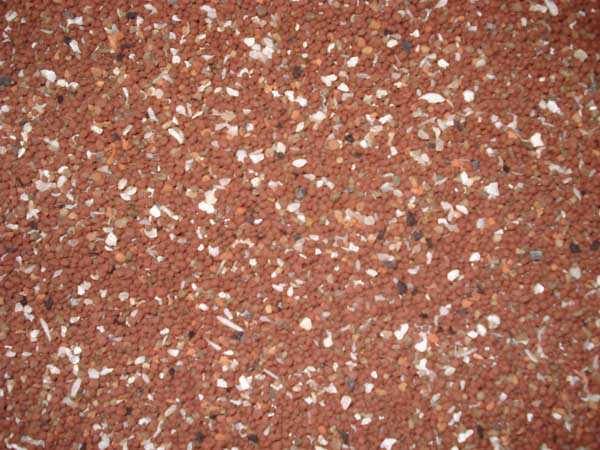
Health sand, namely mineral feed, contains the minerals essential to pigeons and is used to supplement the deficiency of minerals in the daily ration. Today we will briefly introduce some of the main ingredient components of health sand, their functions, and how to prepare and use health sand.
Main ingredient components and their functions
1. Oyster shell flakes. These are made by crushing oyster shells with a grinder, with a diameter of 0.5-0.8 cm, that is, about the size of a cut pea. Some people process oyster shells into powder, but pigeons do not particularly like to eat it; flake-form oyster shell helps the digestive function of the pigeon's gizzard. According to reference materials, the components contained in oyster shell flakes are: calcium 38.1%, phosphorus 0.07%, magnesium 0.3%, potassium 0.1%, iron 0.29%, chlorine 0.01%. Abundant calcium is the main source of calcium provided in health sand. It can promote the normal growth and development of the body and prevent pigeon rickets and soft-shelled eggs, etc. In addition, it is also related to enzyme metabolism and the formation of clotting factors.
2. Bone meal. It is made from animal bones that have been sterilized at high temperature and then crushed. Its components include: calcium 30.7%, phosphorus 12.8%, sodium 5.69%, magnesium 0.33%, potassium 0.19%, sulfur 2.51%, iron 2.67%, copper 1.15%, zinc 1.3%, chlorine 0.01%, fluorine 0.05%, etc. It is the main source of calcium, phosphorus, and iron, and is a raw material with relatively high phosphorus content. Calcium and phosphorus depend on each other in the body; only after both are absorbed in a certain proportion can a hard yet tough skeleton be formed in the body. When phosphorus is deficient, the bones become porous and brittle and break easily. Therefore, bone meal can prevent poor development, skeletal deformation, and rickets in young pigeons, and prevent female pigeons from laying soft-shelled eggs, thin-shelled eggs, and sand-shelled eggs, etc. The iron element in bone meal has a good effect on the formation of hemoglobin and the prevention of anemia. When purchasing bone meal, note that raw animal bone meal that has not been steamed and sterilized, bone meal used as fertilizer, and bone meal ground by processing plants often carry pathogens and impurities and cannot be used as an ingredient, otherwise it is likely to cause disease in pigeons.
3. Eggshell powder. When oyster shells or bone meal are unavailable, it is also suitable for pigeon fanciers who keep a small number of pigeons. Before use, first fry the eggshells until cooked, then crush them and they are ready to use. Main components: calcium 34.8%, phosphorus 2.3%. Its function is similar to the above two.
4. Lime (or limestone): Its function is to supplement calcium and a small amount of trace elements. Slaked lime is relatively alkaline, so the amount used should not be too much, generally about 5%.
5. Aged gypsum. Not many people use it, and the amount used is generally about 5%. It contains relatively much calcium. Its function is to supplement the need for calcium, etc., and to clear heat and detoxify. According to reference materials, gypsum also has a good promoting effect on pigeons' molting from August to October. During this period, it can be appropriately included in the health sand.
6. Coarse sand. It is best to use sand from streams and rivers. After collecting it, screen it appropriately, discard the small particles and large particles, select medium particles, wash them clean with water, place them in the sun to dry for 2-3 days, and then bag them for later use. The main function of sand is to help the gizzard mechanically digest the feed. Under the pressure of the gizzard, the ingested granular feed is ground, making it easier for the intestines to digest and absorb. Sand particles are also slowly crushed in the gizzard, and part of the trace elements in them is utilized by the body. The absence of sand particles in health sand can easily lead to indigestion in pigeons and reduce the utilization rate of feed.
7. Stone rice. People like to use it to replace sand particles. Use by some pigeon farms has shown that stone rice is superior to sand particles. The reason is that, in addition to having the effect of sand particles, stone rice also has the advantages of being available from more sources, uniform in size, clean and easy to use, and free of impurities. Stone rice is harder than sand and is not easily ground in the gizzard, but there is no need to worry that eating a lot will accumulate in the gizzard. Pigeons themselves can peck an appropriate amount of stone rice according to their needs, and through internal regulation and digestive function they can excrete part of the finer stone rice in the droppings. In addition, the pressure and acidity of the pigeon's gizzard are very great, enough to grind or crush the stone rice and excrete it within a few days.
8. Yellow mud. Some people call it red soil or loess. It can be dug up almost anywhere, but care should be taken to dig deep-layer yellow mud so that it does not contain bacteria and impurities. After the yellow mud is dug out, place it in the sun to dry, then put it into bags for later use. Yellow mud contains many trace elements such as iron, zinc, cobalt, manganese, and selenium. Its function is to serve as a raw material of health sand and to provide a small amount of trace elements. Because current health sand contains macro elements or trace elements and so on, yellow mud is already used little or not at all in current health sand formulas.
9. Charcoal powder. The surface of charcoal powder has a very strong adsorption effect. It can adsorb harmful gases produced in the intestinal tract, remove harmful chemical substances and pathogens such as bacteria, and also has an astringent and anti-diarrheal effect. In the intestinal tract, it can adhere to the digestive tract mucosa and protect the intestinal canal, but on the other hand, it will also adsorb nutrients and affect the digestive and absorptive function of the intestinal tract. Therefore, the amount used should not be too large, generally controlled within 5%. During use, it is best to constantly vary the amount, once a week, with a variation range of 1%-5%.
10. Salt. Coarse-grained sea salt is ideal. Its main components are chlorine and sodium, and it also contains a small amount of potassium, iodine, magnesium, and other elements. Pigeon keeping requires salt to supplement the elements needed by the body. In addition, salt also has the effect of enhancing appetite and promoting metabolism, and is an indispensable supplement. However, meat pigeon technology has a certain limit on the amount of salt used; excessive intake can cause poisoning. The amount of salt used is generally 2%-5%.
11. Red iron oxide. It is actually iron oxide and is reddish-brown, hence called red iron oxide. It can be purchased from paint stores, but care should be taken that it does not contain other substances. The main function of red iron oxide is to supply the iron needed by the body, synthesize hemoglobin, and promote blood circulation. It should not be used in too large an amount; 0.5%-1% is suitable.
12. Commonly used additives.
(1) Growth promoters. The growth promoters mentioned here are a collective term, generally referring to a collection composed of various nutritional components and drugs used in extremely small amounts that directly or indirectly promote animal growth. Domestic and imported growth promoters differ somewhat in composition, and those produced by different manufacturers also vary, so their ingredients should be understood when using them. Overall, the components of growth promoters mainly supplement the macro elements, trace elements, and other nutrients needed for the growth and development of pigeons. The amount used generally accounts for 1%-2% of the health sand. Of course, they can also be added to the feed.
(2) Brown sugar. As a nutritional additive, its main functions are to increase energy, supplement body fluids, strengthen myocardial power, and also increase the osmotic pressure of the body, causing tissue dehydration, with diuretic and detoxifying effects. As an additive to health sand, brown sugar is mainly used to increase heat energy, enhance the cold resistance of pigeons (especially squabs) in cold weather, and prevent frostbite and freezing to death. If there is no brown sugar, slab sugar and glucose, etc., can be used. The amount used is generally 2%-3%. Because adding sugar to health sand easily makes it deteriorate and become damp, it should be added to the prepared health sand on the same day and used immediately after preparation.
Preparation and use
1. Measure the feed intake of pigeons. Only by carefully measuring the amount of health sand ingested by pigeons can various nutrients and drugs be given relatively accurately, avoiding insufficiency or waste. Measurement method: randomly select 20 pairs of normal parent pigeons (including breeding pigeons and non-breeding pigeons). Measure continuously for 28 days and take the average to obtain the daily intake per pigeon. The amount of health sand used should not be measured for only a few days, because breeding pigeons have different intake of health sand throughout the entire brooding period. The general intake situation is: they eat relatively little in the first few days after hatching, gradually increase after 4 days, eat the most at 1-3 weeks of age, and then slowly decrease after 3 weeks. This is because parent pigeons can regulate their own intake of health sand according to the needs of squab growth.
2. Issues to note when preparing health sand. When preparing health sand, first, check whether the various ingredients used are pure and whether there are impurities or moldy and spoiled conditions. Second, when mixing the ingredients, mix from less to more and stir multiple times. For ingredients used in relatively small amounts, such as red iron oxide and growth promoters, a small amount of health sand can first be taken and mixed evenly, then mixed into all of the health sand. Third, after health sand is prepared, it should not be used for too long, otherwise it will not be fresh and will easily deliquesce and deteriorate. Generally, the main ingredients of health sand, such as oyster shell powder, bone meal, coarse sand, red mud, and growth promoters, can first be mixed well, in an amount sufficient for the pigeon flock to consume for 3-4 days, and then the ingredients used in small amounts and those prone to oxidation and deliquescence can be mixed in each day before feeding the health sand. In this way, the quality and effect of the health sand can be guaranteed.
3. Methods of using health sand. It is very necessary to master the correct methods of using health sand. If used improperly, it cannot exert the role of health sand. Therefore, the methods of using health sand must be mastered.
(1) Health sand should be prepared and used immediately to ensure freshness and prevent certain substances from being oxidized, decomposed, or undergoing adverse chemical changes that affect efficacy.
(2) It should be supplied regularly and quantitatively every day. Generally, it can be fed after the morning feeding. The amount given each time should also be appropriate. Parent pigeons during the brooding period should be given more, while those not in the brooding period should be given less. Usually, each pair of pigeons is supplied 15-20 grams.
(3) The remaining health sand should be thoroughly cleaned up once a week and replaced with newly prepared health sand to ensure quality.
4. The formula of health sand should vary according to the state of the pigeons, the needs of the body, and the season, etc. It cannot remain unchanged, so that it can suit the actual needs of meat pigeon production.