What are the costs and profits of pigeon farming?
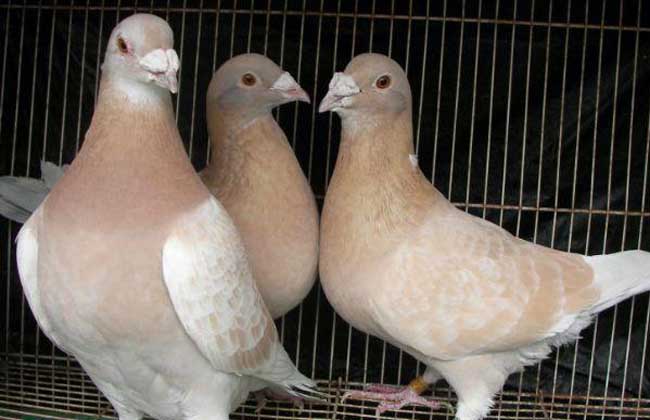
After steady development following the 1990s, the pigeon farming industry has gradually matured. At present, market prices are relatively high, and pigeon farming has once again attracted the attention of many investors. But no matter how mature any farming industry is, it must constantly withstand the test of the market. Investors must plan ahead, work out the economic accounts thoroughly, and develop pigeon farming at the right time according to their own financial strength and local conditions.
Below, taking a pair of cage-raised pigeons as an example (cage rearing, with each cage having 3 tiers, each tier holding 4 pairs of pigeons, and each cage holding 12 pairs of pigeons), the economic benefits are calculated separately at the current market price and at the protective price of leading enterprises during a market trough, for reference.
Calculated at current market prices, income situation in the first year
1. Total input cost for a pair of pigeons
① Tools such as cages, feed troughs, and water troughs need to be purchased for 50 yuan.
② Purchasing a pair of breeding pigeons costs 40 yuan.
③ A pair of young pigeons needs 50 grams of feed per day, and the feed price is 1.34 yuan per kg. The growing period lasts 4.5 months, consuming a total of 6.75 kg of feed (4.5 months × 30 days × 50 grams), costing 9 yuan in total (6.75 kg × 1.34 yuan). One breeding cycle of pigeons is 45 days. After the breeding pigeons mature, they can still produce 5 clutches in the remaining 7.5 months. During the brooding period, the breeding pigeons consume 100 grams/day of feed, and the feed price is 1.54 yuan/kg. The brooding period is generally 25-28 days. If calculated at an average brooding period of 27 days, the 5 clutches of squabs consume a total of 13.5 kg of feed during the brooding period (27 days × 100 grams × 5 clutches), totaling 20.79 yuan (13.5 kg × 1.54 yuan). Feed consumed during other times is 4.5 kg, (7.5 months × 30 days — 27 days × 5 clutches) × 50 grams, totaling 6 yuan. Therefore, the first year requires a feed cost of 35.79 yuan (9 yuan for the growing period + 20.79 yuan for the brooding period + 6 yuan for other periods during brooding).
④ Epidemic prevention and other costs are 2 yuan.
⑤ Water and electricity costs are offset by income from selling manure. Therefore, the total input in the first year is 127.79 yuan (50 yuan for tools + 40 yuan for breeding pigeons + 35.79 yuan for feed + 2 yuan for epidemic prevention and other costs).
2. Gross income in the first year: the current price of 25-28 day old squabs is 9 yuan each. Calculated at this price, 5 clutches produce a total of 10 birds, for a gross income of 90 yuan.
3. Net profit in the first year: the breeding period of breeding pigeons is generally 4-5 years. Calculated at a 4-year service period, with tool costs depreciated over 10 years, the net profit is 37 yuan (90 yuan — 40 yuan × 1/4 — 50 yuan × 1/10 — 35.79 yuan — 2 yuan).
Calculated at current prices, income situation in the second year and each year thereafter
After the second year, only costs such as feed and epidemic prevention need to be invested. After pigeons enter normal production, they can lay 8 clutches of eggs per year, with 2 birds per clutch, producing a total of 16 squabs and achieving a gross income of 144 yuan; the annual feed requirement is 36.5 kg, equivalent to 56.2 yuan, plus 2 yuan for epidemic prevention and other costs, for a total annual input of 58.2 yuan; the net profit obtainable is 72.8 yuan.
Suggestions and points for attention
Under normal circumstances, one person can raise 500 pairs of pigeons in cages, with an average annual net profit of 20,000-35,000 yuan. Meat pigeon farming has low feeding costs, a short cycle, quick results, and high economic benefits. It is very suitable for housewives to engage in courtyard farming and is a good project for becoming wealthier.
1. Developing the pigeon farming industry should rely on leading enterprises and establish a stable contractual relationship with them. For any mature farming industry, the ultimate model is “leading enterprise + base”, “leading enterprise + farmers”, or “leading enterprise + cooperative organization + farmers”. For farmers, relying on leading enterprises and establishing a stable contractual relationship with them can effectively reduce market risks and ensure no loss. Enterprises generally implement a one-stop service, which for new breeders can well relieve worries about farming technology, feed, and sales, allowing them to devote all their energy to farming and increase economic benefits.
2. Investing in pigeon farming requires persistence. Farming is a continuous process, and pigeon farming is no exception. Before investing, you must make long-term plans. If you invest this year and stop raising them next year, you will certainly lose everything. Therefore, once you have chosen the right project, you must persist, and appropriately adjust the scale and varieties according to market conditions, so as to ensure making big money when the market is good and not losing money when the market is poor, ultimately becoming a big winner in the farming industry.