How should coughing and wheezing in meat pigeons be treated?
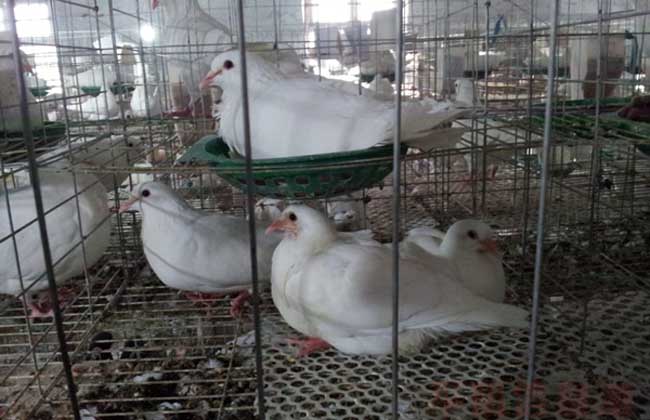
Clinical symptoms
Sick pigeons cough, their respiratory rate increases, bubbling sounds can be heard with breathing, and they drool mucus from the mouth. There is mild fever and difficulty breathing, manifested as panting, even open-mouth breathing, cyanosis of the oral mucosa, and exhaled gas with a foul odor. The body gradually becomes emaciated, to the point of being unable to fly, and some have diarrhea; in some cases, airsacculitis also occurs. When this disease occurs, it often begins as bronchitis, then gradually worsens and develops into lobar pneumonia, and even pulmonary gangrene. Severe cases of affected pigeons may also die from suffocation. Those that do not die will turn into chronic pneumonia, with a prolonged course and secondary complications.
Prevention and control measures
To prevent this disease, attention should usually be paid to maintaining good cleanliness and hygiene, and strengthening feeding management. Do not let pigeons drink cold water or eat soft feed, and eliminate irritating gases in the pigeon loft. In winter, attention should be paid to cold protection and warmth retention, especially to prevent squabs and young pigeons from catching cold. The feed should be of good quality and fresh to enhance the disease resistance of the pigeons. Flight training should also be carried out gradually and must not make the pigeons overly fatigued. When administering oral medication or hand-feeding squabs, extra care must be taken not to let drugs or feed enter the trachea and lungs. Sick pigeons can be treated with the following drugs:
① Keling (composed of bitter apricot kernel, platycodon root, perilla leaf, pinellia tuber, licorice, borneol, etc.), mix one packet with 10 kg of feed and administer continuously for 3 days.
② Penicillin or streptomycin orally, 50,000 units per pigeon each time, 2 times a day, for several consecutive days; injection is also possible, but attention should be paid to streptomycin allergic reactions, and it should be used with caution. Orally there is generally no reaction.
③ Kanamycin intramuscular injection, 40,000 units per pigeon each time, once a day, for several consecutive days.
④ During treatment, also administer 1 tablet of vitamin C and 1-2 drops of cod liver oil, once a day, for several consecutive days.
⑤ Combining treatment with traditional Chinese medicine gives better results. Specifically, use: 10 g of Scutellaria baicalensis, 7 g of platycodon root, 5 g of ephedra, 7 g of apricot kernel, 7 g of pinellia tuber, 7 g of loquat leaf, 4 g of mint (added later), and 4 g of licorice; decoct the juice for 10 adult pigeons to drink, 1 dose per day, for 3 consecutive days.