Meat pigeon farming techniques explained with video tutorials
The meat pigeon is a type of domestic pigeon bred specifically for producing squabs for meat. It was developed by humans over a long period through crossbreeding and careful selection. At present, meat pigeon breeds include the Shiqi pigeon, King pigeon, and hybrid King pigeon.
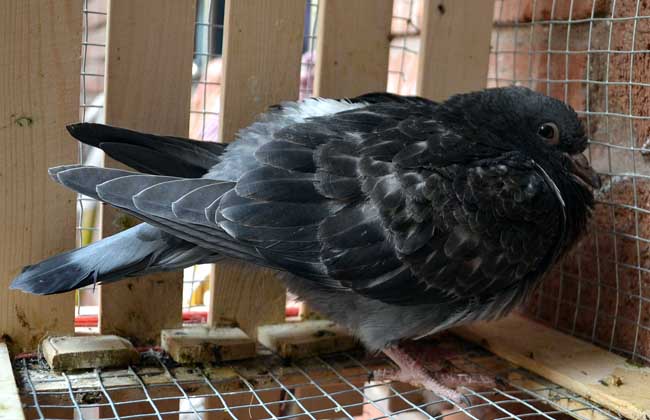
The value of meat pigeon farming
1. Analysis of the economic value of meat pigeons
Pigeon meat is tender and delicious, ranking first among blood-and-flesh foods. Testing has shown that squab contains more than 17 kinds of amino acids, with total amino acids reaching as high as 53.9%, and it also contains more than 10 trace elements and multiple vitamins. Therefore, pigeon meat is both an ideal food that is high in protein and low in fat, and a high-grade tonic and nutritional product.
2. Analysis of the benefits of meat pigeon farming
Meat pigeons have the characteristics of simple feeding and management, low farming costs, and strong adaptability:
① Simple management. Female pigeons lay eggs, incubate them themselves, and raise the squabs themselves. Squabs can be marketed once they reach 500 grams in weight, unlike other poultry whose eggs and chicks all require artificial incubation and hand-feeding, and must be managed in three stages: chick, growing, and adult. Meat pigeons have strong immunity and relatively strong disease resistance; devastating diseases that easily infect other poultry rarely occur in pigeons.
② Low cost. Raising one pigeon requires a cost of 7 yuan, while one adult pigeon can sell for about 12 yuan at current market prices.
③ Strong adaptability. The suitable temperature range for meat pigeons is -4°C to 40°C, so they can be raised in every region of our country.
3. Market analysis of meat pigeons
At the beginning of this century, due to economic prosperity in the United States, people's levels of daily consumption generally rose, and the dietary structure underwent a fundamental change. Pigeon meat not only entered public venues such as hotels and clubs, but as people gained further understanding of the nutritional value of squab, residents of some countries in Western Europe and Southeast Asia also developed the habit of eating pigeon meat, and a trend of "replacing chicken with pigeon" emerged. In our country, with economic development and the adjustment of people's dietary structure, domestic meat pigeon consumption has also increased year by year. Hong Kong, China has an annual demand for meat pigeons of more than 10 million birds, and in peak years annual meat pigeon consumption reached as many as 100 million birds. In addition, the annual meat pigeon consumption in major cities such as Guangzhou, Shanghai, and Shenzhen is also more than 1 million birds each. At present, our country's pigeon farming industry has transitioned from the initial breeding-stock supply stage to the commercial production stage.
Squab rearing and management
Pigeons from hatching to 28 days of age are collectively called squabs (in some regions, from birth to 10 days of age they are called newly hatched squabs, and from 10 to 20 days of age they are called squabs).
1. Two hours after the squabs hatch, the parent pigeons begin to blow air and secrete pigeon milk to the squabs with their beaks. After another 2 hours, the parent pigeons begin to feed pigeon milk. At this time the squabs are small and weak and prone to death, so management must be strengthened. First, observe carefully and take care to prevent them from being trampled or frozen to death by the breeding pigeons. If newly hatched squabs still cannot get pigeon milk after 5 to 6 hours, find out the cause promptly (if necessary, feed the squabs artificial pigeon milk). If the parent pigeons are found not to be feeding, the squabs can be fostered by breeding pigeons of the same period, which can also avoid some parent pigeons feeding only a single squab and improve production capacity.
2. After 3 to 4 days of age, the squabs' eyes slowly open, their bodies gradually become stronger, feathers begin to grow, food intake gradually increases, and digestive power strengthens. At this time the parent pigeons must frequently feed the squabs, sometimes as many as a dozen times a day, so the feed supplied to the parent pigeons must be sufficient and rich in nutrients to meet the demand. At this time the squabs' droppings increase, easily contaminating the nest, so the mat cloth and bedding straw should be replaced promptly every day to prevent disease.
3. At 10 days of age, many new feathers have grown on the squabs and they can move around on their own. The parent pigeons shorten the time spent keeping the squabs warm, and the food they feed the squabs changes from pigeon milk to semi-granular feed. A small number of squabs cannot fully adapt and often develop indigestion and crop inflammation. When this happens, yeast tablets or stomachics should be fed promptly to help digestion.
4. At 15 days of age, the squabs' whole body feathers are basically fully grown and they move freely. They can be taken out of the nest, and a piece of cloth measuring 20 cm × 20 cm should be spread in the cage to let them gradually adapt without spraining their feet. At this time the feed given by the parent pigeons is granular, the same as the feed they eat themselves, and most parent pigeons begin laying eggs again and are not focused on feeding the squabs, so artificial feeding should be added during this period.
5. After 20 days of age, the squabs have full feathers and can move around the cage, but they cannot yet fully peck food on their own and still rely on the parent pigeons, though they can actively beg food from them. At this time the parent pigeons will force them to feed independently. Management should be strengthened and more high-protein feed supplied to meet the squabs' needs. When squabs grow to 25 to 28 days of age, their body weight can reach 500 to 750 grams, and they can be sold (at this time the squabs are called squabs for meat).
Rearing techniques for young pigeons
From 28 days of age when they leave the nest until they are transferred to another group, where conditions permit it is best to achieve the "three unchanged": feeding in the same place, feeding by the same keeper, and the same feed unchanged. This can promote normal growth and development of the squabs. Young pigeons within 2 months of age are difficult to raise because they transition from being fed by the parent pigeons to independent living, so feeding management must be strengthened, attention paid to warmth and ventilation, and the supply of health grit and nutrients in the feed increased to boost disease resistance and ensure normal growth and development. At this time, achieve the "three looks and three checks": the "three looks" are looking at activity, looking at appetite, and looking at droppings; the "three checks" are checking whether they have eaten feed, checking whether they are overcrowded, and checking whether they have been pecked and injured. Those that cannot get feed can be fed separately, those pecked and injured should be cared for promptly, the aggressive ones should be raised separately, and overcrowding can be solved by expanding the group. At 2 months of age, the squabs begin molting, and protein feed in the diet should be appropriately increased to promote feather renewal. Add 5% hemp seed to the feed, add Chinese herbal medicines such as Andrographis paniculata or gentian to the health grit, and add small amounts of antibiotics to the drinking water in a planned way to prevent respiratory diseases and paratyphoid. During this period, special attention should be paid to the hygiene of the cages and feeding and drinking utensils, which should be washed and disinfected on time. At 3 to 4 months of age, secondary sexual characteristics begin to appear and activity capacity becomes stronger and stronger. At this time, selection should be carried out to keep the superior and remove the inferior, males and females should be raised separately, or they should be forcibly placed in cages for pairing, and the pigeon flock should be dewormed to ensure normal growth and development.
Breeding pigeon rearing techniques
1. Selection of breeding pigeons: The purpose of selection is to obtain squabs with good meat quality and high yield, so as to obtain good economic benefits. When selecting, a comprehensive evaluation should be made from the aspects of individual quality, pedigree, and progeny.
① Selection by individual quality
a. Body type: According to the characteristics of different breeds, keep those that conform to the body type and appearance characteristics of the breed for breeding.
b. Body condition: Eyes alert, iris clear, whole body feathers glossy, wings and feet free of deformities, conforming to the breed characteristics.
c. Reproductive capacity: Lays many eggs and the individual eggs are heavy; generally breeding eggs of 16 to 18 grams have a high fertilization rate and good hatchability; keep pigeons that conform to the breed's annual offspring count for breeding.
d. Keep those with a strong physique, docility, good nursing ability, strong chick-protecting ability, and strong disease resistance for breeding. This kind of individual selection is relatively practical in actual production.
② Pedigree selection: Detailed records should normally be kept of the source and various performance traits of fine breeding pigeons, and a pedigree file should be established. When selecting, generally inspect 3 generations, but mainly rely on the parental generation.
③ Progeny selection: In addition to considering the above two selection methods, progeny selection should also involve necessary comprehensive comparison. This kind of selection is a method of determining whether an individual should be kept for breeding by testing the quality of its progeny. The quality of the progeny is the best evidence for judging the breeding value of a breeding pigeon. Especially for traits with low heritability, only progeny testing can correctly estimate their genetic performance, so progeny testing is considered the most reliable selection method. For traits that live pigeons cannot provide for testing or recessive traits that male pigeons cannot express, judgment can also only be provided through progeny testing. The disadvantage of progeny selection is that it takes a long time to complete and requires huge manpower, material resources, and financial resources; sometimes, because the number of individuals meeting the conditions for progeny selection is small, it is difficult to carry out high-intensity selection. This method is mostly used by breeding units.
④ Selection by appearance: Breeding pigeons are required to have a clear iris, tightly arranged and glossy feathers, feather color conforming to breed standards, no deformities in the body, feet, or wings, a straight and undistorted keel, a broad and well-developed chest, a long body, a sturdy and well-proportioned body, and thick, strong legs.
2. Identification of the sex of breeding pigeons
① Sex identification of squabs
a. Among a pair of squabs in the same nest, the male squab generally always rushes to be fed first, is more robust, and grows slightly faster.
b. After 10 days of age, male squabs react sensitively, raise their feathers, and can peck at people's fingers.
c. Male squabs appear especially lively and combative, and often leave the nest bowl first.
d. Male squabs have a relatively thicker and larger head, appear nearly square when viewed from the back, a broad, thick, and slightly short beak, a large and flat cere, and relatively thick, solid legs; female squabs are the opposite.
e. Generally, the ends of the last 4 primary wing feathers of male squabs are sharper, the uropygial gland does not fork, and the leg bones are longer with sharper ends; female squabs are the opposite.
② Sex identification of adult pigeons
a. Male pigeons often actively chase female pigeons and make a "gu, gu" sound.
b. Male pigeons are larger in body size, lively and combative, with a larger cere and thick, strong legs.
c. When caught, male pigeons resist more strongly and make a continuous "gu, gu" sound, with the nictitating membrane flickering rapidly.
d. Male pigeons have thick, glossy neck feathers, which open into a round shape when courting, and their tail feathers are often soiled; female pigeons have a slender and softer neck, and their tail feathers are cleaner and held tightly together.
e. The distance between the pubic bones of male pigeons is narrow and tight, while that of female pigeons is wide and elastic.
3. Feeding and management of breeding pigeons: Young pigeons gradually begin pairing at 5 months of age, and are already sexually mature at 6 months of age. Most of the pigeon's primary wing feathers have been replaced down to the last one, and at this time they have basically entered the breeding pigeon stage.
① Do the preparatory work before laying eggs: Egg laying begins 8 to 10 days after pairing. At this time, where conditions permit, they should be placed in cages for rearing (or moved into a pigeon house with egg nests for rearing), and an egg-laying nest should be prepared, lined with 1 layer of linen cloth to prevent the eggs from breaking. Check the cages for holes to prevent disturbance by cats, dogs, snakes, and rats or invasion by drafts and rain leaks, which could cause losses that should not occur.
② Do the management work from egg laying to before hatching
a. After egg laying, promptly check for deformed eggs and broken eggs and remove them in time. For first-time layers, often observe whether the egg nest is fixed and whether the 2 eggs are concentrated in the center bottom of the egg nest.
b. For new mates, observe whether they are harmonious, whether they frequently jump around and peck at each other, causing eggs to be stepped on and broken. For large-bodied pigeons, take special care to prevent them from crushing the eggs, and even more importantly prevent pigeons with incomplete nutrition or feather-pecking habits from pecking at and eating the breeding eggs.
c. Carry out egg candling on time, deal with bad eggs promptly, and remove infertile eggs, dead sperm eggs, and dead embryo eggs in time to prevent the eggs from becoming rotten and affecting normally developing eggs and the health of laying pigeons. If infertile eggs and dead embryos are found, identify the cause and improve the management system.
3. Merge eggs laid at the same time for paired incubation: For those with 1 egg in a clutch or 1 egg remaining after 2 candlings, merge eggs laid at the same time for paired incubation to improve productivity.
4. Hygiene of the egg nest environment: The egg nest should be kept warm and clean. Prepare double egg nests, and pay attention to keeping the squabs warm after birth. Frequently replace the linen cloth (dry straw) and frequently wash off droppings in the egg nest to maintain cleanliness and hygiene. When the squabs are 12 days old, another egg nest should be placed in reserve, because at this time the breeding pigeons begin laying the second clutch of eggs, which are laid in about 15 days. The breeding pigeons then take on the dual tasks of feeding and incubating, and at this stage feeding and management must be even more careful, increasing feed nutrition and increasing feeding frequency to ensure the breeding pigeons complete their dual tasks.
5. Keep registration and recording work well: Keep production records of laying pigeons at all times to provide an important numerical basis for future feeding and management.
Breeding techniques for meat pigeons
1. Pairing: Meat pigeons begin sexual maturity at 5 to 7 months of age, and the egg-laying and incubation period can last as long as 7 to 8 years, but the economically usable period is about 5 years. Pigeon breeding includes two methods: natural pairing and forced pairing. The latter places male and female pigeons forcibly into cages according to a breeding plan, which can strictly prevent inbreeding. After pairing, put on leg numbers and move them to cages in the breeding pigeon house. Generally, pairing an old male or female pigeon with a young female or male pigeon produces ideal progeny results.
2. Nest building: The first action of paired meat pigeons is nest building. Generally the male pigeon collects grass (the pigeon keeper may also prepare the nest in advance); when raised in cages, a plastic nest bowl can be provided and covered with a piece of burlap. At first the male pigeon severely restricts the female pigeon's movement or closely chases her, and this following behavior stops when the second pigeon egg is laid.
3. Mating: Before formal mating, pigeons all show some courtship behavior. The male pigeon takes the initiative, manifested as stretching the head and neck, erecting neck feathers, inflating the neck air sac, spreading the tail feathers into a fan shape, nodding frequently and making a "gu, gu" sound, and following closely behind the female pigeon; or, with the female pigeon as the center, making circling steps and gradually approaching her. If the female pigeon is willing, she will bring her head close to the male pigeon's neck, and sometimes eat a little food from the male pigeon's crop to show affection. After a round of chasing, teasing, flirting, and approaching, mating takes place.
4. Egg laying: Generally two eggs are laid in succession per clutch. The first is laid on the first day in the afternoon or evening, no egg is laid on the second day, and the second egg is laid at noon on the third day.
5. Incubation: Incubation usually begins after egg laying, and the male and female pigeons take turns incubating. The male pigeon replaces the female pigeon at around 10 a.m. so she can come out to eat and drink, and then at around 2 p.m. the female pigeon goes back in to incubate until the male pigeon takes over the next morning. The incubation period is counted from the day the second egg is laid. Egg candling can be done once each on the 5th and 10th days of incubation, removing infertile eggs, dead sperm eggs, and broken eggs. The incubation period is 18 days.
6. Records: Keep records of the pairing date, egg-laying date, number of fertilized eggs, hatching date, and number of hatchlings for each pigeon pen.
Disease prevention and control techniques
1. Observation of flock symptoms
① Observe mental state: Healthy pigeons appear lively, excited, highly sensitive, with compact and glossy feathers; sick pigeons are listless, lazy to move, slow to react, often stay alone in a corner, and have loose, dull feathers.
② Observe feeding and drinking conditions: Based on the daily record of feed given, changes in food intake can be accurately grasped. Generally, when pigeons are sick, feed intake decreases, but water intake increases.
③ Respiration: The normal respiration of pigeons is 30 to 40 times per minute. Generally, common diseases and mild diseases mostly do not cause changes in respiration. Only during severe high-fever stages or when the cardiovascular system is affected and heart function declines does the respiratory rate increase and breathing difficulty appear; when diseases of the respiratory system occur, almost the entire course of the disease is accompanied by varying degrees of respiratory changes. The latter is called primary dyspnea, and the former is called secondary dyspnea.
④ Observe droppings: Abnormal droppings are often a sign of disease. Normal pigeon droppings are gray, yellowish brown, or grayish black, shaped in strips or spirals, with a white substance attached at the end. The droppings of sick pigeons are mostly soft, loose, watery, green, yellowish white, or red, with a foul odor.
⑤ Observe movement and behavior: Mainly observe whether the pigeons have abnormal phenomena such as twisting the head and neck, accompanied by unstable standing and walking backward.
2. Observation of individual condition
① Beak: The beak of healthy pigeons is clean; sick pigeons often have a filthy beak due to increased nasal secretions.
② Eyes: Pay attention to observing the color of the conjunctiva, bleeding points and edema, and the integrity and transparency of the cornea. Inflammation of the conjunctiva, inflammation such as edema of the cornea and iris, and constriction or dilation of the pupil.
③ Cere: The cere of healthy pigeons is bright, white, and clean. In normal squabs the cere is flesh-colored, and in young pigeons the cere gradually changes from flesh-colored to white. If the cere is filthy and moist and its color is dull, these are signs of disease.
④ Oral cavity: Open the oral cavity and observe the integrity, color, and mucosal state of the tongue and hard palate. Excessive oral mucus is seen in many respiratory diseases and acute septicemia. If diphtheria-like lesions are found in the oral cavity, especially at the back of the oropharynx, they are symptoms of pigeon pox. Keratinization of oral epithelial cells is seen in vitamin A deficiency.
⑤ Crop: If pressing the crop with a finger gives a dough-like feel, it may be hard crop disease; if the pigeon's head is held upside down while pressing the crop and a sour, foul liquid flows out from the oral cavity, it may be soft crop disease.
⑥ Cloaca: First observe whether the feathers around the anus are contaminated by droppings, then use the thumb and index finger to open the cloaca and observe the mucosal color, integrity, and state, checking for congestion, bleeding, and necrotic lesions.
⑦ Body examination: This includes chest examination, abdominal examination, and leg and joint examination. Healthy pigeons have a sturdy body and full chest muscles, feeling firm and elastic in the hand; sick pigeons are generally emaciated and struggle weakly in the hand. At the same time, attention should be paid to checking for keel deformities, increased abdominal circumference, lameness, and drooping wings.
⑧ Body temperature: The normal body temperature of pigeons is 40.5 to 42.5°C. Mild, minor illnesses in pigeons will not cause changes in body temperature. If examination finds a obvious rise in body temperature, it is mostly related to acute inflammation and infectious diseases; if body temperature drops, it is often a sign of critical condition and poor prognosis.
3. Methods of pathological autopsy
① During autopsy, understand the source of the dead pigeon, the disease, symptoms, treatment process, and epidemic prevention situation.
② Before autopsy, prepare the needed instruments and disinfectants, wear work clothes, and put on gloves.
③ After autopsy, promptly wash and disinfect all used clothing and instruments. After washing the hands used for autopsy, wipe them with alcohol; where conditions permit, take a bath and change clothes.
④ The earlier the autopsy, the better; if too much time has passed after death, it is unfavorable for observing lesions.
⑤ Before examination, prepare containers and fixative solution so that the required pathological materials can be placed at any time during autopsy.
⑥ Pathological materials that need to be sent for testing should be promptly placed in plastic bags or wide-mouth bottles, and the carcass and packaging materials after autopsy should be buried deeply or incinerated together.
⑦ The autopsy room should be kept clean and orderly, and cleaned and disinfected promptly after use; when necessary, fumigated and disinfected with formaldehyde solution. Pay attention to disinfection when entering and leaving the autopsy room, and unauthorized personnel are forbidden to enter.