Detailed Explanation of Key Points of Routine Feeding and Management Techniques for Meat Pigeons
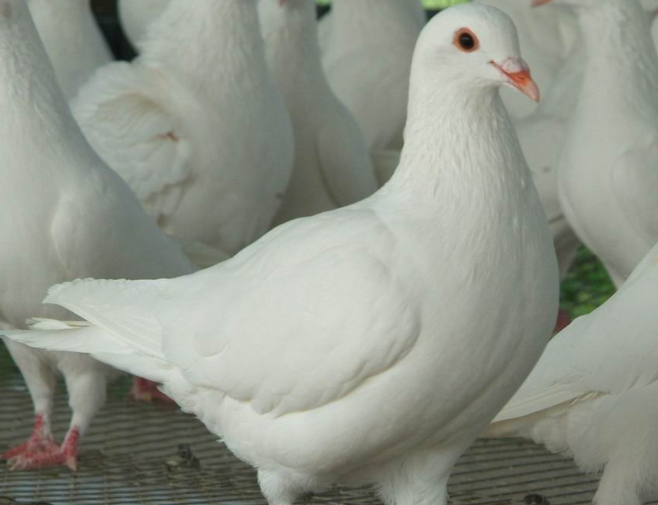
In the feeding and management process of meat pigeons, although it is a continuous process from young to old, there are certain differences in the physiological characteristics of each stage during their growth and development, requiring different emphases in feeding and management at each stage. Therefore, according to the growth and development characteristics of meat pigeons and the arrangements of actual production, they can be artificially divided into the squab period (0-1 month of age), the young pigeon period (1-2 months of age), the growing pigeon period (3-6 months of age) and the breeding pigeon period (over 6 months of age). Although the feeding and management techniques for meat pigeons at each stage have different emphases, the basic requirements in daily management are the same, and the following points should be followed in actual operation:
Ensure the comfort of the living environment
Environmental conditions not only affect the health of pigeons but also affect the performance of their production capacity. Environmental factors affecting the production performance of pigeons include: temperature, humidity, light, density, noise and dust, etc. Although pigeons have a certain tolerance to various factors, if these exceed their tolerance capacity, their production and health will be affected. Therefore, attention must be paid to regulating the four indicators of pigeon house temperature, humidity, ventilation and harmful gas content, achieving warmth in winter and coolness in summer, dryness and cleanliness, and ensuring that the concentration of harmful gases must be reduced to within the indicators that do not harm the growth, development and health of meat pigeons.
Pay attention to observing the dynamics of the pigeon flock
Pigeons have various dynamic expressions such as doubt, terror, sadness, illness, thirst, hunger, happiness and courtship. These expressions should be carefully observed, starting from improving feeding and management, and satisfying their desires and requirements so that they can give play to their various production potentials.
Adhere to the feeding principle of small amounts and frequent additions
Feeding small amounts frequently can stimulate the appetite of pigeons, enable parent pigeons to obtain sufficient nutrition, prevent pigeons from being picky about food, reduce feed waste, and encourage pigeons to exercise.
Feeding should be quantitative and at fixed times
The daily feed intake of meat pigeons generally accounts for about 1% of their body weight, and it will increase slightly in winter and during the lactation period. This amount of feed should be evenly fed in different time periods. Usually, during the lactation period, feed once each at 8 a.m., 11 a.m., 3 p.m. and 5 p.m., and 9 p.m. Growing pigeons are fed once each at 8 a.m. and 3 p.m. every day, with 15-20 grams per pigeon per feeding.
Add health sand in a timely manner
When raising pigeons in large groups, place the health sand in a high, dry and cool place for them to eat freely. For caged meat pigeons, a separate health sand cup should be placed or it should be placed at the other end of the feeding trough, separated by a partition. The amount of health sand consumed by meat pigeons is 5%〜10% of their feed intake. The health sand should be kept moist and not pasty. To ensure that its effective ingredients are not destroyed or contaminated, it should be replaced every 5〜7 days.
Bathe frequently
Bathing will make the pigeons' feathers clean, prevent external parasite invasion, stimulate the secretion of growth hormones in the body, and promote muscle growth and development. When the weather is warm, bathe once a day; in hot summer, bathe 2-3 times; when the weather is cold, bathe 1-2 times a week. For growing pigeons and adult parent pigeons with an exercise yard, a bathing pool can be made in a corner of the exercise yard. The size of the pool depends on the number of pigeons. A bathing pool with length, width and height of 100 cm, 100 cm and 150 cm respectively can allow 100 pigeons to bathe in turn. The water used for bathing is best if it is running water, always keeping the pool water clean. For caged parent pigeons, a shower nozzle can be connected above the cage, and the nozzle can be turned on at fixed times every day for showering, with each session lasting about 10 minutes. It is worth noting that parent pigeons that are incubating eggs and brooding squabs within 10 days of age are not suitable for bathing.