What rabbit farming equipment is there? An introduction to common types of equipment
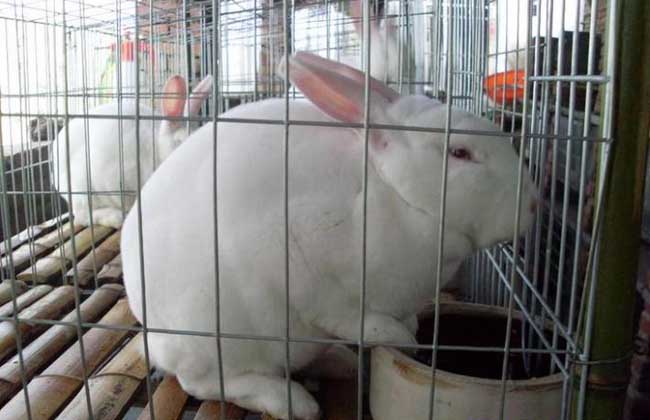
There is an old saying in our country that goes, "To do a good job, one must first sharpen one's tools." Therefore, before raising rabbits, you must first equip yourself with the relevant farming equipment so that the subsequent farming work can be carried out. Rabbits at different growth stages also need different farming equipment. Let's take a look below at what rabbit farming equipment there is!
Rabbit feed trough
For rabbit farming, it is recommended to use external-mount sealed automatic feed troughs throughout. This kind of trough hangs on the cage door. When the rabbit eats, its head reaches in through the cage opening into the trough, which can effectively prevent digging at the feed and feed contamination, and can also prevent young rabbits from squeezing out through the opening. The feed trough consists of a feed inlet, a storage bin, a feeding trough and a partition. Adding feed outside the cage is very convenient and easy to operate.
Rabbit cage classification
1. Breeding rabbit cage: Breeding rabbit cages are larger in size. The cage length should be 70-80 cm, the cage width 70-75 cm, the front height 45-50 cm, and the rear height 35-40 cm. The spacing between the cage floor and the manure-collecting board is 10-13 cm at the front and 18-23 cm at the rear. It is best made of cement board or brick. If it is made of wire mesh, the gaps must not exceed 2 cm and must be such that young rabbits cannot squeeze out.
2. Young rabbit cage: Young rabbits are placed in young rabbit cages after weaning and vaccination. Young rabbit cages are generally best arranged as whole rows of wire cages placed horizontally, with each cage 30 cm long and a gap between each cage. The cage width is 40 cm, the front height 35 cm, and the rear height 25 cm. A row of sealed feed troughs is hung at the front of the cage, and young rabbits can stretch their heads into the openings to eat at any time. The cage door should be very easy to open. At the gap between two cages there is a shared hay rack, and at the rear of each cage 2 duckbill-style automatic drinkers are installed. It is best to place 3-4 young rabbits per cage.
3. Fattening cage: Once young rabbits have grown to 1.5 kg, they should be promptly moved to fattening cages.
Rabbit cage design
1. Rabbit cage walls: For cage fixtures built with cement boards, the cage walls are required to have a smooth surface, not absorb moisture, and not retain water. If it is a wire cage, there should be no burrs.
2. Rabbit cage top: The top of the rabbit cage is required to be heat-resistant and cold-resistant. Fixed cages can be built with cement boards. The top of a wire cage generally also serves as the manure-collecting board, and it is required to cover completely, with no leaking at any layer, especially at the joints between cages.
3. Cage floor: The cage floor is the key part of the rabbit cage. The best cage floor is the front-board rear-slatted type, that is, the front 2/3 of the cage floor is rubberized wooden board and the rear 1/3 is slatted bamboo board. The advantage of this kind of cage floor is that it can effectively prevent foot dermatitis and also effectively control hygiene inside the cage.
4. Manure-collecting board: The manure-collecting board is generally installed below the cage floor and mainly serves to catch manure and urine. There are two types: flat and cement-tile shaped. When installed, it slopes downward from the front of the rabbit cage to the rear to form a slope, so that manure and urine flow backward into the manure and urine ditch. The requirements for the manure-collecting board are that the front, back, left and right coverage must be tight, there must be no gaps between the upper and lower layers, and there should be a certain spacing between it and the cage floor.
5. Cage door: The key to setting up the cage door is that it opens and closes conveniently, closes tightly, and is easy to operate after opening. The height of the cage door should be basically level with the cage height, and the width is generally about 30 cm.
Rabbit drinker
For rabbit drinkers, it is recommended to use a water supply system in which a purified water bottle is hung and connected to duckbill-style drinkers, that is, the kind of purified water bottle used on household water dispensers is hung upside down above the rabbit cage, with a plastic tube connected to the bottle mouth and to multiple drinkers, installed at the rear of each rabbit cage.
Rabbit kindling box
The kindling box is the main facility that artificially simulates a burrow environment for does to give birth and raise young. The warmth retention, ventilation, size and shape of the kindling box, the bedding straw inside it, and its placement position all have a relatively large impact on the survival rate and development of young rabbits. It is recommended that everyone uniformly use sealed or burrow-type kindling boxes.
Rabbit hay rack
The hay rack is the main feeding utensil for rabbits to eat green feed or roughage. If it is a wire cage, it is recommended to set the hay rack at the middle-upper part between two cages. If it is a fixed-board rabbit cage, the hay rack can be set above the feed trough on the outer side of the cage door. In order to prevent forage from spilling out through the outer gaps of the hay rack, the outer wire mesh of the hay rack can be made denser, or it can be made of iron plate or wooden board.
Manure-urine separation waste discharge system
The manure-urine separation waste discharge system is a very important part. The benefit of separating manure and urine is that it can greatly reduce the concentration of ammonia odor in the rabbit house and reduce irritation to the rabbit's mucous membranes, thereby controlling the occurrence of infectious rhinitis and respiratory tract inflammation.