What is the function of a rabbit's tail? A detailed explanation is here
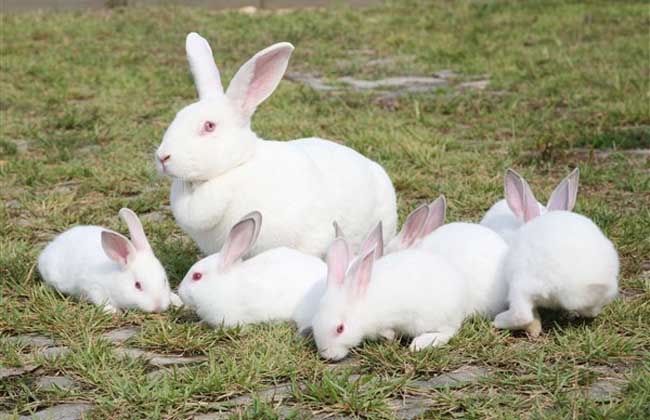
Rabbits are the collective name for all genera under the family Leporidae in the order Lagomorpha of mammals, with the greatest variety found in eastern and southern Asia, Africa, and North America. They are mostly seen in deserts, desertified grasslands, tropical open woodlands, dry steppes, and forests or woodlands. They have tubular long ears and a clustered short tail. The tail is short and fluffy, curling up into a ball, and is very cute. Now let us take a look together at what the function of a rabbit's tail is!
What is the function of a rabbit's tail?
A rabbit's tail is short and small, and seems to have no use, but in fact a rabbit's short tail can help it escape in an emergency. When a rabbit is bitten by a beast of prey, it immediately uses the “skin-shedding trick” and slips off the “skin sleeve” of its tail, thereby winning the instant needed to escape. At the same time, a rabbit's tail can also maintain balance when jumping, and when standing upright it can use the tail as support to prevent falling over.
Why are rabbit tails so short?
The short tail of a rabbit is entirely the result of evolution for survival. Because it is timid, to survive it must adapt itself to the environment. Once it encounters an enemy, in order to run and jump quickly it needs to be as lightly equipped as possible. A long tail is obviously superfluous and cumbersome. Therefore, only by controlling tail growth did the long-term result of evolution make the tail shorter.
What are the functions of animals' tails?
1. Gecko: The gecko's tail is both slender and long, and can be used for self-defense. When other animals try to catch a gecko, they often think that by grabbing or pinning down the gecko's tail they can catch it. In fact, the gecko can break off its tail and escape immediately, making the animal trying to catch it rejoice too soon. Not long after breaking off the original tail, it can grow a new tail again.
2. Birds: A bird's tail can balance the body during flight, adjust speed, change direction, and control ascent and descent, so it is called the “all-purpose rudder.” The woodpecker's tail is somewhat special: hard and strong, it can support the woodpecker as it stops on a tree trunk to peck for insects and feed, and it can also help the woodpecker keep its body balanced while climbing the trunk. At the same time, when the woodpecker flies, it can also play the role of an ordinary bird's tail.
3. Mules and horses: The tail of a mule or horse is made up of very long coarse hair, can be swung left and right, and can drive away mosquitoes, horseflies, and flies that land on the mule or horse.
4. Squirrel: The squirrel's tail is fluffy, large, and long. When a squirrel jumps down from a height, it can slow the speed of descent so that the squirrel lands safely, playing the role of a parachute. When sleeping, it can use its tail as a quilt to cover its body, and can also nestle its tail beside itself, playing a role in keeping warm.
6. Peacock: The peacock's tail can display its beauty and attract the opposite sex. Sometimes it can also play a role in warning and intimidating predators. The tail of the male peacock can attract attention.
5. Tiger: The tiger's tail is like a steel whip and can lash out. When fighting other animals, the tail becomes a powerful combat weapon, lashing the opponent until it is dizzy and disoriented and cannot counterattack.
7. Monkey: The monkey's tail is a “fifth hand.” It relies on its tail for climbing and hanging, uses its tail to dart around in trees, and sometimes also uses its tail to seize food. It can also regulate body temperature.
8. Crocodile: The crocodile's tail is very powerful, as sturdy as an iron rod, and can be used as a weapon for defense and attack. Ordinary wild beasts such as lions and leopards cannot withstand a single blow from it.
9. Duck: The duck's tail helps keep the body balanced, and the tail can secrete a lot of oil. Through the beak, the oil is spread onto the thick, dense, and lightweight feathers so that the feathers will not be soaked by water, and air is always kept inside, so the duck can float on the water surface.