What Do Rabbits Eat? A Detailed Guide to Scientific Feeding Methods
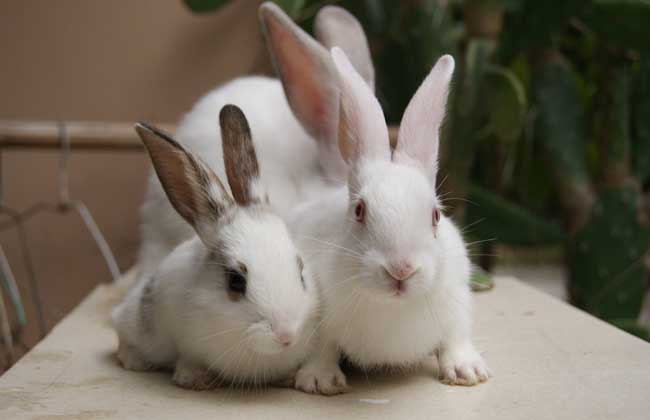
Rabbits are the collective term for all genera under the family Leporidae of the order Lagomorpha in the class Mammalia. Rabbits have long tubular ears and short tufted tails. The greatest variety of species is found in eastern and southern Asia, Africa and North America, with a small number of species distributed in Europe and South America. They are mostly seen in deserts, desertified grasslands, tropical open woodlands, dry steppes and forests or woods. Let us take a look below at what rabbits eat!
What do rabbits eat?
Rabbits are herbivorous animals and like to eat grass. When keeping rabbits at home, attention should be paid to the food provided, because young rabbits have no sense of fullness. Vegetables are not recommended for young rabbits, as they easily cause enteritis; they can only be provided appropriately after the rabbit reaches adulthood. Rabbits are divided into young rabbits and adult rabbits. Young rabbits are rabbits from 1 to 6 months old, and adult rabbits are rabbits over 6 months old. Both are fed in the morning and evening, 2 times a day. If you need to change the brand of feed, a transition is required; it should not be changed directly, which would cause the rabbit to be unaccustomed and develop discomfort.
Types of rabbit feed
1. Concentrate feed: Concentrate feed mainly provides rabbits with the energy, protein and fat they need daily, followed by minerals, amino acids, etc. At present, the vast majority of rabbit pellets are complete foods, meaning that all the nutrients rabbits need are formulated into rabbit pellets in a certain proportion, which in theory can meet most of the nutrition rabbits need.
2. Roughage: Roughage mainly provides rabbits with the crude fiber they need daily, followed by protein, amino acids, etc. Forage grasses of different families also differ in nutritional composition and palatability. Legume forages are generally more palatable than grass-family forages, and fresh forage is generally more palatable than green hay. In terms of nutritional value, forage in its young and tender stage has high nutritional value and low crude fiber content, while forage in its mature stage has low nutritional value and high crude fiber content.
3. Succulent feed: Succulent feed mainly provides rabbits with the vitamins, water, etc. they need daily. Different vegetables and fruits also have different nutritional compositions, but their vitamin content is generally equal to or higher than that of forage.
What can't rabbits eat?
1. Steamed, boiled or fried foods: Rabbits eat raw food, and fried food is even more unsuitable.
2. Frozen food: Frozen food will make a rabbit's stomach and intestines very unaccustomed and cause diarrhea. Vegetables and fruits just taken out of the refrigerator must be left until they reach room temperature before being given to the rabbit!
3. Spoiled food: Do not think that animals are not as delicate as people and that it is fine for them to eat spoiled food that people cannot eat. Rabbits are especially fragile, so this must never be done.
4. Chocolate and coffee: Chocolate and coffee contain alkaloids and can cause poisoning.
5. Candy and sweet foods: Candy and sweet foods are high-calorie, high-sugar foods and truly offer no benefit to rabbits. Besides making them excessively obese and causing digestive tract diseases (sugar can cause abnormal fermentation of chyme in the intestines), they can also cause rabbits to develop tooth decay.
6. Spicy vegetables: Such as garlic, onion, Chinese chives, scallions, chili peppers, etc.
7. Meat foods: Rabbits are herbivorous animals, and their digestive system simply cannot digest and absorb meat. If eaten, it will not only cause gastrointestinal blockage and intestinal necrosis, but also deform the bones and muscles.
8. Biscuits and bread: Biscuits and bread have a relatively high carbohydrate content, which can cause bloating. The yeast they contain may cause death, and the oil, sugar and salt they contain are also unsuitable for rabbits.
9. Human snacks: Likewise, the sugar, salt, etc. are all unsuitable for rabbits, and the additives, flavorings and colorants in them will all harm the rabbit's body.
10. Corn and peanuts: Corn and peanuts easily become moldy and produce toxins, so do not give them to rabbits.
11. Nuts and dried fruits: Nuts and dried fruits can be eaten in small amounts, but their vegetable oil content is too high. Rabbits do not need such a high intake of fat; hibernating animals need it more (such as squirrels), so it must be a very small amount, or better yet not eaten at all.
12. Yogurt: Some people give rabbits yogurt to supplement probiotics, but rabbits cannot digest yogurt well, and the probiotics in it may not necessarily be absorbed. Normal rabbits also do not need probiotic supplements.
13. Grains: They can be eaten in small amounts. Barley and wheat are raw materials for rabbit pellets, but grains are high in calories and should not be eaten much. Moreover, rabbits are already eating rabbit pellets, so this kind of supplement is really unnecessary.