How to best raise a lop-eared rabbit? A detailed guide to breeding methods
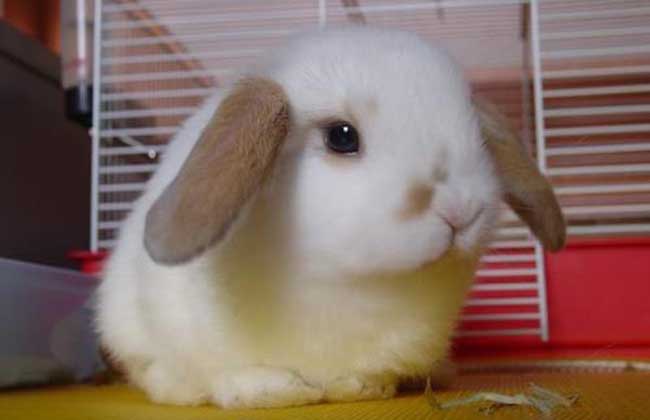
The most distinctive feature of the lop-eared rabbit is its long, large ears drooping down on both sides of its head. It likes burrowing, is quiet, timid and easily startled, tolerates cold but fears heat, is active by night and rests by day, and stays in dry, clean places. If you want to keep a lop-eared rabbit, you must understand its living habits and master the raising methods. Let's take a look below at how to best raise a lop-eared rabbit!
Living habits of the lop-eared rabbit
1. Timid and fond of quiet: The lop-eared rabbit is very timid. When it suddenly hears a noise, it shows a "startled" reaction, and its appetite decreases. A mother rabbit that is kindling, when startled, often suffers difficult birth or refuses to nurse the young rabbits. Apart from moving and eating, it likes to rest and sleep, and becomes alert at the slightest sound. Therefore, choosing a quiet, comfortable environment is very important for raising this rabbit.
2. Tolerates cold but fears heat: The lop-eared rabbit's fur is very dense and can resist severe cold. An adult rabbit can endure temperatures below zero, and can breed in winter at around 5°C. The lop-eared rabbit greatly fears heat, because its sweat glands are underdeveloped and it cannot regulate body temperature by sweating. So when the outside temperature is too high, the lop-eared rabbit often lies sprawled on the ground, using heat conduction through the ground to dissipate heat, or increases its breathing rate, using exhalation to carry heat away.
3. Rests by day and moves by night: During the day, apart from eating, the lop-eared rabbit likes to rest or sleep in its cage, but at night it is unusually active and eats frequently. Its nighttime food intake accounts for about 75% of its total daily ration, so when raising rabbits you must insist on feeding night grass.
4. Likes burrowing: The lop-eared rabbit likes to dig burrows to live in. When raised free-range, it digs burrows even more frequently before each breeding. When building rabbit housing, attention should be paid to this in both design and materials. Based on this habit of the lop-eared rabbit, you can use hills and ridges in places with good climate for burrow raising.
5. Naturally combative: When adult male lop-eared rabbits meet, they chase and bite each other, and female rabbits together also bite each other, while male and female rabbits together mostly get along harmoniously. Therefore, when managing them, try not to keep adult male rabbits or adult female rabbits together.
6. Reproduction between the sexes: When a male and female rabbit are together, mating can be completed in just a few seconds. Because giving birth to young rabbits causes great harm to the female rabbit's body, you must never put an unneutered male and female rabbit together. In addition, for the rabbit's health it is best to have them neutered.
How to best raise a lop-eared rabbit?
1. Diet combination: The rabbit's diet requires a sufficient supply of clean boiled water, and the food must be nutritionally balanced and properly combined. The food should organically combine vegetables, rabbit pellets, hay, and so on, and then be given to the lop-eared rabbit to eat. Rabbits have no concept of feeling full, so when feeding the rabbit you must control the amount, to avoid too much food causing indigestion in the lop-eared rabbit, or in serious cases overfeeding the rabbit to death.
2. Raising environment: Rabbits like a dry, clean environment. At home you should prepare a dry, well-ventilated place for the lop-eared rabbit to place its hutch, and add a wooden board or mat inside the hutch to prevent the rabbit from getting diseases such as pododermatitis. The hutch should also be cleaned regularly.
3. Avoid bathing; do not bathe young rabbits. Rabbits are very clean animals and groom their fur by licking every day, so bathing them is not recommended. However, if there is no other choice and you must bathe it, choose a day with good weather and sunshine, and you should prevent water from entering its ears, because if you are not careful it can get otitis media.
4. Brush often: Most lop-eared rabbit breeds belong to the type with a larger amount of fur, so during seasonal changes they certainly shed more hair than short-haired rabbits. If you cannot brush it often, the coat is prone to tangling, and over time the coat problems will cause the little rabbit's skin to become red and swollen. Raising a lop-eared rabbit should be done in the grooming manner of long-haired rabbit breeds, and the ears are an especially key area to groom.
5. Do not grab the ears: When picking up a rabbit, never grab the rabbit's ears. The ears are an important organ of the rabbit. Rabbits have no sweat glands and must use their ears to dissipate heat. If the rabbit's ears are grabbed and injured, causing nerve damage, the rabbit's ears will not stand up and cannot turn. The correct way to pick up a rabbit is to support the rabbit's back with one hand, and use the other hand to lift the rabbit's bottom, so that the rabbit's legs and belly both face forward.
Health checks for the lop-eared rabbit
1. Appetite: Whether it eats is a very sensitive indicator of an animal's health. Generally, animals have a very good appetite before each meal. If you find that it does not eat or does not finish eating within its usual fixed time range, it is a sign of many diseases.
2. Drinking desire: The amount drunk is also very important information about changes in the rabbit's body. Pay special attention when the amount drunk suddenly increases or decreases, as this is often the beginning of disease.
3. Feces: Feces are the rabbit's disease informant and an intuitive manifestation of a normal digestive tract. About 30% of diseases can be reflected through changes in feces. Normal feces should be independent droppings, medium in size, moderately soft, smooth on the outside, floating when placed in water, and breaking apart when squeezed by hand. If you find pointed at one end, pointed at both ends, pasty, porridge-like, watery, bloody, or mucus-like feces, you should seek diagnosis and treatment immediately.
4. Spirit: A healthy rabbit should be full of energy, with bright eyes and quick reactions. If you find slow reactions or excessive excitement, you should observe it further.
5. Facial features: A healthy domestic rabbit should have no eye discharge, no nasal discharge, no tongue ulcers, no pus in the ears, and no mouth lesions. If you find eye mucus or tears, nasal discharge, drooling, or abnormalities in the ears, these are all signs of poor health.
6. Movements: If you find the rabbit tilting its head, circling, scratching itself, or looking at its anus, these are all occurrences of disease.
7. Coat: A healthy rabbit's fur is clean and pure. If hair thinning, hair loss, ringworm, scabbing, dirtiness, or dampness occurs, you should pay attention and observe.
8. Sounds: If the rabbit makes sounds it has never made before, such as sneezing or coughing, you need to pay attention.
9. Smell: If the rabbit gives off a smell it has never had before, such as the smell of rotten apples, then it is pregnancy toxemia; a sour odor indicates indigestion; a foul odor indicates Clostridium welchii.