How to Utilize and Process Rabbit Manure? A Detailed Guide to Practical Methods
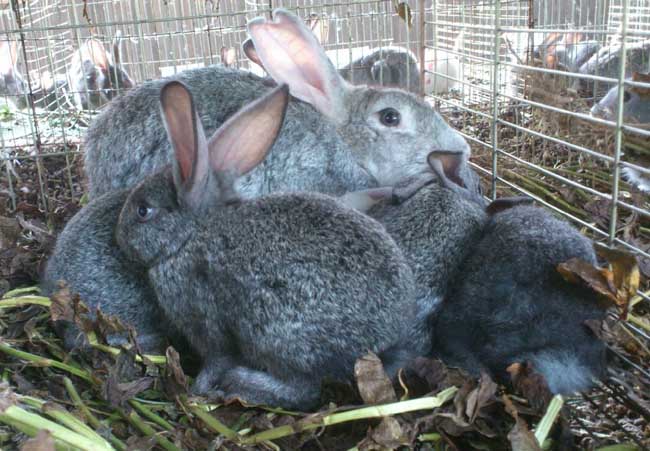
Rabbit manure can not only be used as feed for livestock, but after special processing it can also serve as an ideal fertilizer. This not only improves the profitability of rabbit farming, but also reduces environmental pollution. Below, the editor introduces the utilization and processing methods of rabbit manure, to provide a reference for improving the utilization rate of rabbit manure.
Rabbit manure is a high-quality organic fertilizer
1. Rabbit manure contains higher levels of nitrogen, phosphorus and potassium than the manure of other livestock and poultry, and also contains various trace elements and vitamins. One adult rabbit can produce about 10 kg of manure per year, and the manure output of 10 adult rabbits is equivalent to that of 1 pig. Every 100 kg of rabbit manure is equivalent in fertilizing effect to 10.85 kg of ammonium sulfate, 10.90 kg of superphosphate and 1.79 kg of potassium sulfate.
2. Rabbit manure and urine can improve the granular structure of the soil, increase soil fertility, and have effects such as killing insects and sterilizing, and resisting drought and preserving soil moisture. Soil treated with rabbit manure and urine can reduce above-ground and underground pests such as mole crickets, red spiders and armyworms. Applying dilute rabbit manure and urine during the cotton seedling stage can control cutworms that damage cotton seedlings, and fumigating with rabbit manure and urine can kill muscardine fungi and lead to a bumper silkworm cocoon harvest. Applying rabbit manure and urine can increase the yield of various crops.
3. The urea, ammoniacal nitrogen, potassium, phosphorus and other substances in rabbit manure and urine can be directly absorbed and utilized by plants, but the protein that has not been digested and absorbed cannot be directly used by plants and needs to be fermented and decomposed before it can be absorbed. Therefore, rabbit manure and urine must be processed to improve its fertilizing effect and utilization rate.
Processing methods of rabbit manure and urine
1. Stack fermentation
Stack rabbit manure and urine together with leftover forage, adding water while stacking, so that the moisture content reaches about 50%. Form it into a round pile, seal the surroundings with mud, and let it ferment. After several weeks, the internal temperature can reach above 50 degrees. After the temperature drops, open the manure pile and let it ferment for another period. Generally, when it turns brown, has no foul or sour odor, and feels soft and not sticky to the hand, it is fully decomposed.
2. Making rabbit manure and urine liquid
Remove weeds from the collected rabbit manure and urine, add water at a ratio of 1:7 into a vat and seal it (seal the vat opening with plastic or mud). In summer and autumn it ferments well in 3-4 days, and in winter and spring in 10-15 days. Filter out the residue with a burlap sack or gauze, and it becomes rabbit manure and urine liquid. When using, add 10 times water to dilute it, put it into a sprayer, and apply it to the leaf surface of crops, using 5-10 kg per 667 sq m. Spraying it on the leaf surface of barley, wheat and rice at the heading stage can achieve obvious yield increases.
3. Making granular fertilizer
Remove the forage and impurities from the rabbit manure and urine, dry it in the sun, put it into a plastic bag, and tie the bag tightly for later use. This granular fertilizer is easy to store, has strong fertility, and is convenient to use. It can be applied as hole fertilizer to fruit trees, tea gardens and vegetables. When used as base fertilizer, in addition to a notable fertilizing effect, it also has effects such as resisting drought and preserving soil moisture, and killing insects and sterilizing.
Application of rabbit manure in the breeding industry
Rabbit manure contains 9.2% crude protein, 1.7% crude fat, 52% nitrogen-free extract and 8.2% total ash, and also contains niacin, pantothenic acid, vitamin B12, etc. Practice has proved that rabbit manure is a good feed. Feeding rabbit manure to livestock, poultry and fish allows it to be well digested, absorbed and utilized, for example:
1. Feeding rabbit manure to pigs
There are many reports at home and abroad on feeding rabbit manure to pigs. Many rabbit farmers feed rabbit manure to pigs, saving concentrated feed and increasing economic income. The methods used by comprehensive rabbit farmers to feed rabbit manure to pigs include the following:
① Feeding fresh rabbit manure directly to pigs. Boil water in a large pot (add water at a water-to-manure ratio of 1:2), put fresh rabbit manure with impurities picked out into the pot and boil for 5-10 minutes, then add mixed concentrated feed (rabbit manure accounting for 30% to 40%, concentrated feed accounting for 60%-70%) and continue boiling for 3-5 minutes, and break up the rabbit manure balls and stir so that the manure and feed mix evenly into a thick porridge-like consistency. After it cools, it can be fed, 3-4 times a day. Feeding rabbit manure to fattening pigs can save 50-100 kg of mixed concentrated feed per pig, and feeding sows can save 175 kg of mixed concentrated feed per animal. The manure of 15-20 adult rabbits can feed one sow.
② Feeding after fermentation. There are two fermentation methods:
The first is to remove debris from the collected fresh rabbit manure, dry it in the sun and crush it, then put it into a vat. For every 10 kg of dry rabbit manure, add 6-7 kg of water and 0.1-0.2 kg of salt, stir evenly, fill the vat to 80% full, then seal the vat opening with plastic film for fermentation. Fermentation time: 2-3 days in summer, 5-10 days in spring and autumn, and 15-20 days in winter.
The second is to remove debris from the collected fresh rabbit manure, crush it, and mix it into feed (water grass, vegetable leaves, black locust leaves, etc.), with manure and green feed in a ratio of 3:1. Then add 0.5%-1.0% salt and an appropriate amount of clean water. The amount of water added should be such that when squeezed tightly in the hand no water drips out, and when the hand is released it falls apart. Then put it into a vat and press it firm, and on top add a 2-3 cm thick layer of bran, rice bran, etc. to keep it warm. Generally fill the vat to 80% full, and finally seal the vat opening tightly with plastic film or clay for fermentation. In hot weather it ferments well after 2-3 days, and in cold weather after 8-15 days. After fermentation it has a sour fragrance, good palatability, and pigs like to eat it.
③ Feeding after drying and crushing: This method is relatively simple. That is, remove grass and impurities from the collected fresh rabbit manure, dry it in the sun and crush it, and use it directly with mixed concentrated feed to feed pigs, with a manure-to-feed ratio of 3:7.
2. Feeding rabbit manure to chickens
There are very few reports at home and abroad on feeding rabbit manure to chickens. In a trial at the Gaocheng livestock farm in Hebei Province, dry rabbit manure was used to replace 17.5% of corn to feed Avian broilers. There was no obvious difference between the experimental group and the control group, indicating that rabbit manure can replace part of the corn to feed broilers.
3. Feeding rabbit manure to fish
The Shexian Animal Husbandry and Aquatic Products Bureau of Hebei Province once used rabbit slaughtering offal (including rabbit manure and part of the rabbit gastrointestinal tract) to feed fish, greatly increasing the yield. The method is as follows: put the slaughtering offal (including the feces in the gastrointestinal tract) into a pot, add water and cook it thoroughly, then add cornmeal, bran, millet chaff, etc., and continue boiling for 5 minutes (offal accounting for 60%, mixed concentrated feed accounting for about 40%), making it into a thick porridge-like consistency. Take it out and place it on a cement floor, then mix in a portion of mixed concentrated feed composed of cornmeal, bran, millet chaff, etc., dry it in the sun and make it into pellet feed to feed carp. It has good palatability and the fish grow quickly. After 90 days of rearing, the yield of carp increased by about 50% per hectare.