What to Do If Your Rabbit Has Diarrhea? Prevention and Treatment Methods Every Rabbit Keeper Must Know
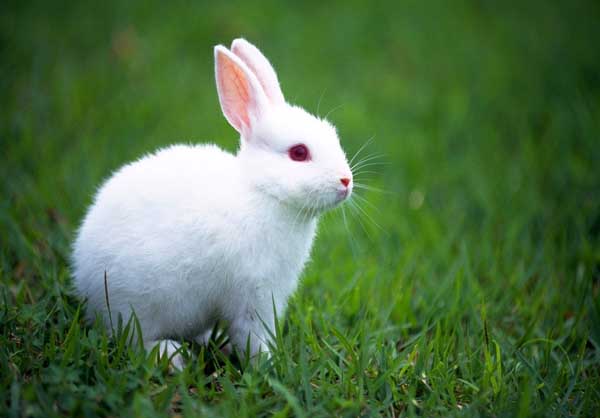
The rabbit is the general name for all genera under the family Leporidae of the order Lagomorpha in the class Mammalia. Its intestinal wall is very thin, and once diarrhea occurs, the consequences are often more serious than in other animals. Therefore, when a rabbit develops diarrhea, measures must be taken within 4 hours, otherwise its life will be in danger. There are many causes of diarrhea in rabbits. Let us take a look below at what to do if your rabbit has diarrhea!
Causes of Diarrhea in Rabbits
1. Changing feed: When rabbits are usually fed mainly dry roughage and are suddenly given green fodder, young rabbits may overeat and develop bloating and diarrhea, and some rabbits are even more prone to diarrhea. When changing feed, it should be increased or decreased gradually, step by step, preferably completed within 7 to 10 days.
2. Feed poisoning: The forage itself contains toxic substances, such as certain poisonous weeds and sprouted potatoes, etc. Secondly, feeding rabbits forage contaminated by pesticides or other drugs can cause poisoning. Thirdly, toxins may be produced during the processing and storage of forage.
3. Too much concentrate: Rabbits are herbivores and have their own unique digestive physiological characteristics. If the proportion of concentrate is too large, especially starchy feeds such as corn, it cannot be fully digested and absorbed in the small intestine, which inevitably increases the burden on the hindgut, causing digestive dysfunction and diarrhea.
4. Sudden environmental changes: Sudden weather changes, low temperatures and catching cold, and various other stress responses (fright, sudden changes of cold and heat, long-distance transport, etc.) can all cause diarrhea in young rabbits.
5. Caused by bacterial diseases: Diarrhea in rabbits is mainly caused by several bacterial diseases such as Escherichia coli, Clostridium perfringens disease, Tyzzer's disease, salmonellosis, yellow urine disease in young rabbits, and rabbit coccidiosis.
Symptoms of Diarrhea in Rabbits
1. Improper feeding: The droppings are mostly pasty, piled, or elongated, soft and unformed, mainly caused by improper care or feeding.
2. Escherichia coli: At the beginning of the disease, the feces are loose and unformed. In the middle and later stages, the symptom is feces like mouse droppings, pointed at both ends, in strings, wrapped in gelatinous or mucous material (what we often call jelly-like feces), gradually turning into watery feces. The feces are very foul-smelling, and mucus or yellow-brown watery diarrhea adheres to the hair near the anus.
3. Clostridium perfringens: The feces are thin as water, with black (brown) water discharged, gelatinous feces with blood, and a special fishy odor, while body temperature is not high. When the rabbit's body is gently shaken, a "clanging" sound of water can be heard. When the affected rabbit is lifted, fecal water flows out from the anus.
4. Tyzzer's disease: It mainly occurs in young rabbits from 20 days to 3 months of age, and is more common in late autumn and early spring. It usually comes on relatively acutely, with the main features being severe watery diarrhea, brown watery feces, dehydration, and rapid weight loss.
5. Salmonella: Watery feces, foamy mucous feces, foul-smelling, grayish-white or light yellow.
6. Yellow urine in young rabbits: Yellow watery feces and yellow urine, emaciated body, damp hair, the area around the anus often soaked by yellow urine, an unbearable odor, and the affected rabbit's body is as soft as mud. In the later stage, it is mostly comatose. The course of the disease is 2 to 3 days. If not treated in time, death often occurs due to dehydration.
7. Rabbit coccidiosis: The feces are first dry and hard, then watery, or dry and hard feces alternate with watery feces, sometimes with blood.
What to Do If Your Rabbit Has Diarrhea?
1. Be sure to place the rabbit in a warm place. If possible, put an electric blanket underneath so that the abdomen will not continue to be chilled, and abdominal pain can be relieved. Next, orally administer 2 tablets of lactobacillus tablets and 2 tablets of Jiangzhong Jianwei Xiaoshi tablets, 2 times a day, 2 tablets of each each time, until the feces return to normal. Crush the tablets, mix with a small amount of water, and feed with a syringe (with the needle removed).
2. Orally administer 2 to 4 tablets of Biofermin, twice a day, until the feces return to normal. Crush the tablets, mix with a small amount of water, and feed with a syringe (with the needle removed). Because Biofermin is sweet, some rabbits will eat it on their own, making feeding more convenient, but the effect is not as good as lactobacillus.
3. For diarrhea caused by bacterial diseases, you can go to a pet hospital for injections of relevant vaccines. For example, for Escherichia coli disease, go to a pet hospital for an injection of ceftiofur sodium; for Clostridium perfringens disease, inject kanamycin, and at the same time provide fluid infusion to replenish body fluids. However, the best method for this disease is to inject Clostridium perfringens vaccine, which can prevent young rabbits from suffering from this disease.
4. If diarrhea is caused by coccidiosis, it is recommended to use sulfonamide drugs for prevention and treatment. At present, the relatively ideal one is sulfachloropyrazine sodium, which has a definite therapeutic effect on outbreaks of coccidiosis. For prevention, mix it with water for drinking in the first week of each month for 3 days, then stop for 4 days, and then drink it for another 3 days. Rabbits aged 1 to 4 months should be treated once a month, which can prevent rabbits from suffering from coccidiosis. If prevention of coccidiosis is maintained, it can be completely avoided.