What forage grass is suitable for planting for raising rabbits? A variety selection guide
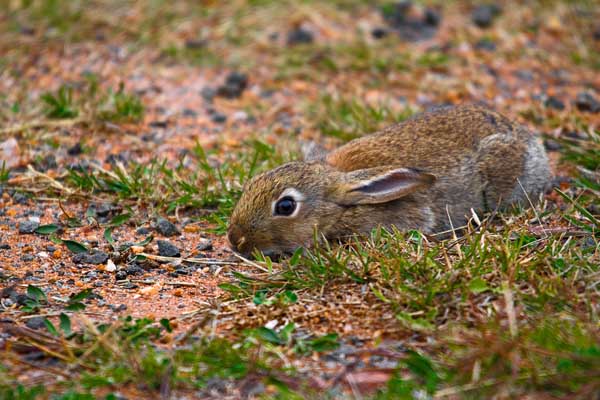
For raising rabbits, under the current premise of using pelleted feed, how to choose forage grass varieties and cultivate green feed well is also very important. Rational use of green feed can improve the economic benefits of raising rabbits. Raising rabbits with grass requires more thought in the selection of forage grass varieties and the reasonable arrangement of planting times.
Selection of forage grass varieties
Forage grasses that rabbits relatively like include annual ryegrass, winter grazing 70 rye, alfalfa, bitter lettuce, hybrid napiergrass, chicory, and Rumex K-1 hybrid sorrel, etc. In addition, sweet potato vines, peanut vines, large-root vegetables, carrots, cabbage, and green vegetables are also good feed suitable for feeding rabbits and can be comprehensively used when raising rabbits.
Generally, each mu of forage grass produces about 5000 kg of fresh grass per year, which can support 110 rabbits year-round. In order for rabbits to basically be able to eat fresh green forage throughout the four seasons of the year, the planting time must be reasonably arranged.
Cultivation methods of forage grass
1. Intercropping of perennial forage grass and annual forage grass
Chicory and Rumex K-1 hybrid sorrel are perennial forage grasses. Planted once, they can grow continuously for 8—10 years. The full-year fresh grass utilization period is from April to November. Generally, seedlings are raised and transplanted in March, with a plant spacing of 30 cm × 50 cm. In mid-to-late October, taking advantage of the exposed space between rows after these two forage grasses are mowed, intercrop annual annual ryegrass or winter grazing 70 rye. The fresh grass utilization period of annual ryegrass and winter grazing 70 rye is from December to April of the following year. In mid-April, remove annual ryegrass or winter grazing 70 rye together with their roots, allowing chicory or Rumex K-1 hybrid sorrel to grow alone.
2. Rotation of annual forage grass with annual forage grass.
Plant bitter lettuce or hybrid napiergrass in late April, plant annual ryegrass or winter grazing 70 rye after clearing the stubble in mid-September, and after clearing the stubble again in late April of the following year, plant bitter lettuce or hybrid napiergrass again, and repeat in this way.
3. Rotation of annual forage grass with crops.
Large-root vegetables or carrots can be used to replace annual ryegrass and winter grazing 70 rye in the second pattern. Sweet potato can also be used to replace bitter lettuce or hybrid napiergrass in the second pattern. However, the cultivation time for sweet potato should be early June, the stubble-clearing period should be late October, the sowing period of annual ryegrass or winter grazing 70 rye should be postponed to late October, and the stubble-clearing period should be postponed to early June of the following year.
When feeding rabbits with fresh green forage grass, the amount used per rabbit per day is about 0.75 kg.
In addition, rabbits must also be fed concentrated feed once a day, with an amount of about 70 grams per rabbit. In the concentrated feed, grains such as corn and wheat should account for 40%, bran and chaff should account for 40%, soybean cake should account for 15%, and fish meal should account for 3%. In addition, an appropriate amount of salt, trace elements, and mineral feed should be added. The specific formula should be adjusted according to the needs of different rabbit breeds and different growth stages. The concentrated feed should be made into pelleted feed according to the formula or crushed and fed with an appropriate amount of water. Rabbits have a very urgent need for water, and sufficient water must be supplied to the rabbits through equipment such as automatic drinkers or water basins.