What Are the Prospects for Hare Farming? Market Analysis
China has uniquely favorable conditions for farming hares: rich grass resources and a suitable climate mean that most regions are suited to raising hares; hares have strong resistance and adaptability, grow quickly, cost little to raise and deliver good returns, and are generally ready for market after 3 months of rearing. Moreover, domestic production is scarce, meeting less than 1% of market demand, so supply falls short of demand. In European countries, each person consumes 5 to 6 kg of rabbit meat per year, and because domestic supply is insufficient, large quantities are imported from China. In addition, Japan, South Korea, Russia and the regions of Hong Kong, China, Macao, China and Taiwan, China also frequently place orders with the mainland, and demand is surging. In particular, after China's accession to the World Trade Organization, the scope for exports will expand further and sales channels will become broader still, with enormous market potential, creating an excellent space for the development of China's rabbit industry. Therefore, if hare farming can achieve scale production, it will certainly deliver clear economic benefits, and the prospects look very promising.
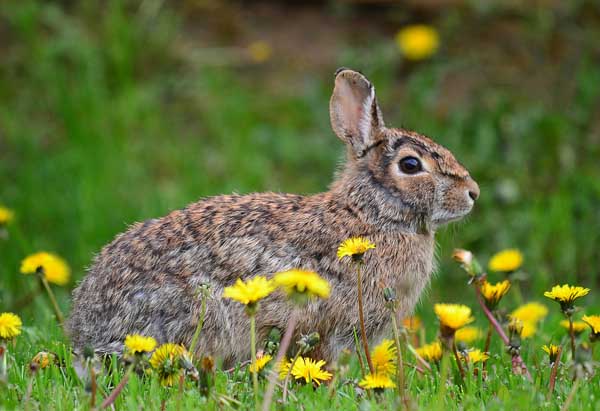
The hare is a special wild herbivorous economic animal valued for its skin, fur and meat alike, feeding mainly on various wild grasses, green vegetables and tree leaves. After many years of domestication, hares have lost their timidity, nervousness and some of the undesirable habits of domestic rabbits, while retaining the wild hare's strong disease resistance, larger body size, strong cold tolerance and wide adaptability (they can grow healthily in both the south and the north of China), yet their average meat yield has doubled. At present, the rabbit meat market is booming, which guarantees the profitability of farming.
Hare meat is tender and richly flavored, a rare wild delicacy, and has been designated by the World Rabbit Science Association as "beauty meat" and "health meat", with the long-standing saying that "among birds none beats the swan, among beasts none beats the hare". As people's living standards continue to rise, the pursuit of delicious, nutritious, nourishing, health-promoting and novel foods has become a new consumer trend. Since the 1990s, pigs, chickens, ducks, fish and other livestock and poultry have been fed large amounts of compound feed containing additives and growth promoters, which has lowered meat quality and even produced side effects harmful to human health, leading people to favor herbivorous livestock and poultry.
Hare hide is fine-fibered and becomes relatively soft after tanning, with good elasticity and breathability, and can be tanned into plain leather, shrunken grain leather, suede leather and high-grade oil-tanned leather.