Key Points and Methods of Meat Rabbit Breeding Technology Explained
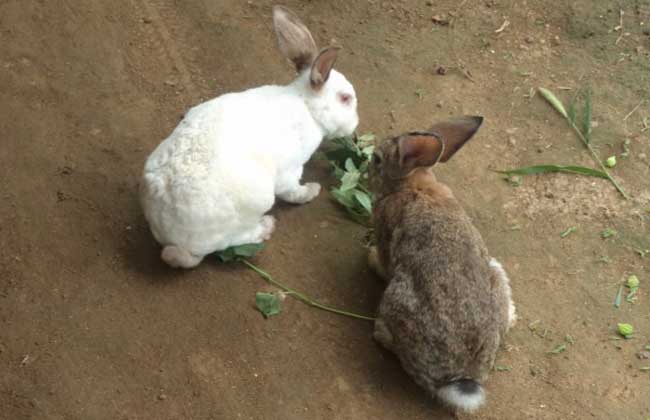
In the breeding process of meat rabbit farmers, the success rate of mating will directly affect the benefits of meat rabbit farming. To ensure the success rate of mating, we can start from the following aspects:
Scientifically determine the initial mating age
The initial mating age of meat rabbits is mainly determined by body weight and months of age. Under normal feeding and management conditions, when the body weight of male and female rabbits reaches 70% of the standard body weight for that breed, they have reached body maturity and can begin mating and reproduction. Generally, the initial mating age for small breeds is 4-5 months, with a body weight of 2.5-3 kg; for medium breeds, it is 5-6 months, with a body weight of 3.5-4 kg; for large breeds, it is 7-8 months, with a body weight of 4.5-6 kg. Because male rabbits reach sexual maturity later than female rabbits, the initial mating age of male rabbits should be about 1 month later than that of female rabbits. To prevent early mating and inbreeding, males and females should be raised separately before sexual maturity.
Scientifically determine the service years
Cull and replace the rabbit flock in a timely manner. The service life of male and female rabbits is generally 3-4 years. If they are robust and used reasonably, the breeding service life can be appropriately extended. However, if they are too old, their conception rate, litter size and survival rate are all poor, and the quality of the offspring rabbits is also poor, so the rabbit flock should be culled and replaced in a timely manner. Generally, 1/3 are culled each year, with a rotation every 3 years, so that breeding rabbits of the right age occupy an absolute advantage in the flock.
Scientifically arrange the breeding and reproduction season
Mastering the breeding and reproduction season of meat rabbits is an important part of improving the survival rate of young rabbits. Although meat rabbit reproduction has no obvious seasonality and can be carried out all year round, differences in temperature, light and nutritional status in different seasons all have a certain impact on the conception rate of female rabbits and the survival rate of young rabbits.
1. Spring and autumn. The climate is mild and dry, breeding rabbits have strong sexual desire, female rabbits have a high conception rate, litter size is large, and the survival rate of young rabbits is high. This is the best season for meat rabbit breeding and reproduction, and breeding and reproduction work should be carried out well. Many rabbit farms mostly adopt the intensive kindling method (blood mating) for spring breeding, producing 2-3 litters in succession, then adjusting to restore physical strength, and starting autumn breeding in August.
2. Summer. Whenever the barn temperature is above 30°C, breeding and reproduction should be stopped, generally from June to mid-July each year. However, if the female rabbits are robust and there are heat prevention conditions, breeding and reproduction can still be appropriately arranged.
3. Winter. Winter temperatures are relatively low, breeding rabbits are relatively weak, and the conception rate is low. If there is no insulation equipment, the newborn rabbits are likely to freeze stiff or freeze to death. Therefore, for winter breeding, feed rich in nutrients must be supplied to maintain a robust physique; insulation measures are also required. Generally, the room temperature should not be lower than 15°C, the young rabbit nest should not be lower than 30°C, and young rabbits require an environment of 20°C.
Timely mating
1. Determination of the mating period for natural mating
① Determine the mating time according to the estrus performance of the female rabbit. The estrus cycle of female meat rabbits varies greatly, generally 8-15 days, and the estrus period is generally about 3 days. The estrus performance includes restless behavior, reduced appetite, often scratching the box with the forelegs or "stomping" with the hind legs, and sometimes the phenomenon of carrying grass to make a nest. The vulva is moist, red and swollen. The entire estrus period is divided into early, middle and late stages, and the judgment is mainly based on the changes in the vulva: in the early stage of estrus it becomes relatively moist, slightly swollen, and pink; in the middle stage it is moist, swollen, and bright red (commonly known as old red); in the late stage it is moist, swollen, and purple-black. The best mating time is the middle and late stages of estrus.
② Use the teasing method to determine the mating period. Put the female rabbit into the male rabbit's pen. When the male rabbit chases and mounts, if the female rabbit assumes a mating posture, it indicates that the female rabbit is in estrus and mating can be carried out. Otherwise, if she is not in estrus, mating cannot be carried out.
③ Blood mating. That is, mating is carried out 1-2 days after the female rabbit gives birth.
2. Determination of the mating period for artificial insemination. The female rabbit is an animal with induced ovulation and will not ovulate automatically without mating or drug stimulation, so ovulation must be induced before artificial insemination. Generally, injection of reproductive hormones is used to induce ovulation. The conception rate is highest when insemination is carried out within 2-8 hours after inducing ovulation. In order to improve the conception rate, ovulation should be induced during the peak estrus period.
3. Choose an appropriate mating time on the day of mating. In spring and autumn, it is best to arrange it at 8-10 a.m.; in summer, use the cooler early morning and evening; in winter, choose the relatively warm noon. In addition, mating is not suitable within 1 hour before or after feeding.
Correctly master the mating procedure
1. Inspect the breeding male rabbit and create a suitable environment. Before mating, the breeding male rabbit should be inspected. Any male rabbit that is weak, poorly developed, diseased, or related by blood must not be used for mating. Where conditions permit, the semen quality of the breeding male rabbit should also be checked. After the male rabbit is determined, remove all feeding utensils from the male rabbit's cage and place a large wooden board at the bottom of the cage to prevent the rabbit's claws from being caught in the gaps of the cage and sprained.
2. Put the female rabbit into the breeding male rabbit's cage for mating. Gently put a female rabbit that is in good estrus, healthy, and suitable for mating into the male rabbit's cage for mating. The male rabbit must not be put into the female rabbit's cage for mating. If the male rabbit is put into the female rabbit's cage, the change in environment may easily affect his sexual desire activity, or he may even fail to mount the female rabbit, resulting in mating failure.
3. Post-mating handling. Immediately after mating is completed, forcefully pat the female rabbit on the rump. When the rear part of the female rabbit tenses, the semen can be drawn in deeply, which helps the sperm move from the vagina toward the uterus and prevents backflow of semen. Then take the female rabbit out of the male rabbit's cage, check the vulva for signs of false mating, return the female rabbit to its original cage, and promptly keep a record of the mating.
4. Re-mating. In order to ensure pregnancy in the female rabbit and prevent pseudopregnancy, re-mating should be carried out. There are two methods of re-mating.
① Repeat mating. Use the same male rabbit to mate again 6-8 hours after the first mating. According to experiments, the conception rate of repeat mating can reach 95-100%.
② Double mating. About 10 minutes after the first mating, use another male rabbit for the second mating. According to experiments, the conception rate of double mating can be increased by 25-30% compared with single mating. This method is only suitable for commercial rabbit production, because when used for breeding stock, the paternal bloodline cannot be determined.
Do a good job of pregnancy checking
Promptly determine whether the female rabbit is pregnant. If she is not pregnant, timely supplementary mating should be carried out. External observation and fetal palpation can be used for checking.