Detailed explanation of the key points of feeding and management technology for lactating female rabbits
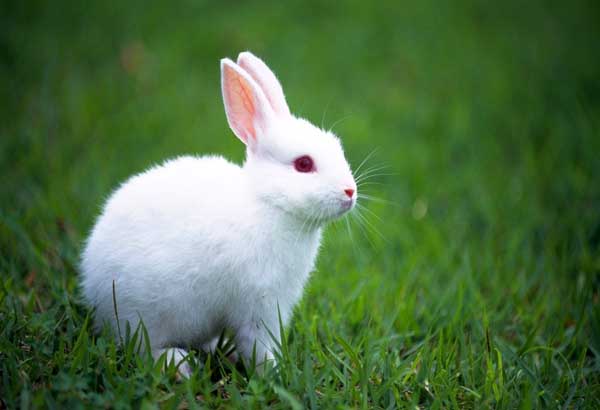
From kindling to weaning of the young rabbits, about 40 to 45 days are needed, and this period is called the lactation period.
Young rabbits mainly rely on breast milk to sustain life and growth, so whether the young rabbits grow well depends on the quality and quantity of the female rabbit's milk. To ensure the healthy growth and development of the young rabbits, the feeding and management of lactating female rabbits must be strengthened. After the female rabbit kindles, because of the need for lactation, its food intake is relatively large. Therefore, the feed ration should be increased gradually, and it can be increased by 2/3 of the original food intake to more than double. In addition to giving more fresh green feed, the amount of concentrated feed should also be increased, such as soybeans, soybean cake, wheat bran, soybean dregs, and so on. Fish meal, bone meal, eggshell powder, and growth hormones should also be added, so that the female rabbit's constitution is greatly strengthened, to ensure the good development of the young rabbits.
To improve the survival rate of young rabbits and make the young rabbits in each litter grow and develop evenly, the methods of adjusting young rabbits and foster nursing can be adopted. Among the young rabbits in the same litter, some are strong and some are weak, some are large and some are small. The large and strong ones grab the teat quickly and suck strongly, while the weak and small ones grab the teat slowly and suck poorly. Therefore, for each litter of young rabbits born within 3 days, adjustments should be made according to the size of the young rabbits and the lactation ability of the female rabbit. Each female rabbit can regularly nurse 4 to 6 young rabbits. If a female rabbit gives birth to many young rabbits, the extra young rabbits can be fostered to a female rabbit with fewer young rabbits, or another female rabbit can be used for foster nursing. To prevent the female rabbit from biting young rabbits with a strange odor, young rabbits can be adjusted after the female rabbit has nursed, so that through the odor of the young rabbits in the original litter clinging to the odor of the introduced young rabbits, the female rabbit cannot distinguish them at the next nursing.
To prevent rodents and wild animals from biting and eating the young rabbits, the newborn young rabbits can be taken out of the female rabbit's cage together with the kindling box and kept separately. The ear number of the female rabbit, the cage number, and the kindling time should be marked on the nest box, and they should be sent back when it is time to nurse. If the feed is well matched and the female rabbit's food intake is normal, lactation is generally very good, but there are also individual female rabbits that have little or no milk after kindling. "Lactation-promoting tablets" can be used to promote milk, once a day, 2 tablets each time, for 3 to 4 consecutive days; or dandelion can be used as feed. If the first two methods are ineffective, the female rabbit can be given an intramuscular injection of "oxytocin," 0.5 ml each time, and 1 to 2 times will be effective. For female rabbits within 3 days after kindling, if 0.5 g of sulfathiazole (ST) and one soda tablet each are fed every day, it can reduce their mastitis, young rabbit septicemia, and inflammation of the female rabbit's reproductive system. •53•
If milk blockage occurs in the female rabbit, earthworms can be used to promote milk flow. The method is to first soak live earthworms in boiling water until they turn white, then chop them and mix them with sugar to feed the female rabbit. If the teats of the female rabbit are purple or dark purple after the first kindling, this is the early stage of mastitis, which some people call "milk cap," and treatment should be given immediately. The female rabbit can be given an intramuscular injection of sulfadiazine sodium injection, 2 ml each time, 2 times a day, for 3 to 5 consecutive days. If the female rabbit's milk is excessive and the young rabbits cannot finish it, forming milk lumps, a towel dipped in hot salt water can be used for compressing, 20 to 30 minutes each time, and then the relatively large young rabbits should be allowed to suckle. For female rabbits with little milk, more succulent feed or soybean milk, rice soup, and brown sugar water can be added. When there is too much milk, cold salt water can be drunk, while reducing the amount of concentrated feed and green feed to reduce milk secretion.
In addition, it is necessary to frequently observe whether the feces and urine of the young rabbits are normal. If the young rabbits urinate a lot, it indicates that the female rabbit has drunk too much water or eaten too much green feed, and the milk is thin. If the young rabbits urinate little, it indicates that the female rabbit's milk is too thick and has too little water. Therefore, according to the actual situation, the female rabbit's feed should be adjusted appropriately.