Practical Techniques and Methods for Rabbit Selection and Breeding Explained
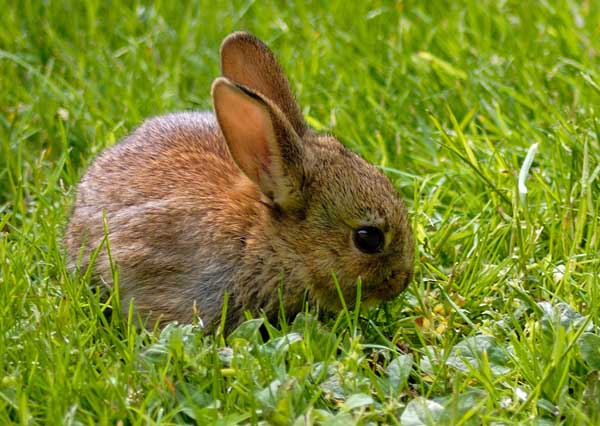
Selection of domestic rabbits means, during the breeding process, choosing superior bucks and does with good growth and development, high production performance and stable heredity as breeding stock, and culling those bucks and does that do not meet the breeding requirements, so that the superior traits of the whole rabbit herd are inherited and consolidated in the direction required by humans according to the breeding goals. There are many selection methods, but no matter which method is used, selection must be based on a comprehensive consideration of all factors.
Family selection method
Family selection mainly includes full-sib, half-sib, progeny testing and pedigree evaluation. In rabbit breeding work, full-sib and half-sib testing are widely used. Because the usable lifespan of rabbits is very short, progeny testing after kindling would inevitably take a long time. Using full-sib and half-sib testing allows results to be obtained in a short time, accelerating breeding work. Full-sib and half-sib testing is often used to measure traits with low heritability, such as fertility, milk secretion capacity and survival rate; when testing these low-heritability traits, a larger number of full-sibs and half-sibs is needed.
1. Progeny testing: evaluation of the quality of offspring can be used to assess the breeding value of bucks and does. It evaluates the body weight gain at 1 month and 4 months of age, health status, meat production performance and wool production performance of the young rabbits produced by the tested bucks and does.
2. Pedigree evaluation: pedigree evaluation is mostly used for selecting young rabbits.
Individual selection method
Selection is based on the performance of the individual rabbit itself, that is, its physical appearance and production performance. This method is very simple and is especially suitable for selection for high-heritability traits, because traits with high heritability show obvious differences among individuals in the rabbit herd. When using individual selection, different requirements should be applied to rabbits for different uses. Apart from fertility, for meat rabbits the main evaluation is body size. A dressing percentage of 53% and a feed conversion ratio (feed-to-meat ratio) of 3.5:1 are the best. For fur rabbits, the main considerations are fur quality and body size, with a large chest circumference and rump circumference being best. For wool rabbits, the main considerations are wool yield and wool quality. For dual-purpose rabbits, the main consideration is the special body type combining both meat and fur use, that is, evaluating body size, growth rate, rabbit meat quality and meat production performance, while also examining fur quality. From this it can be seen that individual selection is selection based on the physical appearance and production performance of the breeding rabbit.
Comprehensive evaluation method
The comprehensive evaluation method integrates the individual quality of the breeding rabbit, pedigree selection and progeny selection into one for overall evaluation. Selection can be carried out in stages:
1. When selecting breeding rabbits, young rabbits must be chosen from those produced by superior does.
2. Select from the offspring of the fifth litter. Pedigree evaluation should be the main basis, combined with the uniformity of growth and development of littermates. This is generally done when the young rabbits are weaned.
3. For meat rabbits, carry this out at 3 months of age. For wool rabbits, carry it out at the first shearing, with emphasis from 50 days to 65 days of age on body weight at shearing.
4. Carry this out at 5 months of age. For meat rabbits, check growth and development again; for wool rabbits, in addition to checking growth and development, focus on checking body weight and wool yield at the second shearing.
5. At 6 to 7 months of age, refer to performance in reproduction. At this time the rabbit's growth and development have matured, and medium-sized breeds have already entered reproduction; the main things to look at are conception rate, mating ability, kindling rate and survival rate of young rabbits. For wool rabbits, the third shearing yield can also be multiplied by 4 at this time to predict the annual wool yield of the rabbit.
Observation and screening method
When selecting breeding rabbits, you must be meticulous and patient, and carefully observe the external morphological characteristics of the rabbit, such as physique, body shape, eye color, coat color, whether it has a dewlap, ear shape, feeding characteristics and walking characteristics. Any rabbit that does not meet the standards for appearance traits must not be selected for breeding; those with various deformities or physiological defects, whether congenital or acquired, also must not be selected for breeding.
1. Lop ears: lop ears means the rabbit's ears hang down. This is an inherent characteristic of certain breeds, such as the British Lop Rabbit, French Lop Rabbit and Dutch Lop Rabbit. But for most breeds, both ears of the rabbit should be erect. If one or both ears droop due to hereditary or acquired reasons, this is a physiological defect and is not suitable for breeding. If it is acquired, for example caused by grabbing only the two ears when handling the rabbit, and the ear cartilage is damaged because the body weight is too great, it is also best not to select it for breeding.
2. Overlong incisors: overlong incisors are also called mandibular prognathism deformity. In some rabbits, the lower incisors grow obliquely upward and protrude, like upside-down ivory tusks, while the upper incisors grow into the mouth and become long and curved, just like sheep horns, seriously affecting the rabbit's feeding. It is especially difficult when eating long grass, and the upper palate and gums are easily pierced, causing inflammation and seriously affecting the rabbit's growth and development.
3. Drooping rump: rump refers to the rabbit's hindquarters. Some rabbits have too sloping a rump. Although such rabbits do not necessarily show poor meat production performance, mating is very inconvenient and the appearance is unattractive, so they are also not suitable to keep for breeding.
4. Splay legs: splay legs are also called swimmer legs. The two legs extend obliquely forward in a splayed shape, making it difficult for the rabbit to walk. Splay legs can be congenital or gradually acquired. Congenital cases can be inherited. Acquired cases are caused by nutritional imbalance, an unsuitable calcium-to-phosphorus ratio, and improper management, such as living since youth on an overly smooth floor net, causing a shift in the body's center of gravity and leading to leg bone deformity. Whether congenital or acquired, they must be culled and cannot be selected for breeding.
5. Reproductive disorders: rabbits with symptoms such as monorchidism, cryptorchidism or small testicle deformity, difficulty in distinguishing male from female, or too few teats are all unsuitable for selection as breeding stock.