Does the Chinese giant salamander bite people? Let us walk you through its habits
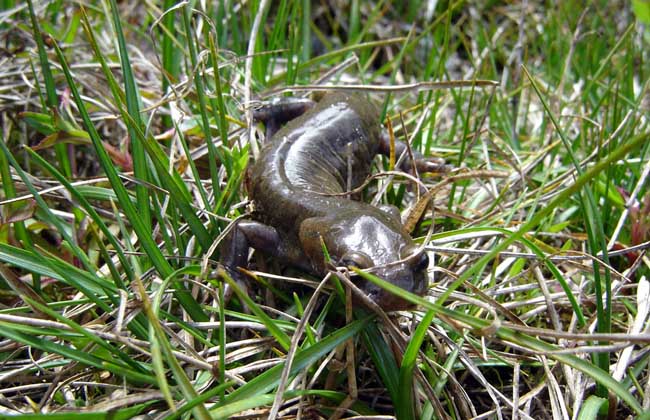
The Chinese giant salamander, whose scientific name is Andrias davidianus, is also known as the "mermaid," "baby fish," "foot fish," "crying fish," and "lard dog," among other names. It is the largest and most precious living amphibian in the world, a national second-class protected wild amphibian, and a key species for agricultural industrialization, specialty agriculture development, and wildlife gene conservation. Let us take a look below at whether the Chinese giant salamander bites people!
Does the Chinese giant salamander bite people?
Adult Chinese giant salamanders do bite people, and in the worst cases a bite can damage bone. The Chinese giant salamander is not a fish but an amphibian. Because of its lovely "baby fish" reputation and chubby body, it looks "very cute," and since it prefers quiet and fears strong light, in many people's eyes a Chinese giant salamander lying quietly in the water seems very docile. However, the Chinese giant salamander is fierce by nature, with sharp, densely packed teeth: two rows on the upper jaw and one row on the lower jaw. It does bite people.
What food does the Chinese giant salamander eat?
The Chinese giant salamander is fierce by nature and carnivorous, feeding on aquatic insects, fish, crabs, shrimp, frogs, snakes, soft-shelled turtles, rats, birds, and more. Its hunting method is to "wait idly for prey to come to it." Its teeth cannot chew, so it simply opens its mouth and swallows food whole, then slowly digests it in the stomach. For artificial feeding, natural bait is best, mainly including plankton, insects, meat, fish, shellfish, and so on.
The Chinese giant salamander's hunting habits
At night the Chinese giant salamander quietly waits among stone piles at the edge of a shoal. Once it spots prey passing by, it launches a sudden attack. Because the teeth in its mouth are sharp and dense, prey that enters its mouth can hardly escape. It has a strong ability to endure hunger; kept in cool water, it will not starve to death even if it does not eat for two or three years. At the same time, it can also gorge itself, and one full meal can increase its body weight by one fifth. When food is scarce, cannibalism among the same species can occur, and it will even eat eggs to stave off hunger. It usually hides away, and it likes to make its body color resemble the surrounding stones in order to avoid natural enemies.