Is Eating a Chinese Giant Salamander Illegal? Legal Regulations on Consuming the Chinese Giant Salamander Explained
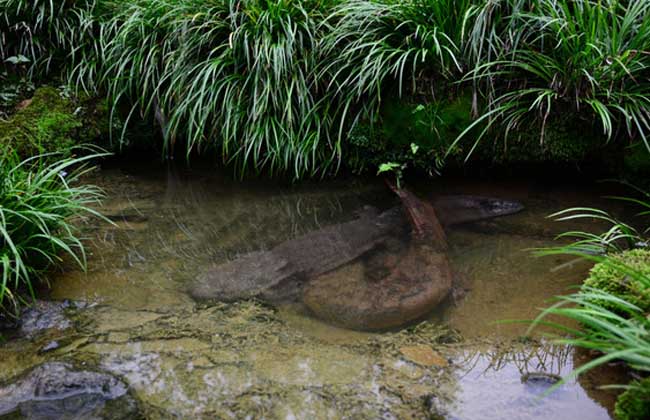
The Chinese giant salamander is the largest and most precious amphibian alive in the world today. Its back is brightly colored, its front limbs have four fingers like human hands, and its hind limbs have five toes like human feet. Its mouth is exceptionally large and its call is loud, closely resembling a baby, which is why it is called the "baby fish". Its lifespan is relatively long among amphibians. Let us take a look below at whether eating a Chinese giant salamander is illegal!
Is Eating a Chinese Giant Salamander Illegal?
Eating a wild Chinese giant salamander is illegal; eating a second-generation (F2) Chinese giant salamander is not illegal. The Chinese giant salamander is the largest and most precious amphibian alive in the world today, a national second-class protected amphibious wild animal, and also a key species for agricultural industrialization and specialty agriculture development as well as a genetic conservation species of wild animals. China stipulates that only second-generation (F2) Chinese giant salamanders may be consumed and traded. Illegally capturing, hunting, selling, or eating wild Chinese giant salamanders will be subject to legal sanctions.
What Does Second-Generation (F2) Mean?
A "first-generation (F1) Chinese giant salamander" is the first generation bred directly from wild Chinese giant salamanders; it may be farmed but is not permitted to be eaten. Only the "second-generation (F2) Chinese giant salamanders" bred from "first-generation (F1) Chinese giant salamanders" may be eaten and sold on the market. There is almost no difference in appearance between "first-generation (F1) Chinese giant salamanders" and "second-generation (F2) Chinese giant salamanders," making them very difficult to distinguish with the naked eye, which gives many lawbreakers an opportunity. However, an "electronic chip" implanted in the body of the Chinese giant salamander has now been developed; this chip can record and track the Chinese giant salamander.
Current Population Status of the Chinese Giant Salamander
Some estimate the total wild stock of the Chinese giant salamander in China at 50,000 individuals; the true number of wild Chinese giant salamanders still in nature may not reach 50,000. Of course, a more realistic figure awaits in-depth investigation and research for assessment. As for artificial breeding of the Chinese giant salamander, some reports put the annual national breeding output at 100,000 individuals, and artificial breeding has already surpassed 1.6 million individuals. According to statistics, the natural resource reserves of the Chinese giant salamander are about 90,000 individuals, with the largest resources in hilly and mountainous areas; in economically developed regions, resources are even more scarce due to intensified industrial pollution. The Daba Mountains area of Nanjiang County, Bazhong City, Sichuan, with its high mountains, dense forests, and lack of industrial pollution, is the best environment for the Chinese giant salamander to survive.