How much was a jin of giant salamander in 2016?
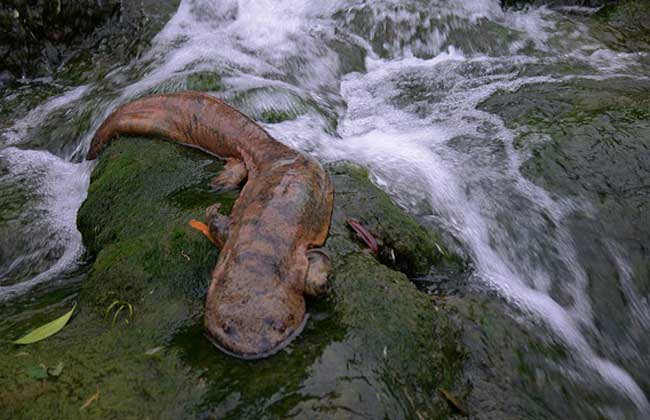
The giant salamander is the largest and most precious amphibian existing in the world today. Its call sounds like a baby's cry, so people also call it "baby fish". It has extremely high edible value, with tender meat and a delicious taste, and contains high-quality protein, abundant amino acids and trace elements. Its nutritional value is extremely high, and it is known as the "ginseng of the water". Now let us take a look at how much a jin of giant salamander cost in 2016!
How much is a jin of giant salamander?
Farmed giant salamanders are much cheaper than wild ones. Generally, giant salamanders weighing more than three jin cost 700 to 800 yuan per jin, those under three jin cost about 1000 yuan per jin, and juvenile giant salamanders cost 200 to 300 yuan each. At present, the wholesale price of giant salamanders is 200 to 300 per jin, which can be said to be the lowest in recent years. There are two reasons for the price drop: first, governments in various places have all supported farmers in breeding giant salamanders, and the number has risen somewhat; second, the consumer group using public funds for eating and drinking has decreased due to crackdowns.
Is it illegal to eat wild giant salamanders?
Wild giant salamanders cannot be eaten; eating them is illegal. Farmed ones can be eaten. It needs to be emphasized that only those of the second filial generation and above can be eaten, developed and utilized, that is, the "grandchildren" generation. After wild giant salamanders reproduce, those raised artificially are called the first filial generation, and the next generation is called the second filial generation. To eat giant salamanders, first, the source must be legal. The giant salamanders used for business and utilization must be artificially domesticated, and the supplier must hold a "Domestication Certificate". Second, the place where they are eaten must be legal. The user must be a designated place and hold a "Business Utilization Certificate".
Nutritional value of giant salamanders
1. The giant salamander is an animal with extremely high edible value. Its meat is tender and delicious, and it contains high-quality protein, abundant amino acids and trace elements. Its nutritional value is extremely high, and it is known as the "ginseng of the water". In the markets of Hong Kong, China, Taiwan, China and Southeast Asia, it is regarded as a rare tonic.
2. Giant salamander muscle protein is a high-quality protein, with high essential amino acid content and a good composition ratio, fully conforming to the human body's requirement pattern, and its nutritional value is far superior to abalone, bird's nest, shark fin and soft-shelled turtle. The muscle protein of large giant salamanders is rich in 18 kinds of amino acids, among which 6 flavor amino acids account for 42.77% of the total amino acids, 8 essential amino acids for the human body account for 40.72% of the total amino acids, and the ratio of essential amino acids to non-essential amino acids is 68.68%, all conforming to the ideal pattern of FAO/WHO.
3. The essential amino acid score of giant salamanders is high, and the degree to which it conforms to the human body's requirement pattern is quite high. It is rich in lysine, which is easily lacking in our country's staple foods, and can be reasonably paired with staple foods when eaten to produce a protein complementary effect.
Summary: Although the price per jin of giant salamanders has dropped a lot, because giant salamanders have always been a relatively niche variety, ordinary people still do not accept this fish as an ordinary consumer product and do not recognize this kind of consumption. That is to say, most people do not care how much a jin of giant salamander costs, because they basically do not need it. However, with the decrease in the price of giant salamanders, the amount of fish used for ornamental and educational purposes has risen somewhat.