Can You Eat the Chinese Giant Salamander? Read This and You Will Know
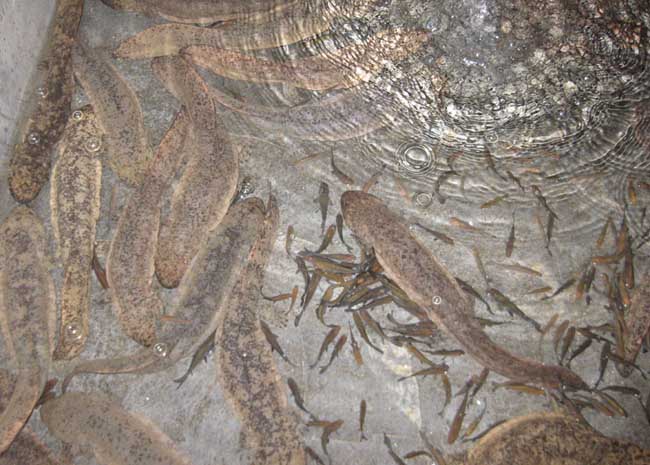
The Chinese giant salamander is the largest species of amphibian, with a total length reaching 1 m or more and a maximum weight of over 100 jin. Its appearance is somewhat similar to a lizard, only comparatively plumper and flatter. In China it is mainly found in the mountain streams of the middle and upper tributaries of the Yangtze River, Yellow River and Pearl River. Let us take a look below at whether the Chinese giant salamander can be eaten!
Can you eat the Chinese giant salamander?
Yes, the Chinese giant salamander can be eaten. The giant salamander is an animal of extremely high food value; its meat is tender and delicious, containing high-quality protein, abundant amino acids and trace elements, with extremely high nutritional value. It is known as the “ginseng of the water” and is regarded as a rare tonic in the markets of Hong Kong, China, Taiwan, China and Southeast Asia. The muscle protein of the Chinese giant salamander is a high-quality protein with a high content of essential amino acids and a good composition ratio, fully conforming to the human requirement pattern.
Does the Chinese giant salamander taste good?
Yes, the Chinese giant salamander tastes good. The Chinese giant salamander is the largest amphibian currently surviving in China; its meat is very delicious, with a rich flavor, fatty but not greasy, and suitable for all ages. Moreover, the Chinese giant salamander has extremely rich nutritional value for humans and also has many uses in medicine, which is also one of the main reasons it has become endangered.
Is it illegal to eat the Chinese giant salamander?
Eating wild Chinese giant salamanders is illegal, but eating second-generation (F2) Chinese giant salamanders is not illegal. The Chinese giant salamander is the largest and also the most precious amphibian existing in the world. It is a national second-class protected amphibious wild animal, and is also a key species for agricultural industrialization and specialized agriculture development as well as for wild animal gene protection. China stipulates that only second-generation (F2) Chinese giant salamanders may be eaten and traded; illegally capturing, hunting, selling or eating wild giant salamanders will be subject to legal sanctions.