Why do wild orchids rarely suffer large-scale disease outbreaks? The reason is simple.
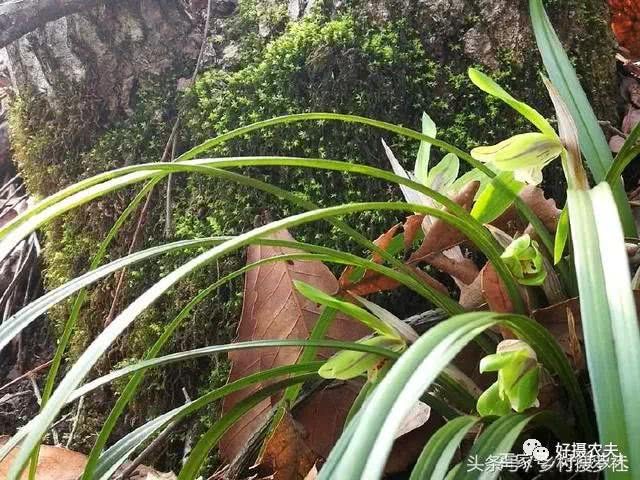
Cultivated orchids are prone to disease, and this is also the most troubling problem for many orchid lovers. Moreover, once some viruses cause infection, if treatment is not timely, they can spread rapidly in a short time, and in severe cases can cause all the orchids to suffer utter devastation. It is not that we care for cultivated orchids too carelessly, yet things often turn out contrary to our wishes. What is the reason for this?
But strangely, wild orchids rarely suffer large-scale bacterial infection, and even if a few plants are occasionally infected, they often recover on their own. In fact, we can look at this issue step by step, and it will not seem so complicated. Haoshe Farmer often goes up the mountain and comes into close contact with wild orchids as they grow, and has also made some simple records of their growth and health.
First, it is the principle of natural selection. Wild orchids (including other animals and plants) reproduce only in environments that suit or please them. We often see wild orchid seeds scattered by the wind, but not many actually sprout into seedlings. This process is a kind of natural selection. Only when a seed lands in a place suitable for its own growth can it possibly grow into a robust orchid seedling. What we do not see are the even more numerous ones that never become seedlings.
This is somewhat similar to how we only pay attention to the glory of successful people in society, while not noticing those who did the same work as them but failed.
Even if wild orchids are on the same mountain, the trees growing at each elevation of the mountain are not all the same, and the trace elements contained in the soil are not completely the same either. That is why we can find wild orchids of different varieties and different flower colors on one mountain.
And the disease-resistant effects produced by various different trace elements are also different. Simply put: bacteria that easily breed at the mountainside may very likely be unable to survive at the summit, while bacteria at the summit that may harm orchids pose no threat to orchids at the mountainside.
The orchids we cultivate at home, however, are mostly grown in the same environment, with the same planting medium, the same watering pattern, and the same fertilizer. Too much uniformity instead causes the orchids to lose their own wildness. This loss of wildness greatly reduces the orchids' resistance. The commonly seen phenomenon is that once one orchid is infected with bacteria, it can quickly spread to the other pots, and may even wipe them all out.