Detailed Explanation of Key Techniques for Summer Management of Tree Bonsai
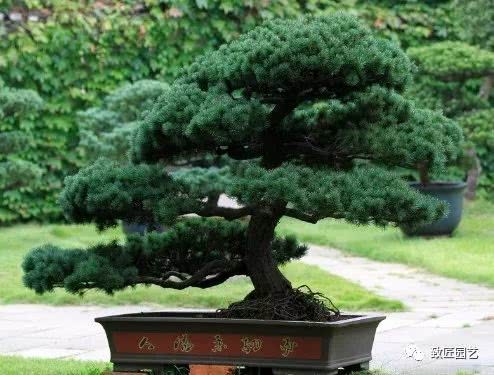
Summer management of tree bonsai is somewhat difficult, because summer temperatures are high, sunlight is intense, and storms and pest infestations are common, which is unfavorable to the growth of tree bonsai. A slight negligence may lead to death, and it is difficult to remedy. Based on the author's own experience, as long as the following aspects of management are handled well, tree bonsai can pass through summer smoothly.
1. Shaping and pruning
It is very necessary to carry out shaping and pruning of tree bonsai around the Beginning of Summer, which helps maintain the tree's graceful form, can also reduce nutrient loss, and improves the tree's ability to endure dry and hot weather. At the same time, after the tree bonsai is pruned back, the tree can regrow new buds, increasing its ornamental value.
(1) Pinching. After the beginning of spring, the new shoots of tree bonsai have already grown to a certain length. Before the new shoots become woody, remove the growing point at the tip of the tender shoot by hand to prevent excessive branch growth, shorten the branch spacing, maintain a certain posture of the tree, promote axillary bud germination, and increase leaf and branch density.
For cypress species, pinching generally starts in late May, and fingers should be used; if scissors are used, the wound will turn rusty in color, affecting the ornamental effect. It can be pinched once more in late summer. For broadleaf trees that readily send out new shoots, such as maples, woody begonias, and Japanese boxwood, generally remove the tender tip after 2-3 leaves (pairs) on the new shoot; after half a month, new shoots will emerge again and can be pinched off again. Through pinching, the branches and leaves can become luxuriant and the tree form full.
(2) Leaf removal. Foliage-type trees are most beautiful when the new leaves have just unfolded. For deciduous trees such as elms, maples, ginkgos, and pomegranates, all unattractive old leaves can be removed in summer, and after about half a month, pleasing new leaves will grow. During the period before and after leaf removal, apply 2-3 rounds of decomposed liquid fertilizer to ensure good leaf growth.
(3) Flower thinning and fruit thinning. The flowers and fruits of trees such as five-needle pine, Japanese boxwood, and cypress species have no ornamental value and can be removed in time to avoid consuming nutrients. For flowering and fruiting trees, if the flowers and fruits are too abundant, some flowers and fruits also need to be thinned to maintain tree vigor. This can avoid nutrient consumption and at the same time promote bud germination and growth.
(4) Branch pruning. This is generally carried out around the Beginning of Summer. The principle of pruning is to beautify the tree shape and benefit tree growth. The growth habits of the tree must be considered, and flowering and fruiting must not be affected. Generally speaking, dead branches and diseased or pest-infested branches should be cut off at any time and burned to prevent spread and transmission; water sprouts should also be cut off, and if their position is good, they can also be shortened to control vigor.
Overly dense branches should be thinned so that branch density is appropriate and ventilation and light penetration are favored; overly long branches should be appropriately shortened; all crossing branches, overlapping branches, and other branches that affect the styling must be pruned; for parts missing branches, attention should be paid to inducing and supplementing branches so that the tree form is complete. When pruning, also note: do not prune during hot high temperatures, the scissors must be sharp, the cut must be smooth, and larger wounds can be sealed with wax for protection.
2. Watering
Tree bonsai most fear dehydration in summer, so in summer, frequently check whether the potting soil is already dry, and especially whether the leaves show curling. If this situation is found, water must be given in time, and it must be watered thoroughly. When sunlight is intense, some water mist can be sprayed on the leaves and trunk to increase humidity, so as to meet the tree's water needs.
3. Shading
When summer sunlight is too intense, tree bonsai can be shaded for protection. Generally, ordinary bamboo blinds sold on the market are sufficient, and if conditions permit, shade netting can also be used. At other times, the blinds and netting should be rolled up to avoid affecting the tree's light requirements. In addition, during stormy weather, bamboo blinds and the like can also be used for covering to prevent situations such as potting soil being washed away and trees being uprooted, which would affect tree growth.
4. Pest prevention
Summer is the season when tree bonsai are most prone to pest damage, so timely prevention and control are needed. Generally, an appropriate amount of pesticide is sprayed on the leaves and trunk. Alternatively, soak 3 ordinary cigarettes in every 500 ml of water for several days, then use the water to spray the trunk and leaves once a week; the effect is very ideal.
Wonderful content