Put this at the bottom of the camellia pot and add 4 more grains, and once the flowering season arrives, buds will burst out vigorously, big and plentiful
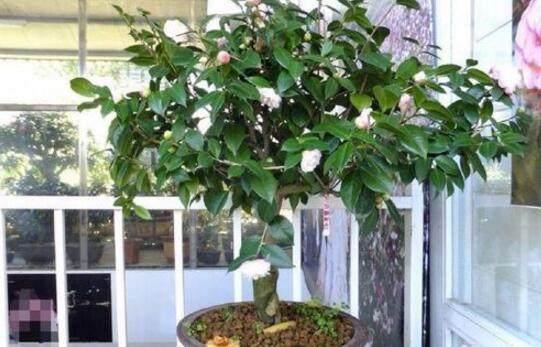
Camellia is a potted plant that flower lovers quite like. Its leaves are rich and lush, and its flowers are gorgeous, making it very popular as an indoor potted plant. However, if you want to grow camellias well, fertilizer is absolutely indispensable, because camellia is a fertilizer-loving flower. If you want it to bloom more, flower lovers can put "it" at the bottom of the pot, then add 4 grains of "it", and once the flowering season arrives, buds will burst out vigorously, big and plentiful. Are flower lovers confused by all this? What exactly are this "it" and that "it"?
Bone residue at the bottom of the pot, ample nutrition and brilliant flowers
Camellia is a fertilizer-loving flower. If you want it to grow well, you must use organic fertilizer and chemical fertilizer in combination. Only in this way can you grow camellias well, and bone residue is an organic fertilizer containing multiple nutrient elements, just right for growing camellias.
The preparation method is as follows:
Collect the bones left over from eating pork ribs and fish at home, soak them in clean water for about 10 hours (this step is to remove the salt and other seasonings on them), then put them in a pressure cooker and simmer for about 30 minutes. Take them out, let them cool, then put them under the sun to dry for 7-10 days. Smash them with a hammer (a grinder is even better), and they can be used to grow flowers.
The method of use is as follows:
1. When potting, take out an appropriate amount of bone residue and place it at the bottom of the pot. If no garden soil is added, it can be kept a little farther from the root system.
2. Mix it together with the potting soil at a ratio of 1:20 to directly plant the camellia, with good results.
3. You can dig a few holes around the edge of the pot, put some bone residue in each hole, and cover with soil.
After using bone residue, this kind of organic compound fertilizer, your camellias are sure to bloom with flowers as big as bowls, plentiful, and bright in color.
Xiaohua just said that if you want camellias to bloom a lot, then we need to use organic fertilizer and chemical fertilizer in combination, so when watering the camellias we can also apply a little chemical fertilizer once a month. You can add some nitrogen fertilizer. Nitrogen fertilizer is mainly applied during the branch-growing and budding period. Add 3-4 at a time and water it on. During the flowering period, apply phosphorus and potassium fertilizer. You can add some monopotassium phosphate at a concentration of 0.3%.
It should be noted that in high-temperature summer weather, fertilizer cannot be applied.
With sufficient fertilizer and water, the camellia will have the strength to grow and bloom. Other care steps cannot be omitted either!
1. Light
Camellia cannot be exposed to strong sunlight and likes half-shade and half-sun light. In summer, when the sunlight is too strong, just letting it get sun in the morning and evening is enough. At exactly noon, the camellia should be shaded.
2. Watering
For the cultivation of potted camellias, the soil should be kept moist, but it should not be too wet, to prevent alternating dry and wet conditions.
Generally, in spring it can be watered a little more to help sprouting and new shoot growth; in summer, insist on watering in the morning and evening, and it is best to spray water on the leaf surface so the leaves are thoroughly wet. Do not use a strong stream to pour directly or flood the pot, and avoid watering around noon when temperatures are high; in autumn, watering should be moderate, while in winter it is best to water around noon, and you can spray water once every two or three days.
3. Pruning
Camellia grows relatively slowly. In usual pruning, just remove diseased branches and overly long branches. Pruning should be light.
That is all for today's sharing. If you want all kinds of fresh flowers, you can send a private message to the editor. The editor will regularly select lucky fans and send them fresh flowers!