Analysis of the Core Essentials and Key Technical Points of Giant Salamander Farming
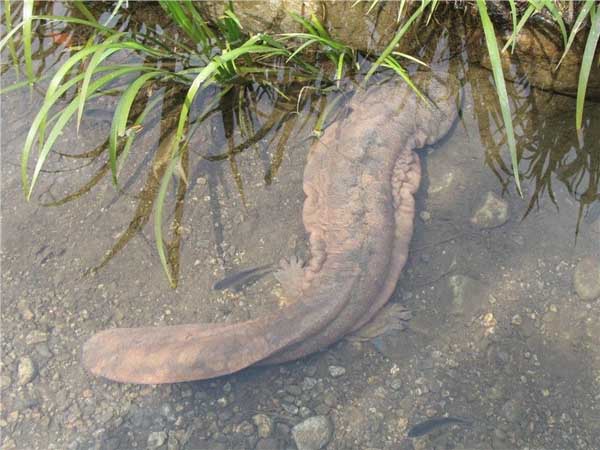
Core Essentials of Giant Salamander Farming
1. Maintain a slight water flow, with the inlet and outlet opened at the same time.
2. The water level should preferably cover the fish's back by 2-5 cm; do not make it too deep.
3. Keep the water temperature between 16-22 degrees, with 17-20 degrees being optimal.
4. Remove the fish's waste every day to keep the water quality from deteriorating.
5. The light should not be too bright; keeping it dim is best.
6. It is best to build a dark hiding hole for the fish; the floor can be used to make one.
7. Thoroughly clean the pond once a month and disinfect the fish's body once, with salt at a concentration of 1-2%.
8. In spring and autumn, disinfect and sterilize the fish once a week, and the pond body once a month.
9. In case of high summer temperatures, ice bottles can be used to cool the water so it stays within 16-22 degrees.
10. The giant salamander fears heat but not cold. It will die quickly if the temperature exceeds 30 degrees to 40 degrees, but it will not freeze to death even at minus 10 degrees in winter. The giant salamander likes cool, shady conditions.
11. The food given to the fish should preferably be fresh and live material that has not spoiled. If using cut-up pieces of material, it is best to sterilize and disinfect them with 1-2% table salt. The best time to feed is shortly after dark, when the fish are swimming around scattered in the pond. Do not feed too much; it is best if no food remains that night.
12. Do not normally put your hands into the water in the pond or grab the fish's body with your hands; it is best to use a net to scoop up the fish.
13. Do not bump the pond body, strike the pond equipment, stir the water, shine strong light on the fish's body, and so on when there is no need.
14. For breeding young fry, the site should preferably be chosen in a mountainous river valley on a gentle slope in a flood-avoiding area with vegetation. The source of breeding fish should preferably be chosen from a farming company with a breeding and raising certificate and a business certificate. Legal seed stock is the key core of future breeding and business operations. For a newly built farm, the brood fish should preferably be selected from disease-free, defect-free, injury-free fish of 5-10 jin and over 5 years old as parents, then cultivated for 1-2 years into breeding fish.
15. For commercial fish, it is best to choose a plain area, and using underground well water is best, as it is warm in winter and cool in summer and does not affect the fish's growth. If using tap water to raise fish, the water must definitely be stored and aerated before being used for the fish.
16. If diseased or abnormal fish are found, immediately remove and isolate them. If the temperature changes sharply with a difference of 1-10 degrees, it is a cold for the fish's body, and antiviral medication should be used for treatment. If it is an intestinal lesion caused by weather changes or spoiled feed, anti-inflammatory medication is better for treatment. If the fish's body develops saprolegniasis caused by scratches, the diseased fish should first be removed and treated with sterilizing medication. In addition, the pond body should be disinfected and sterilized. To raise giant salamanders well, the emphasis is on prevention, not on who can cure them once they are sick. It is best to reach the highest level of having no disease at all.