What Are the Prospects for Giant Salamander Farming? A Comprehensive Analysis of Market Potential
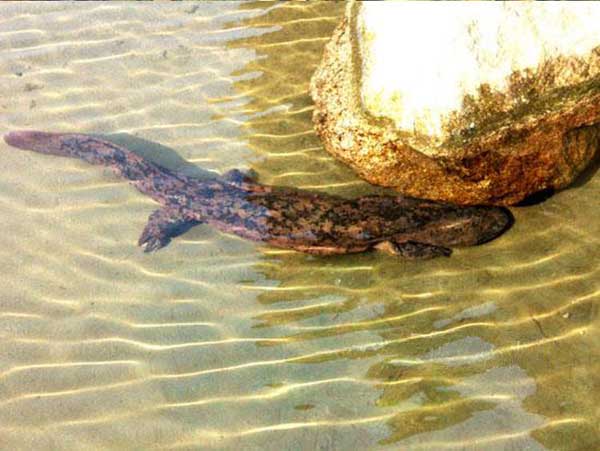
The giant salamander is the largest and most precious amphibian alive today. Its call sounds very much like a baby's cry, which is why people also call it the "baby fish" (wawayu). It is a national Class II protected aquatic wildlife species, a key species for agricultural industrialization and specialty agriculture development, and a wildlife gene conservation species. The Chinese giant salamander is found in all provinces and regions except **, Tibet, Inner Mongolia and Taiwan, China, where no reports exist; it is mainly produced in the mountain streams of the upper and middle reaches and tributaries of the Yangtze, Yellow and Pearl Rivers.
Giant Salamander Farming Prospects as a Specialty Farming Project
Traditional agricultural farming suffers from low technical content, low economic returns, high input and low output, and now faces an unfavorable situation of supply exceeding demand. Industrialized giant salamander development can organize farmers to engage in commercial giant salamander farming, with products bought back by companies at market prices. For example, if each household farms 100 giant salamanders, the net profit after one year can reach more than 50,000 yuan. This is one of the effective ways to develop the rural economy and help farming households increase income and escape poverty. At present, relevant giant salamander farming units have already applied for national industrialization project support, and it will be developed as a specialty farming project in rural areas.
Giant Salamander Farming Is Suitable for Broad Rural Areas
Rural areas are rich in water sources, and most of them are natural mountain springs with good water quality, and there is also plenty of natural bait, which can save on bait costs. With the industrialization of giant salamander farming, farming households can do it in their spare time at home; the labor intensity is not high and the investment is not large, and it can absorb a large amount of urban and rural labor for employment. As the industrialization of giant salamander farming deepens, it will provide large amounts of raw materials for the meat processing industry, winemaking industry, cosmetics industry and others, promoting the development of various industries. At the same time, as an export species, the giant salamander will open up international markets and win greater business opportunities, create greater commercial value and promote the development of trade.
Broad Prospects for Giant Salamander Farming
The national annual output of giant salamander breeding (artificial breeding and imitative ecological breeding) fry is about 200,000. By the most conservative estimate, across the country's 34 provincial-level cities, if each city consumes 10 tons per year, that makes 340 tons for the year; among 333 prefecture-level cities, if each city consumes 1 ton per year, that makes 333 tons; among 2,862 county-level cities, if each county consumes 5 tons per year, that makes 1,431 tons. Total national consumption exceeds 2,000 tons; if domestic sales and exports expand, the demand and transaction value will be enormous. If the annual fry are calculated at a 90% survival rate, and after three years of farming each reaches 2.5 kg, then 450 tons of commercial giant salamanders are produced, which is only one fifth of consumption.
The Huge Space in Giant Salamander Farming Prospects
Because wild giant salamander resources are extremely scarce and on the brink of extinction, and the reproduction rate is low, seizing this development opportunity, in which resources are sharply declining, commercial giant salamander farming has not yet taken shape, and domestic and international market demand is enormous, will generate huge social and economic benefits. The giant salamander is a national Class II protected wild animal, and farming giant salamanders requires obtaining an aquatic wildlife domestication and breeding license, so competition is small. According to relevant legal provisions, second-generation baby fish can already be sold on the market, and one can also apply to the Aquatic Wild Fauna and Flora Protection Office of the Ministry of Agriculture for a giant salamander export license. After comparing and analyzing the market development prospects of soft-shelled turtle (Chinese softshell turtle, eight-treasure fish) and giant salamander farming, we find that baby fish farming offers limitless business opportunities.
1. Soft-shelled turtle market: At present, domestic annual output exceeds 2 million kg. Annual fry output exceeds 10 million. The soft-shelled turtle is a species anyone can farm, competition is strong, and in addition Taiwan, China and Thailand also have large farming output, so the soft-shelled turtle market quickly became saturated. The time to profit from farming soft-shelled turtles is short: from 600 yuan per 7 kg at the high-price period to 50 yuan per 1 kg now, in only 2〜3 years.
2. Sturgeon market: At present, domestic output can reach 300,000 kg, and because the amount of bred fry is large, with each group of broodstock producing no less than 20,000〜50,000 fry, the commercial fish and fry become saturated in just 1〜2 years. Commercial sturgeon went from 400 yuan per 1 kg at the high-price period to 40 yuan per 1 kg now, in only 1〜2 years.
3. Giant salamander market: Current legally marketable domestic output is less than 2,000 kg per year, the price of baby fish is around 1,500 yuan per jin, and annual fry output is less than 150,000. Giant salamanders have a low sexual maturity rate, and the number of fry produced per breeding group is generally only 100〜300. In the next 10 years, annual fry output will not exceed 500,000. In addition, Southeast Asian countries and Taiwan, China have no giant salamander resources, so these countries and regions cannot develop commercial giant salamander farming. Annual market demand for commercial giant salamanders is 3〜5 million kg, and annual market demand for giant salamander fry is no less than 500,000. It can thus be seen that the giant salamander is a seller's market, and for the next 10 years demand will also exceed supply.
Although giant salamander farming has great benefits and market development prospects, farmers should also note that investing in a giant salamander breeding project generally requires more than 500,000 yuan, and the breeding technology is somewhat difficult. It is recommended to start with farming and cultivate your own breeding salamanders, which can reduce investment costs. When introducing giant salamanders for farming, you must sign a legally binding contract, and you must go to a legitimate giant salamander breeding farm to obtain stock, preferably with the help of giant salamander technicians. At the same time, when signing the stock introduction contract, you must require the supplier to state that the fry supplied are giant salamanders, because many fake giant salamanders cannot be identified by ordinary people. Those with small capital can specialize in raising fry, and when they reach 1.5〜2.5 kg after 3 years of farming, they can be sold.