Can giant salamanders be bought and sold? Understand the relevant regulations before deciding
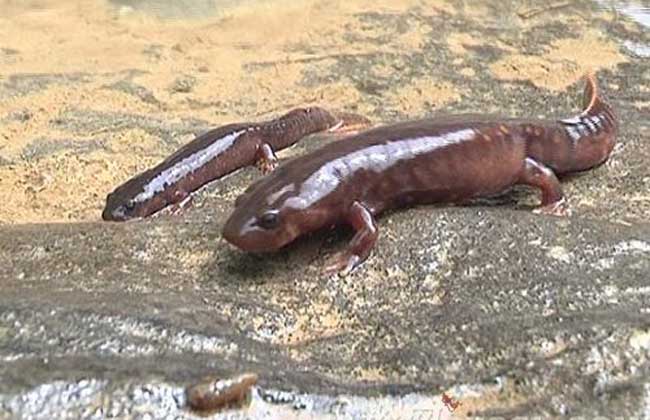
The giant salamander is the largest and most precious amphibian still existing in the world. In China, it is found in all provinces and regions except Tibet, Inner Mongolia and Taiwan, China, where it has not been reported. It is mainly produced in the mountain streams of the upper and middle reaches and tributaries of the Yangtze, Yellow and Pearl Rivers. It is commonly known as "great mountain pepper fish" because its body has a pepper-like smell. Let us take a look below at whether giant salamanders can be bought and sold!
Can giant salamanders be bought and sold?
Buying and selling wild giant salamanders is illegal; buying and selling second-generation (F2) giant salamanders is not illegal. The giant salamander is the largest and most precious amphibian still existing in the world. It is a national second-class protected wild amphibian, and is also a key species for agricultural industrialization and specialty agriculture development as well as a wildlife gene conservation species. China stipulates that only F2 giant salamanders may be eaten and traded. Illegally catching, hunting, selling or eating wild giant salamanders will be subject to legal sanctions.
What does second generation (F2) mean?
"First generation (F1) giant salamanders" are the first generation bred directly from wild giant salamanders; they may be farmed but are not allowed to be eaten. Only the "F2 giant salamanders" bred from "F1 giant salamanders" may be eaten and sold on the market. There is almost no difference in appearance between "F1 giant salamanders" and "F2 giant salamanders", and they are very difficult to distinguish with the naked eye, which gives many lawbreakers an opportunity. However, an "electronic chip" implanted in the giant salamander's body has now been developed, and this chip can record and track the giant salamander.
The habitat environment of the giant salamander
The living environment of the giant salamander is relatively unique. It generally lives in mountain streams, rivers and lakes with swift currents, cool and clear water, lush aquatic plants, and many rock crevices and caves. It sometimes also moves on the shore among tree roots or on fallen tree trunks, and chooses to live in caves at bends with backflow, generally with only one salamander per cave. The caves vary in depth; the entrance is slightly larger than its body, and the inside is spacious, with enough room for it to turn around, while the bottom is relatively flat or has fine sand. During the day it often hides in the cave with its head mostly facing outward, making it easy to act at any time, catch prey and avoid enemies. If disturbed, it quickly leaves the cave and swims into deep water.