What are the man-made causes of giant salamander diseases
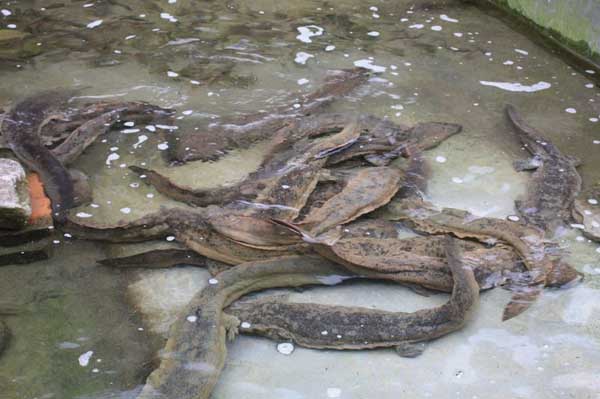
Some common man-made situations that cause diseases in giant salamanders
Improper packaging materials and methods during long-distance transport cause squeezing; individuals are packed too densely; friction and collisions occur along the way, along with temperature and other factors, leading to the most common outbreak in giant salamanders, which is intestinal disease, and the onset of viral cold-like illness caused by temperature differences. Many novice buyers see the fry looking perfectly fine when buying, but when they get home, the fry float, die, and stop eating. The problem lies in the fact that during transport they did not withhold food from the giant salamanders, did not give the giant salamanders stress prevention, used the wrong packaging method, failed to get the amount of water right, and did not control the temperature correctly. After getting home, they also paid no attention to the temperature gap between the box and the pond, which led to viral cold-like illness in the giant salamanders. For example, with the smallest 4 cm fry, if the temperature difference is too great, it can even cause the giant salamander fry to die on the spot.
The bait fed is not disinfected, the dosage of the disinfecting drug is incorrect, or no disinfection is done at all. This is especially true of loach, rice field eel, frogs, toads, pond fish, and shrimp from ditches, which carry large amounts of microorganisms in any season. Many people go into the mountains, ponds, and ditches themselves to catch bait, and these are basically wild items. Wild items carry countless microorganisms. Especially in autumn, spring, and summer, these baits have a very high possibility of carrying viruses. When some households' farmed giant salamanders come down with unexplained diseases for no apparent reason, I believe the bait is the chief culprit. People who farm giant salamanders do not pay attention to the source of the bait, yet they guard the door tightly, always believing that as long as people do not go look, diseases will not spread. To be honest, the claim that a giant salamander gets sick just because someone looks at it is basically incorrect, unless the person looking maliciously carries pathogens and puts them into the pond.
Improper use of drugs. When a few fish among some farmers' stock have problems, they ask around about which drug works best, then go home and heavily medicate the giant salamanders to treat them. All drugs are three parts poison, and an overdose will cause giant salamanders to die. Many farmers' giant salamanders do not die of disease, but are killed by treatment. The dosage of the drug used must be combined with the individual size of the giant salamander, the water volume of the pond, the different seasons, the different temperatures, and other factors to arrive at an appropriate dosage. Especially the first time a drug is used, it must be used sparingly. Some people also use the same dosage for the first and second treatments for the same disease, yet the first time it works and the second time it does not. The reason comes down to drug resistance.
Among the drugs commonly used in China that poison giant salamanders to death, the first is povidone-iodine, the second is chlorine dioxide, the third is potassium permanganate, the fourth is table salt, and the fifth is malachite green. If these drugs are used properly, they will have good effects. If the dosage is insufficient, they will not achieve the effect either. The true use of chlorine dioxide is best for sterilizing and disinfecting pond tools and equipment, but the prerequisite is that the giant salamanders must be taken out first. The biggest mistake novices make is adding chlorine dioxide without removing the fish.
In winter, man-made heavy heating causes indoor temperatures to fluctuate between high and low, resulting in viral cold-like illness in giant salamanders. The following year, such fry have a very hard time getting through summer, their resistance is extremely poor, and the possibility of disease outbreaks is very high.