How much is the artificial breeding output of the Chinese giant salamander
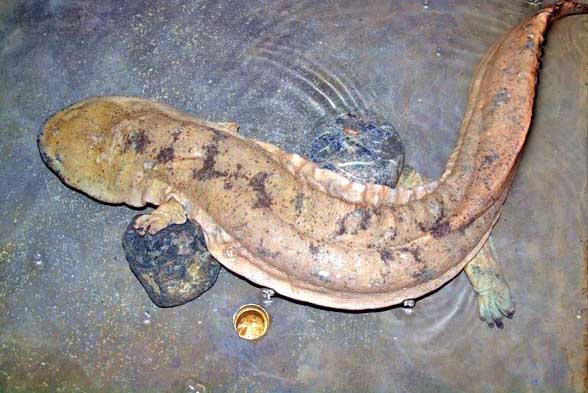
Recently everyone has been discussing how large the breeding output of the Chinese giant salamander is. In my personal view, the breeding output of the Chinese giant salamander is far from reaching its theoretical output. The Chinese giant salamander matures starting from 5 years of age, and individuals weighing from 1.5 kg to 15 kg can all lay eggs.
In actual production, most Chinese giant salamanders weighing between 3 kg and 15 kg are induced to spawn, and the number of eggs laid ranges from 300 to 2000, but the fertilization rate varies greatly; some reach 90%, while others are completely unfertilized. Through technical improvements, the fertilization rate has been raised to 90%, the spawning rate to 90%, and the hatching rate ranges from 90% to 10%.
Assuming the Chinese giant salamander technology is improved to: spawning rate 90%, fertilization rate 90%, hatching rate 90%. Calculated at an average of 1000 eggs per Chinese giant salamander, the average seedling output rate is more than 1:600, that is, each female produces an average of 600 fry. In actual production, it is really very low now. At present, the average at general breeding bases is mostly within 1:30, and most rely on quantity to win, wasting a large number of brood fish. Some even lose confidence in artificial breeding and switch to ecological breeding; when ecological breeding encounters difficulties, they switch back to artificial breeding, seeking the end by abandoning the means. Once artificial breeding technology makes a breakthrough, the drawbacks of ecological breeding become apparent.
In my personal view, artificial breeding has great potential, and the key lies in technological breakthroughs. Nowadays, many breeding farms lack their own technical personnel and have no unique technology of their own; they follow what others say. When ecological breeding is favored, they blindly follow the trend and do ecological breeding; when artificial breeding is favored, they blindly follow the trend and do artificial breeding. Not understanding how to adapt measures to local conditions, failure is inevitably hard to avoid.
In Chinese giant salamander breeding, artificial breeding is the major trend, technological breakthroughs are only a matter of time, and ecological breeding serves as a supplement. Artificial breeding of fry will make major breakthroughs within a few years.