What are the precautions for introducing wild giant salamanders?
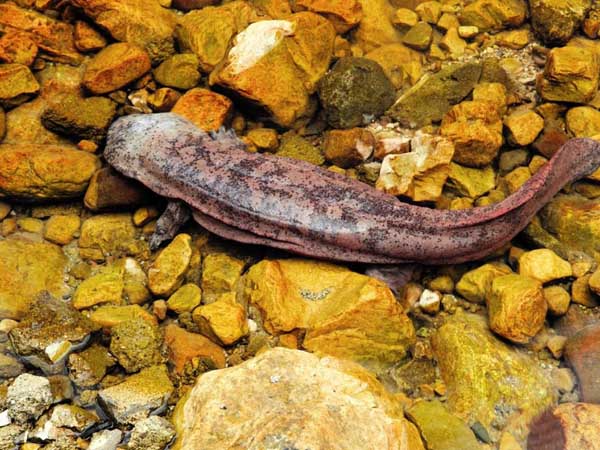
Precautions for introducing wild giant salamanders and anti-stress methods
If the methods used during the introduction of wild-caught giant salamanders are improper, they can cause severe stress reactions and even death. In order to prevent the limited number of wild giant salamanders from dying due to introduction stress reactions, anti-stress treatment must be carried out on introduced giant salamanders and those purchased from the market, and attention must be paid to correct introduction methods.
Stress manifestations in giant salamanders
1. Vomiting: During transport or after arriving at the destination and being placed in water, the giant salamander vomits out all the contents of its stomach. We once saw a giant salamander vomit two mouse heads and excrete a large amount of feces after being placed in water; another giant salamander immediately vomited a large amount of crabs it had swallowed after being placed in water.
2. Weight loss: Mainly due to the giant salamander excreting urine and body surface mucus as a result of stress, causing massive loss of body water, with weight loss reaching as much as 30%.
3. Not entering the cave after being placed in the breeding pond: After entering the water, the giant salamander never enters the cave, wandering idly along the edges of the pond or staying motionless in a corner of the pond. These giant salamanders usually have hooks inside their bodies or injuries on their bodies.
4. The body keeps swinging and the mouth is often open for breathing, for unknown reasons.
5. Not eating for a long time: Although some giant salamanders enter the cave, due to strong stress reactions, they do not eat for a very long period, even when water temperature, light, dissolved oxygen and other conditions are in the optimal range. Some of these giant salamanders have hooks inside their bodies or unhealed wounds. For example, we once observed a giant salamander that only vomited out the long hook it had swallowed 2 months after being introduced and placed in water; and a male giant salamander whose swallowed long hook had reached the intestine, causing multiple perforations of the stomach and intestinal walls, took as long as 7 months from being introduced and placed in water to death, during which time it never ate; another giant salamander with a bite wound that had not healed also never ate.
Precautions for introduction
1. Appearance inspection: First examine the external appearance of the giant salamander to see whether there is external injury, whether the skin has lesions such as ulceration or bleeding, whether movement is normal, whether the hind limbs are strong, and turn it over with its belly facing up to see whether it can quickly turn back over. Giant salamanders with smooth body surfaces, strong hind limbs and quick turning ability generally have better physical condition.
2. Metal detector inspection: When introducing larger individuals as parent stock, special attention must be paid to whether they were caught by angling. Place the giant salamander in a net bag, lift it suspended in the air, and use a metal detector to scan back and forth from the head to the lower abdomen, with particular attention to the throat and upper abdomen, because if there is a fishing hook, it is mostly located in these positions. If a hook is detected in the throat, the giant salamander's mouth can be propped open to see whether it can be removed with tweezers; otherwise giant salamanders with hooks will all die and cannot be kept as parent stock.
3. Temporary holding before transport: Giant salamanders that have been collected must be kept in temporary holding before long-distance transport to let them recover their strength. Feeding must be stopped several days before transport, allowing the food in their stomachs to be fully digested before transport.
4. Precautions during transport: During transport, the salamander bodies must be kept moist, and the water temperature should preferably be controlled below 20°C; to maintain a lower air temperature, it is best to use air-conditioned vehicles for transport. Different individuals should be separated to avoid biting each other. The surface of the transport containers must be smooth to avoid scratching the body surface, and the water depth should be just enough to cover most of the salamander bodies.
Anti-stress treatment after introduction of giant salamanders
Anti-stress treatment after introduction of giant salamanders is very important. The giant salamanders must be relieved of stress reactions and restored to normal condition within a relatively short time; otherwise, if the stress period is too long, physical condition declines and death easily results. The main anti-stress measures are:
1. Properly adjust water temperature, light, dissolved oxygen, etc.: After giant salamanders are introduced from the wild environment into breeding ponds, adaptation to water temperature is very important. Practice has proved that appropriately raising the water temperature is very effective in relieving stress in giant salamanders. For giant salamanders purchased in late autumn or winter, gradually raising the water temperature (to 14°C-16°C), maintaining light ≤500Lux and dissolved oxygen ≥5mg/L, can enable giant salamanders to relieve stress reactions and resume feeding in a relatively short time (generally about 1 week). If the giant salamanders are relatively small (0.2-0.4kg each), weak in constitution, and the water temperature is low (around 5°C), combined with strong stress reactions, death is easily caused. Because dealers transporting giant salamanders back from the wild fear vomiting and other causes of weight loss, they often use the method of adding ice cubes to reduce the giant salamanders' activity and lower their metabolism. For giant salamanders purchased from these people, attention must first be paid to making the giant salamanders adapt to the temperature of the new environment; water temperature adjustment must proceed step by step. After the giant salamanders have finished vomiting out the food in their stomachs and adapted for two days, gradually raise the water temperature to 14°C-16°C in winter. Practice has proved that higher water temperature is very beneficial for wound healing of injured giant salamanders and for increasing the survival rate of introduced breeding stock and juvenile salamanders.
2. Treatment of injured giant salamanders: For all giant salamanders introduced back, it is best to first soak them in 30-50ppm PV iodine for 30 minutes. For giant salamanders with body surface injuries, take the following measures: a. Wound suturing: if the wound is too large, use surgical needles to suture the wound first; b. Apply antibacterial drugs: apply drugs such as sulfonamide ointment or PV iodine to the wound; c. Antibiotic injection: veterinary sulfadiazine sodium or gentamicin 2-4ml per salamander can be used, with an appropriate amount of VC, injected into the back muscles, once a day, for 3 consecutive days as one course of treatment, and generally 1-2 courses are sufficient; d. Rest in shallow water: because injured giant salamanders are in poor physical condition, deeper water easily causes difficulty breathing with the head exposed, so shallow water resting is appropriate. Keep the water level at 20-30cm, change 1/2 of the pond water every 2 days, and avoid disturbance; e. Sprinkle disinfectant drugs over the whole pond: use 15-20ppm PV iodine or 0.3ppm strong chlorine to sprinkle and disinfect the whole pond.
3. Keep water quality fresh: In addition to maintaining the water temperature at 14°C-16°C, 1/2 of the pond water must be changed every 3-4 days to keep the water quality fresh.
4. Timely feeding: After the giant salamanders enter the pond, observe their activity every day. If activity is normal and there are signs of coming out of the cave to seek food at night, food can be appropriately provided. Fresh feed such as animal liver and crucian carp can be provided first, gradually transitioning to domesticated feeding with artificial complete compound feed.
5. Deworming: For giant salamanders introduced from the wild, after their feeding becomes normal, deworming drugs such as those against protozoa, tapeworms and trematodes should be administered. This is because most wild giant salamanders are infected with parasites to varying degrees.