Detailed Explanation of Key Points of Artificial Breeding Technology for the Chinese Giant Salamander
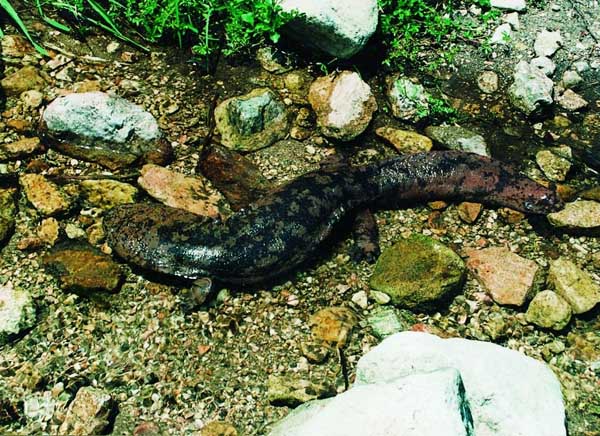
The giant salamander, commonly known as the wawa fish ("baby fish"), is endemic to China, hence it is also called the Chinese giant salamander. The giant salamander is distributed throughout China, mainly found in the streams of dense forests in South China and Southwest China. Common individuals weigh 2—5 kg, with a body length of about 50-150 cm, and the largest individuals can reach 10-20 kg. Because the giant salamander has tender meat, a delicious taste and rich nutrition, it has high food and medicinal value. In recent years, due to excessive hunting by humans and severe damage to the natural ecological environment, giant salamander resources have been declining day by day. It is an endangered animal, so it has been listed by the state as a Class II key protected wild animal. Therefore, conducting research and discussion on the biological characteristics, artificial propagation and breeding technology of the giant salamander has great practical significance.
Biological Characteristics of the Giant Salamander
1. Morphological Characteristics
The giant salamander belongs to Amphibia, Caudata, Cryptobranchidae. Its body surface is bare, and the skin is smooth and elastic, covered with irregular dot-like or patch-like bluish-gray pigment. The body color often changes with changes in the environment. The abdomen is grayish-white. The head is broad and flat, the mouth is large and roughly semicircular, the vomer and jawbones have teeth, and the vomerine teeth are relatively developed, serving as the main tool for capturing food. Adults do not have gills and breathe with lungs. The eyes are located on the upper sides of the head, the interorbital space is wide and flat, and there are no eyelids. There is one nostril on each side, small and round, located above and in front of the eyes. The vertebral centra are amphicoelous. The abdomen is fat, accounting for about 1/2 of the body length. On the back there is an inconspicuous degenerated dorsal fin extending to the tail. The giant salamander has one pair each of forelimbs and hindlimbs; the forelimbs have 4 fingers, and the hindlimbs have 5 toes. The shape of the limbs is similar to frog limbs. The movement of the giant salamander is mainly accomplished by the limbs. Between the abdomen and the two hindlimbs there is a genital pore, and the outer end coincides with the excretory pore. The female salamander does not have a seminal receptacle.
2. Living Habits
The giant salamander is a poikilothermic animal, often living in streams in dense mountain forests. It likes to move in the middle and lower layers of water and can survive in water at 0-38°C; the suitable water temperature is 16-28°C. When the water temperature is below 14°C or above 33°C, feeding decreases, movement becomes sluggish, and growth slows. When the water temperature is below 10°C, it begins hibernation and completely stops eating. The giant salamander has relatively strict requirements for dissolved oxygen and water quality in the water body. When the dissolved oxygen in the water is above 5 mg/L and the water is clear and pollution-free, it is most suitable for the growth and development of the giant salamander. Especially during hatching and reproduction and in the larval stage, the dissolved oxygen in the water must be maintained above 5.5 mg/L, and the water body of the nursery pond should maintain a constant flow state. The suitable pH range is 6.0-9.0, and the optimal pH value is 6.8-8.2. In the natural ecological environment, the giant salamander often lives a benthic life, hiding in caves during the day, crawling out of caves at night to search for food everywhere, and it likes darkness, fearing strong light and fright. It often feeds on small fish, small shrimp and other aquatic animals in streams, and can prey on fish bodies equivalent to 1/2 of its own length. The fish it feeds on are generally topmouth gudgeon, gobies, bitterling, rhodeus, fighting fish, loach, snakehead, etc., as well as mollusks such as snails and mussels, and it also preys on aquatic insects, water rats, water snakes, frogs and other animals. Under artificial breeding conditions, in addition to feeding on various wild fish, it can also feed on some animal carcasses, animal blood or internal organs. Through food training, it can also consume artificial compound feed.
3. Growth Characteristics and Reproductive Habits
Under natural environmental conditions, due to good water quality and abundant food resources, the giant salamander grows relatively fast, and the largest individual can reach 10-15 kg. Under artificial breeding conditions, growth is fastest at 2-5 years of age, especially at 2 years of age, when the annual body weight increase multiple reaches 6.5-9.8, and the annual body length increase multiple reaches about 2.2. The weight increase of pond-raised giant salamanders is significantly faster than that of wild populations, which is mainly related to the more comprehensive nutrition of artificial feeding and the more suitable water temperature; even in severe winter it does not hibernate. Under natural conditions, it generally reaches sexual maturity at 4 years of age. Under artificial breeding conditions, female salamanders reach sexual maturity at 4-5 years of age. When the giant salamander reaches sexual maturity, pressing the abdomen of the male salamander can expel milky-white semen, which disperses when dropped into water. The female salamander can produce bead-like long-chain ribbon-shaped eggs, and fertilization is external during reproduction. May-September is the breeding period of the giant salamander. During the breeding season, the giant salamander often emits a cry resembling that of a baby. The most suitable water temperature for hatching and reproduction is 22-25°C. China has conducted nearly 30 years of research on the artificial propagation of the giant salamander. So far, progress in artificial propagation of the giant salamander has not been great, and the success rate is extremely low. The source of fry and fingerlings is still mainly natural resources. Therefore, carrying out research on artificial propagation technology for the giant salamander is an important topic and main direction for the future.
4. Identification of Fry and Fingerlings Among Amphibia, in Caudata, the Cryptobranchidae giant salamander is very similar to Hynobiidae, Salamandridae and Proteidae. In recent years, stimulated by the high profits of giant salamander fry and fingerlings, some fry and fingerling suppliers have passed off inferior goods as genuine ones, often selling adults of the spotless wart newt or Hynobiidae as giant salamander juveniles, causing losses to farmers. In order to distinguish the giant salamander from Hynobiidae and Salamandridae, their morphological characteristics are compared as follows for reference in identification.
Artificial Breeding of the Giant Salamander
1. Construction of Breeding Ponds
The giant salamander breeding pond can be designed according to the characteristics of the terrain, often in two shapes: rectangular or oval. Its area is generally suitably 200-300 sq m. The installation of inlet and drainage pipes should be done well. The design of the inlet pipe should be higher than the drainage pipe, generally about 80 cm from the pond bottom. At the mouth of the inlet pipe, a "duck bill" can be installed, processed from galvanized iron sheet or trapezoidal, with the wide side as the water outlet. The "duck bill" water outlet is about 1 cm thick and 20 cm wide. According to the size of the breeding pond area, determine the number of "duck bills" to install. This can not only reduce foreign debris, but also increase the width of the inlet water surface and promote water circulation in the pond. The drainage pipe should be installed close to the pond bottom to facilitate removal of deposited dirt. The pond height is 2.5-3 m, and the pond walls should be plastered with cement, kept as flat and smooth as possible. Inside the breeding pond, use bricks, cement boards and other materials to build several artificial caves. The length, width and height of the caves are 2-4 m, 1 m and 0.5 m respectively. The caves can also be connected to one another, but the cave walls should be kept as smooth as possible to avoid scratching the salamander's skin. The cave and pond bottom should preferably be soil, and can be covered with 20 cm thick sand and gravel, with a ratio of gravel to river sand of 5:1, and a feeding platform should be set above the cave. The feeding platform should be flat, and its area should account for about 1/20-1/30 of the breeding pond, with a side slope ratio of 1:5. Above the feeding platform, use blue fiber tiles to build a shade shed to prevent the giant salamander from being frightened while eating. After the new breeding pond is built, fill the pond with water to a depth of about 2 m. After 3-4 days, drain the water, then refill with fresh water. After repeating this 3-4 times, when the alkalinity of the cement has completely disappeared and a layer of attached matter appears on the pond walls and cave walls, salamander fry can be stocked. To ensure the supply of fresh live bait for salamander fry, bait ponds can be built nearby. In the bait ponds, regularly keep a certain number of fish, mollusks, frogs, etc. that have strong reproductive capacity and are easy to raise, such as tilapia, topmouth gudgeon, snails, mussels, small tadpoles, etc., as bait for the giant salamander.
2. Stocking of Salamander Fry
To prevent pathogenic microorganisms on the body surface of salamander fry from being brought into the salamander breeding pond, disinfect the body surface of the stocked giant salamander fry with 1% gentian violet medicinal solution. The method is to prepare it at a medicine-to-water ratio of 1:100, then place the salamander fry in the solution and soak them for 15-20 minutes, then put them into the breeding pond for artificial rearing. The stocking density is 5-6 fry of 8-10 cm size per 10 sq m of water body, and 3-4 fry of 11-20 cm size. At present, most salamander fry are captured and collected from nature, and the size varies greatly. Therefore, when stocking, do a good job of selecting fry and try to stock salamander fry of the same size in each breeding pond, which can avoid the big bullying the small and mutual killing, and improve the survival rate of salamander breeding.
3. Feeding
The giant salamander feeds on animal bait. In addition to being rich in protein, the bait should also be rich in zinc, iron, calcium, phosphorus and various trace elements. When feeding artificially, the types of bait should be as varied as possible and well matched. In addition to feeding a certain amount of wild trash fish, small shrimp, tadpoles, snails and mussels and other fresh live bait, it should also be appropriately fed animal internal organs, blood clots, scraps, etc. The feeding method is based on the individual size and feeding situation of the giant salamander. First wash the animal internal organs, grind them with a meat grinder to the required fineness, and place them on the feeding platform. Before each feeding, clean the feeding platform to ensure cleanliness and hygiene. Do not directly put animal internal organs, blood clots, scraps, etc. into the water body, as this will not only reduce bait utilization but also more easily cause water pollution. When feeding fresh live bait, fish, shrimp, snails, mussels or tadpoles and other live bodies can be directly put into the breeding pond, allowing the giant salamander to prey freely, which can greatly improve bait utilization and increase food intake. The giant salamander has the living habit of hiding by day and coming out at night, so the feeding time should be set in the evening. During the feeding process of the giant salamander, disturbance should be avoided, because after being frightened and stimulated, the giant salamander has the behavior of "vomiting food."
4. Regulation of Water Quality and Water Temperature
The water quality of the salamander breeding pond should always be kept clear and pollution-free. In summer and autumn, as the individual giant salamander continues to grow, food intake increases, and a large amount of excrement is also produced, which can easily cause water quality to deteriorate. Therefore, in addition to frequently removing residual bait and excrement in the pond, the pond water should be changed regularly, generally once every 3-4 days, with each water change amounting to 1/3 of the pond water. If the water source is abundant, constant flowing water can be ensured in the giant salamander breeding pond, which is more beneficial to the growth and development of the giant salamander. Especially in the breeding season of the giant salamander, constant flowing water can stimulate the nervous system of the giant salamander, promote gonadal development and increase the reproduction rate. In addition, a certain number of golden apple snails can be stocked in the salamander breeding pond. Because golden apple snails can feed on humus at the pond bottom, they can not only remove dirt in the pond but also provide palatable bait for the giant salamander. The transparency of the pond water is generally about 35 cm, and the dissolved oxygen in the water body is above 5 mg/L. In order to control the pH value of the water body to reach 6.78, adjust it according to specific conditions by splashing quicklime. Water temperature is also crucial to the growth and development of the giant salamander. The most suitable water temperature is 22-25°C. In hot summer, introduce mountain stream water or clear spring water into the salamander breeding pond as much as possible. The heat-relieving effect is relatively ideal, and appropriately deepen the pond water to about 2 m. To prevent direct sunlight and exposure, some aquatic plants such as water hyacinth, duckweed, water lettuce, etc. can be stocked in the pond, and vine plants can be planted around the breeding pond, which can effectively control sudden changes in the pond water temperature. In early winter, when the water temperature drops below 10°C, the giant salamander hibernates. Under artificial breeding conditions, in order to promote rapid growth and development of the giant salamander, a series of methods such as using geothermal water, industrial warm water, or building heated greenhouses are generally used to regulate the water temperature in the giant salamander pond, keeping the water temperature constantly at 20-28°C so that the giant salamander can still feed and grow normally in winter. This is also one of the keys to increasing salamander breeding output.
5. Disease Prevention and Control
In the process of artificial breeding, because the ecological environment and living habits of the giant salamander have been changed, the water quality is easily polluted, and in addition the nutrition of the fed bait is not comprehensive and the stocking density is relatively increased, this increases the probability of pathogen infection. Whenever bait is lacking, giant salamanders often fight and bite each other, making them very susceptible to injury. According to relevant data, the incidence rate of artificially bred giant salamanders is more than several dozen times higher than that of wild populations. The common diseases of the giant salamander mainly include two types: skin rot disease and tail rot disease. They are introduced separately as follows.
① Tail rot disease: When the giant salamander suffers from this disease, small red dots or red spots often appear from the base of the tail stalk to the end of the tail, the surrounding skin tissue becomes congested and inflamed, and the epidermis is slightly grayish-white. In severe cases, the muscles of the affected tissue necrose, the tail skeleton is exposed, and dark red or pale yellow liquid often seeps out from the wounded area. The diseased salamander has weakened activity or lies motionless on the ground, has no appetite, and the tail becomes stiff, and it soon dies. This disease can occur in all four seasons, and June-August is the peak period for its occurrence, mainly harming 1-3 year old giant salamanders. Prevention and treatment method: Splash 0.2-0.3 ppm chlorine dioxide over the whole pond, including the feeding platform and artificial caves, once a day, with 3-4 days as one treatment course. For giant salamanders with more severe disease, first soak the wounded area with a 15-25 ppm potassium permanganate solution, and use a cotton ball to clean the attachments on the surface of the wounded area. Then apply anti-inflammatory drugs such as sulfathiazole ointment or sulfur ointment to the affected area, once a day, with 5-7 days as one treatment course, and combine with chloramphenicol 2-3 g + kanamycin powder 2 g + Vc 2 g + VE 2 g + VB 2 g per kg of body weight. Mix the above drugs evenly into the bait and feed, continuously for 3—4 days.
② Skin rot disease: This is a disease caused by Aeromonas hydrophila. Its symptoms are: irregular red swellings often appear on the body surface of the diseased salamander. In the early stage of the disease, there are rice-grain-sized light yellow pustules in the center of the red swellings, which gradually spread and enlarge to the surrounding skin tissue. After the pustules rupture, scabies-like lesions form, and the lesion tissue becomes congested and inflamed, appearing ulcerated. At this time, infection is quite fast, and the diseased salamander lies prostrate in the pond without eating. If measures are not taken for timely treatment, the mortality rate is relatively high. Prevention and treatment method: Regularly splash 0.3-0.4 ppm strong chlorine essence or 0.2-0.3 ppm chlorine dioxide over the whole pond for thorough disinfection and sterilization treatment. During the disease outbreak period, do this once a day for 4-6 consecutive days, and rinse the affected area with 0.3-0.5 ppm malachite green solution or medical hydrogen peroxide, then apply sulfathiazole ointment or dermatitis ointment to the affected area, once a day, with 4-7 days as one treatment course. Then inject 0.3-0.4 mL of turtle health injection per kg of giant salamander body weight. The injection site is generally the soft tissue at the lower end of the forelimb, injected at a 45-degree angle, once a day, and it can be cured after 3-4 consecutive days. Note: When a giant salamander is found to be sick, immediately isolate the diseased salamander in a separate pond for rearing.