Key Technical Points for Daily Management in Giant Salamander Farming
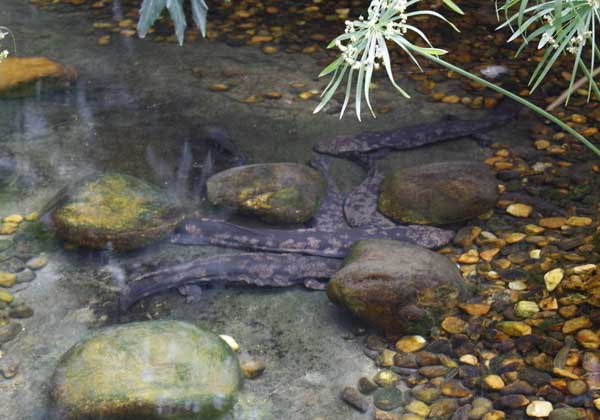
Precautions for Daily Management in Giant Salamander Farming
Management of Adult Ponds: After a period of rearing, adult giant salamanders grow larger and their density relatively increases, and giant salamander diseases occur accordingly. Therefore, daily management work is very important. The daily management of adult ponds can be summarized as one diligence, two earlies, three observations, and four preventions.
One diligence:This means diligently patrolling the ponds. Patrol the ponds 3 times a day: patrol in the morning to check conditions after feeding, patrol at noon to monitor water temperature changes, and patrol in the evening to observe the feeding status of adult salamanders.
Two earlies:This means early stocking and early feeding. Pay attention to whether they are feeding when water temperature rises after the Spring Festival. If they are not feeding, measures should be taken to encourage adult salamanders to feed as early as possible.
Three observations: observing feeding, observing whether they compete for food or spit food, and observing water quality.
Observing feeding mainly means observing whether adult salamanders gather or scatter when feeding at the feeding site.
Observe whether they compete for food or spit food, so as to adjust the feeding amount.
Observing water quality mainly means checking whether the water is clear and whether transparency is high, so as to take measures to improve water quality.
Four preventions: preventing heatstroke, preventing disease, preventing escape, and preventing water deterioration.
Preventing heatstroke is one of the important tasks in adult pond management in summer. Because water temperature is high in summer and adult salamanders are prone to death, measures must be taken to prevent heatstroke and lower temperature, which is beneficial to giant salamander growth. Outdoor heatstroke prevention mainly involves setting up shade materials to reduce light intensity. Water changes should be carried out late at night, which helps adult salamanders “get through summer.”
Preventing disease means preventing giant salamander diseases. Always pay attention to the feeding and activity conditions of giant salamanders. If adult salamanders are found swimming alone away from the group, the disease condition should be examined and studied, isolation and prevention measures should be adopted, and timely treatment should be given.
Preventing escape means preventing adult salamanders from escaping. Frequently inspect the water inlet and outlet areas, strengthen management, and prevent escape. Preventing water deterioration means preventing water quality from deteriorating.
In addition to doing a good job in feeding management, adult ponds also require water quality management, prevention and treatment of adult salamander diseases, and other work.