What are the reasons for the low artificial breeding rate of the Chinese giant salamander?
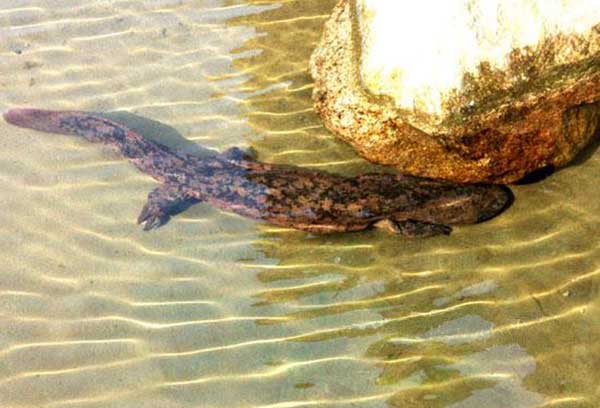
The reasons for the low artificial breeding rate of the Chinese giant salamander include the asynchronous development of male and female gonads, poor sperm motility in males, the difficulty of manually selecting sexually mature parent salamanders, and the large number of eggs laid by female parent salamanders lacking fertilization capacity and the tendency of embryos to die in large numbers at the tail stage, which in turn is caused by a lack of elements in the water and insufficient algae phase.
In summary, the problem lies in the water source during the breeding process. Therefore, only by starting with the breeding water source, that is, using the biological decomposition technology of ecological biology to change the Chinese giant salamander breeding water source to a lower-cultivation source water, can the breeding water source of the Chinese giant salamander be free of element deficiency and have sufficient algae phase, thereby ensuring that the sperm and egg development of the Chinese giant salamander reaches true physiological and morphological maturity, improving the fertilization rate of the eggs, and also significantly reducing the mortality rate of embryos at the tail stage, ultimately increasing the artificial breeding rate of the Chinese giant salamander.
During the cultivation of parent Chinese giant salamanders, the emphasis is on the interactive balance between the Chinese giant salamander and the biological chain, water elements, algae phase, and pH value, so as to fundamentally solve the problem of the low artificial breeding rate of the Chinese giant salamander and achieve the goal of large-scale breeding of fry and fingerlings.