What is the difference between wild yellow eel and farmed yellow eel?
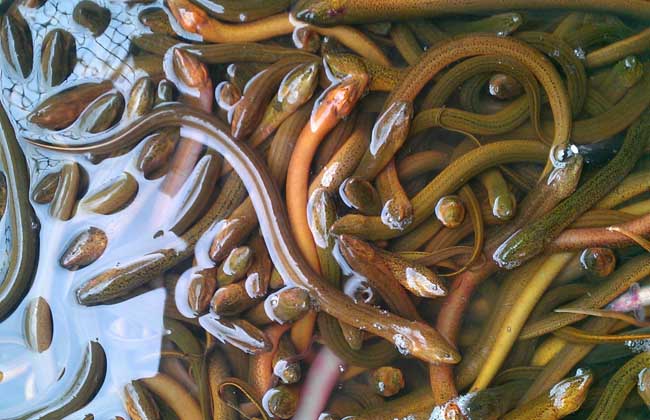
The yellow eel (Monopterus albus) is a fish of tropical and warm temperate zones that lives a bottom-dwelling life. It has strong adaptability and can survive in rivers, lakes, ditches and rice paddies. During the day it likes to burrow into mud rich in decaying organic matter or to live in holes in the crevices of waterside embankments, and at night it comes out of its hole to feed. Most of the yellow eels sold on the market today are farmed, so let us take a look below at the difference between wild yellow eel and farmed yellow eel!
First: To make a home for itself in a river or pond, a wild yellow eel must dig a very deep hole, deep enough to survive even in dry weather, so the head of a wild yellow eel is more pointed than that of a farmed yellow eel.
Second: If you touch the tail of a wild yellow eel with your finger, its tail will coil around your finger. Farmed yellow eels will not do this.
Third: Wild yellow eels show a greenish-yellow or orange-yellow color, and the patterns and spots on both sides of the belly and on the body are large and dark, while the belly of a farmed yellow eel is yellow or orange-yellow all over, with no spots or very faint spots on both sides of the belly, and the patterns on the body are not dark either.
Fourth: After a wild yellow eel is cut open, its blood is dark red or dull red, thick and plentiful. After a farmed yellow eel is cut open, its blood is pink, scant and as clear as water.
Fifth: A wild yellow eel has well-developed muscles; held in your hand, it feels very strong. A farmed yellow eel has loose muscles and feels weak and listless.
Sixth: The meat of a wild yellow eel is firm, with a chewy, resilient texture and a distinctive fresh sweetness and aroma. The meat of a farmed yellow eel is loose, turns sour in the mouth and has a strange smell.
Note: Some people think that as long as a yellow eel is very yellow in color, it is a wild yellow eel, but that is actually quite wrong. There are plenty of farmed yellow eels that are very yellow today, and some farmed yellow eels are raised from small wild yellow eels that were bought, so color cannot be used to tell wild from farmed.