Detailed Explanation of Key Points of Artificial Breeding Technology for Rice Field Eels
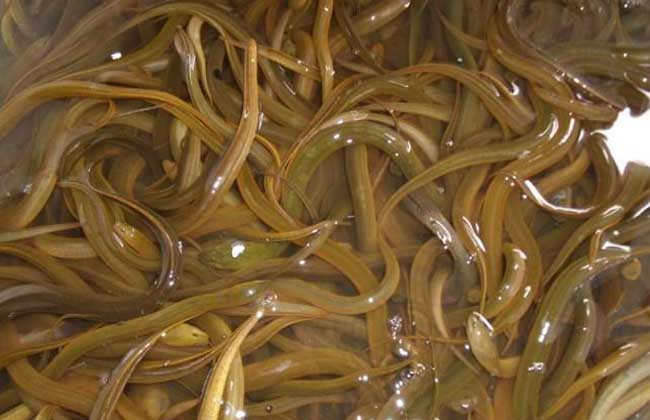
In recent years, the phenomenon of rice field eels being in short supply still exists, and the supply of wild rice field eels is far from meeting market demand, so artificial breeding of rice field eels has flourished. Although large-scale breeding technology for rice field eels is not yet fully mature, ordinary farmers practicing courtyard eel farming can achieve self-supply of fry and fingerlings, reduce breeding costs and risks, as long as they master the artificial breeding technology for rice field eels.
Selection of Parent Eels
Female eels should preferably be about 20-30 cm, and male eels should be as large as possible. The color should preferably be yellow-brown or blue-gray. The male-to-female ratio is 1:(2-3). After disinfection treatment, they are kept for conditioning. The conditioning pond area is about 20 sq m, with a water depth of 20-25 cm, and some aquatic plants such as water hyacinth and alligator weed are planted. The stocking density of female eels is 7 fish/sq m, and the stocking density of male eels is 2-3 fish/sq m. Feeding is mainly live food, with fixed-point (feeding platform) and fixed-time feeding. Change the water once every 5-7 days, and the conditioning period is at least 1 month.
Breeding Materials
2 mortar and pestle sets, 2 mL and 5 mL medical syringes, one each, several needles (No. 4-5), one pair each of scissors and tweezers, 0.7% normal saline, several towels or gauze pieces, several water basins (buckets), several hard feathers, Ringer's solution (dissolve 7.5 g NaCl, 0.2 g KCl, and 0.4 g CaCl2 in 1 L distilled water).
Artificial Induced Spawning
1. Dosage of spawning inducer: For luteinizing hormone-releasing hormone analog (LRH-A), a dose of 0.1-1 microgram/g body weight is relatively suitable. For human chorionic gonadotropin (HCG), a dose of 1-5 international units/g body weight is effective for inducing spawning and ovulation, but 2-3 international units/g body weight is most suitable for induced spawning.
2. Preparation of spawning inducer: Both LRH-A and HCG are white crystals. Fully dissolve them with normal saline solution. Accurately calculate the dose according to LRH-A 0.3 microgram/g body weight + HCG 2-3 international units/g body weight, and draw it into a syringe for later use. The injection volume per parent eel should preferably be 0.5-1 mL, and should not exceed 1 mL. The injection solution should be prepared and used immediately and should not be left for too long. After the first injection, the remaining solution can be placed in a refrigerator and used again for the next injection.
3. Injection of spawning inducer: Use a 5-10 mL medical syringe and No. 4-6 needles. The syringe must be disinfected by boiling in water for 10 minutes or with alcohol. During injection, two people should cooperate. One person holds the rice field eel with a towel or gauze, with the abdomen facing up and a towel placed underneath, and fixes the eel body with both hands. The other person wipes dry the moisture at the injection site, inserts the needle toward the eel's head at an angle of 45-60 degrees to the fish body, punctures into the abdominal cavity at the ovary area, with a depth not exceeding 0.5 cm, slowly pushes the injection solution into the eel's abdominal cavity, and when withdrawing the needle, presses an alcohol cotton ball at the needle hole and gently rubs to prevent the injection solution from flowing out. The needle must not be inserted too deep to avoid piercing internal organs, but it also must not be too shallow, otherwise the medicinal solution cannot enter the abdominal cavity.
Temporary Holding in Ponds
After hormone injection, the eels are temporarily held in a pond with a water depth of 20-30 cm. Females and males must be separated. Change the water once a day. When the temperature is below 25°C, inspect after 40 hours and then once every 3 hours until about 75 hours (the effect time varies). The inspection method is to feel the abdomen with the hand and move it back and forth. If there is a sensation of free egg grains, ovulation can occur, and artificial fertilization can be carried out.
Artificial Fertilization
Take out the female eel and hold its front part with a dry towel. With the other hand, squeeze the abdomen from front to back, and eggs can be successfully released. If there is blockage, use small scissors to cut 0.5-1 cm inward from the cloaca, then squeeze continuously 3-5 times. After squeezing the eggs into a container, kill the male eel and take out the testis (sperm motility can be observed with a magnifying glass of more than 400x), wipe off blood stains with a dry towel, cut it into pieces with scissors, put it into a mortar and grind it lightly a few times, put it into the eggs, and stir thoroughly with a feather (female-to-male ratio of 2-3:1), then add 200 mL Ringer's solution (50 mL per eel), let it stand for 5 minutes, then wash away testis fragments and blood stains with clean water, and artificial incubation can proceed.
Artificial Incubation
Because saprolegniasis is serious between 23-27°C, the indoor drip incubation method is generally used. In the incubator, water enters from the bottom and overflows from the top. The water depth is maintained at about 10 cm, the water temperature is 25-30°C, and water is changed at appropriate times, with a daily temperature difference not exceeding 5°C. Sand is spread on the bottom of the container to prevent saprolegniasis. When fertilized eggs first enter the incubator, the drip rate is 10 drops/minute for 1 day, then 15-20 drops/minute on the 2nd and 3rd days, and 30 drops/minute on the 4th day, until fry hatch out. Unfertilized eggs should be removed in time, otherwise they easily cause water quality deterioration. The later the stage, the more the water change frequency should be increased. Generally, hatching occurs in about 5-7 days.
Fry and Fingerling Cultivation
The cultivation pond uses a small cement pond, with a pond area of 5-10 sq m and a pond depth of 30-40 cm. Add 5 cm of soil to the pond bottom. Add 0.5-1 kg of cow manure or pig manure per 1 sq m of pond. The water depth is 10-20 cm. It is best to introduce tubifex worms into the pond, and water hyacinth must be planted on the pond surface. After the eels hatch, they enter the cultivation pond 4-7 days later. Stock 500-600 fish per 1 sq m, and feed 2-3 times a day. When the eel fry grow to 4-5 cm, the density is 200-300 fish/sq m. After about one month, when the eel fry grow to about 8 cm, stock about 100 fish per 1 sq m. At a body length of 15 cm and body weight of 3-10 g, they can be transferred to adult eel ponds for cultivation.