Detailed Explanation of Artificial Breeding and Induced Spawning Techniques for Rice Field Eels
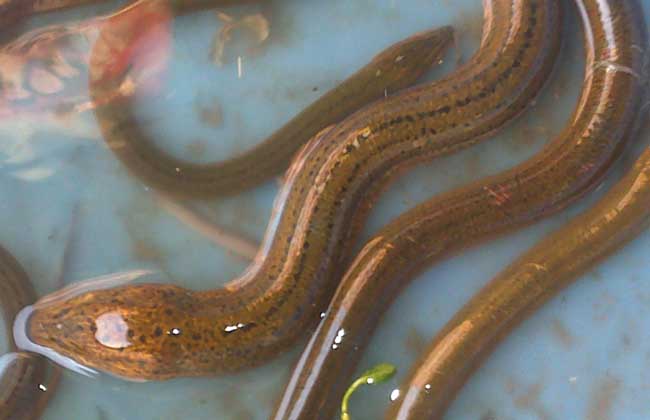
The rice field eel (Monopterus albus) is a hermaphroditic animal, a fish of tropical and warm temperate zones, and a bottom-dwelling fish with strong adaptability that can survive in rivers, lakes, ditches and rice paddies, and has extremely high breeding value. Its reproductive season is roughly from May to August, and during its individual development it has the characteristic of sex reversal. Let us now take a look at the artificial breeding and induced spawning techniques for rice field eels!
Dosage of Spawning Agent
Using luteinizing hormone-releasing hormone analog (LRH-A) at a dose of 0.1-1 microgram/gram body weight is relatively suitable, and using human chorionic gonadotropin (HCG) at a dose of 1-5 international units/gram body weight, both are effective ranges for induced spawning and ovulation, but 2-3 international units/gram body weight is most suitable for induced spawning. The induced spawning effect of LRH-A and HCG on rice field eels is also closely related to the maturity of the gonads themselves. In early May, not long after the breeding season begins, the ovulation effect caused by hormones is not obvious; June to July is the peak breeding period, when hormones have an obvious ovulation-inducing effect; in August the ovaries gradually degenerate, the response to hormones weakens, and the ovulation-inducing effect is poor. Therefore, at different times the induced spawning dose should be increased or decreased as appropriate according to the degree of ovarian maturity, and for male eels the dose is 1/2 of that for female eels.
Effect Time
When LRH-A or HCG is used to induce spawning in rice field eels, the effect time is 1-5 days. The effect time has little relation to the induced spawning dose, but is related to water temperature and the number of injections. When the water temperature is 30°C, the effect time is about 40 hours, while when the water temperature is lower than 27°C, the effect time is more than 50 hours. When using the same dose of LRH-A to induce spawning at a water temperature of 23°C, the effect time of a single injection is 83-160 hours, while two injections can shorten it to 23-81 hours.
Preparation of Spawning Agent
Both LRH-A and HCG are white crystals. Dissolve them fully with physiological saline solution, accurately calculate the dose as LRH-A 0.3 microgram/gram body weight + HCG 2-3 international units/gram body weight, and draw it into a syringe for later use. The injection volume per brood eel is suitably 0.5-1 milliliter, and should not exceed 1 milliliter. The injection solution should be prepared and used immediately and must not be left standing too long. After the first injection, the remaining solution can be placed in a refrigerator and used again for the next injection. If there is no refrigerator, then the solution must be prepared anew for the second injection.
Injection Method
Use a 5-10 milliliter medical syringe with a No. 4-6 needle. The syringe must be sterilized by boiling in water for 10 minutes or disinfected with alcohol. There are two types of injection: intraperitoneal injection and intrathoracic injection. Because the rice field eel has a slender body and a relatively small thoracic cavity, it is generally advisable to use abdominal ovarian injection, which also has a faster effect. During injection, two people must cooperate: one person holds the rice field eel with a towel or gauze, with the belly facing up, pads underneath with a towel, and fixes the eel's body with both hands; the other person wipes dry the water at the injection site, inserts the needle toward the eel's head, at an angle of 45-60 degrees to the fish body, into the abdominal cavity at the ovarian site, with a depth not exceeding 0.5 cm, slowly pushes the injection solution into the eel's abdominal cavity, and when withdrawing the needle presses an alcohol cotton ball at the needle hole and gently rubs to avoid the injection solution flowing out; doing so can also serve a disinfecting function. The needle must not be inserted too deep, so as to avoid piercing the internal organs, but it also must not be too shallow, otherwise the medicinal solution cannot enter the abdominal cavity.