How many jin per mu is the yield of yellow eel farming?
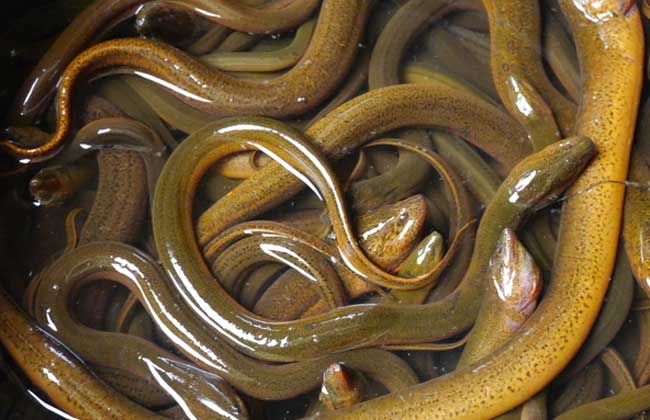
The yellow eel, scientific name rice field eel, also known as snake fish, blood eel, chang fish, etc., is a freshwater fish of the family Synbranchidae and genus Monopterus. Two species are distributed in China: one is the common yellow eel, and the other is the mountain yellow eel. Both are found in Sichuan, Yunnan, Guizhou, Chongqing, Hunan, Hubei, Anhui, Henan, as well as Guangdong and Guangxi and other places. Let us take a look below at how many jin per mu yellow eel produces!
How many jin per mu does yellow eel produce?
Yellow eel generally produces 14 to 15 kg per sq m, and the yield per mu (666.6 sq m) can reach 10000 jin. However, how many jin a mu of field can produce mainly depends to a great extent on the farming method. At the same time, because yellow eel is not prone to disease and grows fast, there is still a certain guarantee in terms of yield.
How many seedlings per mu for yellow eel?
1. Directly enclosing a mu of field with netting on all four sides can imitate ecological farming, with an average of 1 kg of seedlings per sq m. If they grow well, a mu of field can stock 667 kg of seedlings. If 2 kg per sq m, 1334 kg of seedlings can be stocked.
2. If switching to soilless farming in cement ponds, seedlings can be stocked at 2.5 kg per sq m, that is, 1667 kg can be stocked.
How to increase the yield of yellow eel?
1. Choosing a site: The yellow eel pond must be chosen in a quiet, wind-sheltered, sunny place near water. The size of the pond can be determined according to the number of seedlings to be raised. The pond walls should have as many holes as possible so that the yellow eels can burrow and hide. The pond bottom should use soil rich in organic matter, and the soil should be moderately soft with a thickness of about 15 cm. Ditches, canals and culverts that have been modified must be desilted. In addition, the height of the pond walls must not be less than 1 m; if conditions permit, a surrounding wall can be built to keep it quiet.
2. Filling with water to create the environment: After the site is chosen, disinfect the whole pond with an appropriate amount of quicklime. After 7 to 10 days, fill with water to create a natural environment. Some floating plants can be planted in the pond, and an appropriate number of willow trees can be dotted around the pond. After 10 to 20 days, stock 3 to 5 small fish and shrimp per sq m so that the pond is full of vitality. Pay special attention that the pond water must never be well water, because well water not only has low oxygen content, but many minerals in well water can easily make the pond environment inconsistent with the surrounding environment. In addition, the water in the pond should be drained and refilled frequently to keep it active.
3. Stocking in batches: After the spring equinox of that year, catch some local wild eels and put them into the pond so that they first “set up camp”. If the farmer is not in a hurry for quick results, after about 15 days, stock a batch of parent eels, because they have strong reproductive capacity; one stocking allows continuous catching, with 12 pairs per sq m being optimal. Afterward, farmers can stock in batches according to their own capacity, but the total number must not exceed 20 per sq m.
4. Building runways: Yellow eels living together in the pond very much want to find another “habitat” on dark nights or snowy and rainy days. To go along with nature, 1 to 2 “runways” can be built beside the pond (this can be done at the same time as building the pond). The runways can use cement pipes (sealed, do not fill with mud, length 2 to 3 m) looping back into the pond, or leading to another fish pond, so that the wild nature of the yellow eels can be fully expressed and growth promoted. If conditions permit, the runways can also be used to irrigate water, letting the yellow eels play and strengthen their physique.
5. Feeding good feed: The turn of spring and summer is when yellow eels grow fastest. They can be fed snail meat, earthworms, river mussel meat, fly maggots, borers, animal offal, etc. In autumn, in addition to the above feed, appropriately feed some plant-based feed such as wheat bran, cooked wheat, vegetable leaves and small duckweed. Never feed too much or spoiled feed. Feeding should be done at a fixed location; feeding is taboo when the sun goes down and at noon on June days.
6. Preventing and treating disease: When stocking, local wild yellow eels are best (because they adapt to the environment). Do not stock all at once, and do not stock eel bodies with wounds, so as to avoid bacterial infection, disease and death, or even the whole pond dying off. Before the eel seedlings enter the pond, soak and wash them with bleaching powder (10 g per 3 sq m of water). If yellow spots are found on the bellies of the yellow eels in the pond, they can be soaked and washed with copper sulfate aqueous solution (8 g per 3 sq m of water), but the water must be changed after 1 hour.