Detailed Explanation of Key Techniques for Rice Field Eel Farming in Spring
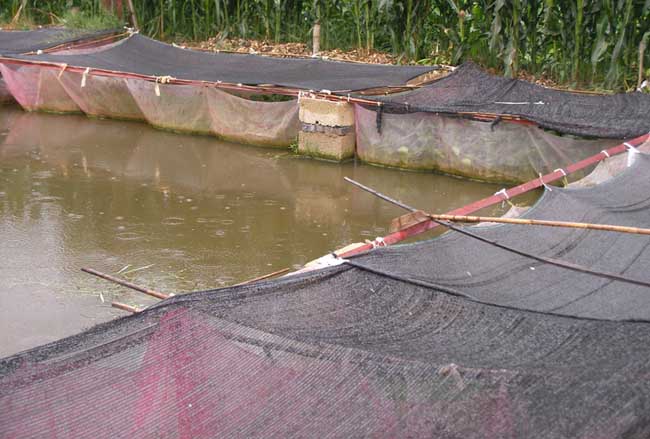
At present, there are many rice field eel farming models, but the spring management work is basically the same. Spring management work mainly centers on stocking and maintaining seed stock, and revolves around improving the survival rate of rice field eels. Only in this way can a foundation be laid for successful farming. Let us now take a look at spring rice field eel farming techniques!
Actively Prepare and Stock Fry Early
According to experience, purchasing eel seed for stocking in early spring and bringing them to market in winter or around the Spring Festival yields the best economic benefits. The earlier the eel seed is stocked, the longer the growth period and the greater the weight gain. Therefore, preparations for stocking eel seed should be actively carried out. The specific work is as follows:
1. Clean up and tidy the area around the farming pond, remove decaying branches and leaves inside and outside the pond, check whether the water inlet, water outlet, pond embankments, escape-prevention and other facilities are intact, and promptly carry out repairs if any problems are found.
2. Check the overwintering condition of the rice field eels, remove the old plastic film covering the overwintering pond or the rice straw and other insulation materials covering the mud surface, so that the water temperature can rise quickly.
3. Replant aquatic plants in the pond, and plant climbing plants such as loofah and hyacinth bean on the mud embankments outside the pond, so as to help improve water quality, block summer sunlight, and lower water temperature.
4. Before stocking the eel seed, the farming pond must also be disinfected with quicklime, and the pond bottom should be exposed to the sun.
Focus on Insulation and Start Feeding Early
In spring, the air temperature gradually rises, and the water temperature in the farming pond also rises with the increase in air temperature, so the rice field eels should be started on feed as early as possible. However, cold air often invades in spring, and even the phenomenon of “late spring cold” occurs, causing the air temperature to drop sharply suddenly, which is extremely unfavorable to the growth of rice field eels. Therefore, insulation work must not be relaxed.
Insulation can be achieved by methods such as covering with plastic film and deepening the pond water. To prevent sudden changes in water temperature, the water depth should usually be maintained at 5-6 cm, and on the day before the air temperature drops, the water depth should be maintained at 10-15 cm to prevent the rice field eels from catching a cold.
Apply Fertilizer Reasonably and Cultivate Water Quality
When fry are stocked in early spring, the water temperature is relatively low. If the water body is too lean, some weak eel seed placed in the boxes are susceptible to bacterial invasion and often become infected with water mold disease, white spot disease, and tail rot disease. Therefore, whether before stocking fry or during the early farming process, attention must be paid to cultivating water quality and keeping the water body green.
Water quality can be cultivated by applying inorganic fertilizers such as ammonium bicarbonate and urea to turn the pond water green. If organic fertilizer (human and livestock manure) is used, it must be fully fermented before application; otherwise, it will aggravate the harm of bacterial diseases.
Pay Attention to Changing Water and Prevent Pollution
In order to prevent the gradual accumulation of water quality pollution caused by bait feeding, part of the water also needs to be replaced in spring. If water changes are neglected, water quality will deteriorate. As the air temperature rises, the amount of water changed should be continuously increased. The specific amount of water changed depends on the feeding amount and the degree of water pollution.
1. When the air temperature is 15°C, change the water once every 6-7 days, changing about 1/4 each time.
2. When the air temperature is 20°C, change the water once every 4-5 days, changing about 1/3 each time.
Water changes should preferably be done on sunny days, and the time should preferably start at 8:30 and end at around 12:00. When changing water, the flow rate should be slow, and attention should be paid to temperature differences. For flowing-water eel farming in cement ponds, the water flow must be kept unobstructed, but the flow rate should not be too high at the beginning. As the air temperature rises and the water temperature increases, the flow rate should also be gradually increased so that feces, dirt and other matter are discharged out of the pond with the water.
Do a Good Job in Feed Training and Feed at the Right Time
Rice field eels stop eating completely when the water temperature is below 10°C, and begin to come out of their holes to seek food when the water temperature is above 12°C. If rice field eels are seen poking their heads out at noon or in the evening, bait can be given. Timely feeding in early spring can help rice field eels quickly recover their physical condition, enhance their vitality, improve disease resistance, ensure the survival rate of eel seed, and lay a foundation for subsequent growth.
For rice field eels that have already been trained, the original feed can continue to be used. For rice field eels that have not been trained to feed, live feed can first be given for about 7 days, and then feed training can be carried out. In early spring, the feeding amount is 0.5%-1% of the body weight of the rice field eels, and afterward the feeding amount should be gradually increased according to their feeding situation.
Strengthen Disinfection and Prevent Eel Diseases
Once rice field eels become ill, treatment results are often unsatisfactory. Therefore, the principle of “prevention first, combining prevention and treatment” should be adhered to. The specific measures for preventing eel diseases are as follows:
1. Do a good job in seed selection, pond clearing and disinfection, water body disinfection, external disinfection of the eel body, and internal deworming of the eels.
2. Do a good job in spring water quality purification, and irregularly add some insecticidal drugs and antibiotics to the bait.
3. Use a 1 mg/L bleach solution to splash and disinfect the whole pond, so as to purify the water quality.